China Top 10 Semi Auto Flute Laminator Manufacturers

Time:2026-11-01 Author:Mason
0%

Selecting a supplier from China’s many packaging-equipment makers takes more than comparing brochure prices. A Semi-auto Flute Laminator bonds printed sheets to corrugated board, and small alignment errors can show up as visible edges, wrinkles, or uneven bonding. Details matter. Operators also play a direct role in feeding and positioning sheets, so machine design and workflow both affect results.

This guide introduces ten manufacturers for buyers to evaluate, not a definitive ranking of factory quality. It focuses on practical questions: What board thicknesses and sheet sizes can the machine handle? How are glue application, pressure, and sheet alignment controlled? Can the supplier demonstrate stable output using materials similar to yours? A stated production speed means little without those details. Ask for a machine test, clear specifications, installation plans, and accessible service support. If possible, inspect sample sheets under normal production conditions, not only during a polished demonstration.

Comparisons can still be imperfect. Published specifications may use different testing conditions, and a short trial cannot prove long-term reliability. That gap deserves attention. Buyers should verify references, warranty terms, spare-parts availability, and operator training directly with each supplier. The manufacturers in this overview offer a starting point for that research; the right choice depends on your board, print quality, order mix, and production floor. A careful comparison may take longer, but it can prevent costly surprises after delivery.
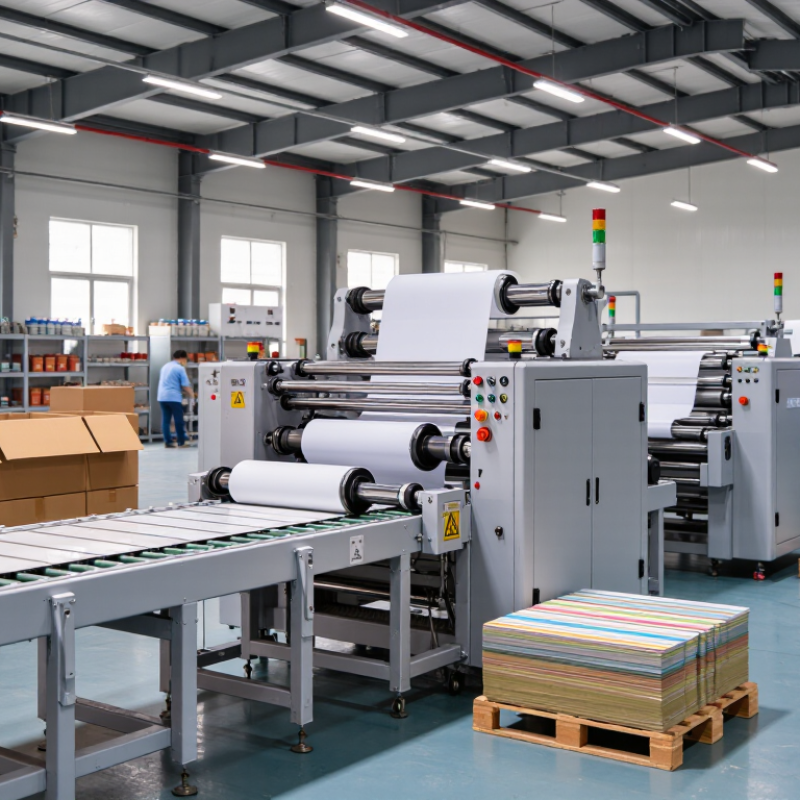
China Top 10 Semi Auto Flute Laminator Manufacturers

What Defines a Semi-Automatic Flute Laminator in Corrugated Packaging?

A semi-automatic flute laminator bonds a printed paper sheet to corrugated board. The operator typically feeds and aligns sheets, while powered rollers apply pressure and move the material through the bonding section. It is not simply a machine with a slow setting. The balance between operator control and mechanical assistance defines the process.

FEFCO’s European Database 2022 reports approximately 55 billion square metres of corrugated board production in Europe. That scale makes consistent sheet alignment and bond quality important on real production floors. A practical check is to inspect the leading edge: uneven overlap, trapped air, or glue marks can signal poor registration or adhesive control. Board warp and paper moisture matter, too. Small changes show up quickly.

Semi-automatic models suit operations that need repeatable lamination without fully automated feeding. Operators can adjust sheet position for different formats, but results still depend on training and setup. Check the machine’s usable sheet range, pressure adjustment, glue application, and cleaning access before choosing one. “Semi-automatic” is not a universal specification; suppliers may use it differently. The label alone tells you little. A timed production trial with your own board and paper is more informative, though it may expose weaknesses that are easy to miss in a showroom.

What Defines a Semi-Automatic Flute Laminator?

This chart shows typical height ranges for common corrugated flute profiles. Flute height helps determine board thickness and is one of the material characteristics a laminator must accommodate.

Typical industry ranges; actual dimensions vary with paper grade and regional specifications. Heights are shown in millimeters.

How A–F Flute Heights, About 0.6–5 mm, Affect Laminator Compatibility

Semi-auto laminator compatibility starts with the flute profile, not the machine’s advertised sheet-size range. Typical corrugated-board references, including FEFCO profile guidance, place A flute near 4.0–5.0 mm, C around 3.2–4.0 mm, B around 2.2–3.0 mm, E around 1.0–1.8 mm, and F near 0.6–0.9 mm. These are working ranges, not guarantees: paper weight, moisture, and compression change the finished board’s caliper. Small differences matter. A thick A-flute sheet may need greater roller clearance, while excessive nip pressure can flatten its arches and weaken cushioning.

Ask for the machine’s usable board-thickness range, roller-gap adjustment, pressure control, and feed-table settings. Then test the actual laminated stack, not a single sample sheet. TAPPI T 411 provides a recognized method for measuring paper and paperboard caliper; use consistent measuring pressure and sample conditioning when comparing boards. A thin F-flute sheet can buckle or skew if feeding is loose, while a tall flute may show uneven glue transfer if the gap is too tight. Record sheet caliper, adhesive spread, speed, and edge alignment during trials. There is a practical trade-off: slower feeding can improve registration, but it may not fix poor roller alignment. A short production test often reveals problems that a specification sheet misses.

China Top 10 Semi Auto Flute Laminator Manufacturers - How A–F Flute Heights, About 0.6–5 mm, Affect Laminator Compatibility

General technical reference for evaluating semi-automatic flute laminators. The entries below describe flute grades and machine compatibility considerations, not rankings or claims about individual manufacturers.

No. Flute / Compatibility Factor Typical Reference Range Effect on Laminator Compatibility Practical Check
1 F flute About 0.6–0.9 mm flute height Fine flutes create a relatively smooth liner surface. Excessive or uneven pressure may crush the flutes and reduce board stiffness. Confirm that pressure can be adjusted for thin, fine-flute board; test for flute crush and surface marking.
2 E flute About 1.0–1.8 mm flute height Commonly used where a finer print surface and moderate cushioning are needed. Board caliper and liner condition affect feeding and bonding. Check the machine’s stated board-thickness range and run samples with the actual liner and adhesive.
3 D flute About 1.5–2.0 mm flute height A less universally specified grade; its height can overlap with other fine flute grades. Compatibility depends on actual board caliper, not flute name alone. Provide a board sample or measured caliper when confirming machine setup.
4 B flute About 2.5–3.0 mm flute height Its greater profile than fine flutes changes total board thickness and compression behavior, which can affect pressure settings and sheet transport. Check maximum substrate thickness, pressure adjustment, and whether the feeder handles the board’s stiffness.
5 C flute About 3.5–4.0 mm flute height The taller profile generally produces thicker board than E or B flute. Accurate alignment and appropriate pressure help avoid uneven bonding. Verify machine capacity using the finished board caliper and the intended sheet format.
6 A flute About 4.0–5.0 mm flute height The tall profile can require more clearance and careful pressure control. A machine suitable for fine-flute board should not be assumed to handle A flute. Confirm maximum board thickness and run a full-size trial to check feeding, registration, and bonding.
7 Board caliper and layer construction Depends on flute grade, liners, and board construction Flute height is not the same as total board thickness. Liner weights, moisture, and single-wall or multiwall construction also affect the caliper. Measure the actual board and compare it with the machine’s specified minimum and maximum substrate thickness.
8 Sheet size and format Machine-specific; no universal size range Maximum sheet dimensions affect whether sheets can be fed, aligned, and supported. Small or lightweight sheets may also need suitable feeding controls. Compare the job’s minimum and maximum sheet dimensions with the machine’s published working range.
9 Pressure and adjustment range Must suit the board and facing-material combination Too much pressure can crush flutes; too little can result in weak or inconsistent bonding. The appropriate setting depends on materials and adhesive. Check adjustment method and make a production-material trial before setting operating parameters.
10 Feeding, registration, and operating speed Varies by machine design and job conditions Board flatness, sheet stiffness, flute direction, and operator setup influence alignment and throughput. A quoted maximum speed may not represent every job. Test the intended board and top sheet together; assess repeatable registration and stable feeding at the required production rate.

Flute-height figures are typical industry reference ranges and may vary by specification, supplier, and regional standard. Confirm the actual board grade, caliper, sheet size, and machine limits with the relevant technical documentation before purchase or production.

Which Machine Specifications Distinguish China’s Top 10 Manufacturers?

For China’s leading semi-auto flute laminator manufacturers, compare verified working width, sheet-size range, and repeatable alignment—not brochure speed alone. The FEFCO European Database Report 2023 recorded about 41.1 billion square metres of corrugated board production in Europe in 2022. That scale highlights why stable feeding and accurate flute-to-liner registration matter. Ask suppliers to demonstrate the machine using your board grades and largest sheets.

Check rated speed alongside actual output, setup time, and reject rate. These figures depend on board thickness, sheet dimensions, adhesive, and operator skill. Useful specifications include adjustable feed tables, pressure control, accessible glue rollers, and clear jam-recovery access. Small details matter. A claimed speed without test conditions tells little. Request a timed trial and record alignment deviation across a full batch.

Compare glue application consistency and drying needs, too. Uneven coating can cause bubbles, while excessive adhesive adds cost and slows handling. Review motor power, guarding, cleaning access, spare-part availability, and operator training. PMMI’s 2024 industry outlook identifies workforce and operating efficiency as continuing packaging-sector concerns; machine usability deserves attention, not just maximum speed. Honestly, no specification sheet can replace a trial on your stock. Ask for written acceptance criteria before purchase.

How Do Feeding, Alignment, and Bonding Systems Differ Across Brands?

China Top 10 Semi Auto Flute Laminator Manufacturers

How Do Feeding, Alignment, and Bonding Systems Differ Across Brands?

Semi-automatic flute laminators vary most in how they control sheet movement. Friction-belt feeders are mechanically simple, while vacuum-assisted feeding can handle lightweight sheets with less slipping. Operators still load sheets by hand, so stack height and sheet curl affect consistency. FEFCO’s 2022 European Database records about 50.2 billion square metres of corrugated board production in Europe. That figure shows the market’s scale, not a performance benchmark for any laminator.

Alignment systems range from adjustable side guides to sensor-assisted registration. Guides are easy to inspect, but need careful setup when sheet sizes change. Sensors can correct positioning more precisely, though dusty conditions or uneven print marks may cause missed readings. Bonding systems also differ: some use metered glue rollers, while others add controlled pressure or heat. The useful comparison is not maximum speed alone. Check glue spread, edge alignment, and waste during a sustained production run. A polished demonstration may not reveal the awkward adjustments operators face on a busy shift.

Tips: Test several board weights and flute profiles. Record feed errors, glue coverage, and setup time. Then repeat the test after a changeover. Small differences matter.

How Can Buyers Compare Capacity, Supported Board Sizes, and After-Sales Service?

For a semi-auto flute laminator, compare verified production capacity, supported board sizes, and service depth—not headline figures alone. Ask suppliers to define capacity by board dimensions, flute type, operator count, and shift length. A machine may handle 30 sheets per minute on a small, stable job, yet slow down with larger sheets or frequent changeovers. Request a live trial using your own printed sheets and corrugated board. Check edge alignment, adhesive coverage, and rejects after the first hour. Small details matter. Looks impressive, sometimes.

Board-size claims deserve careful checking. Confirm minimum and maximum sheet dimensions, board thickness, flute profiles, and whether special tooling is needed. Measure your most common jobs, plus the awkward oversized order that appears every month. Compare loading space and floor footprint too. A fast machine that cannot fit your workshop is not a useful bargain. Numbers help, but they do not replace a sample run. It is easy to overvalue a maximum-speed figure and overlook daily setup delays.

Tips: Ask for capacity figures under written test conditions. Get the response-time target, spare-parts list, and operator-training scope in writing. Speak with a recent buyer if possible. Not always easy.

FAQS

What is a semi-automatic flute laminator?

It bonds printed paper to corrugated board. The operator feeds and aligns sheets manually. Powered rollers apply pressure and move materials through the bonding area.

Why is sheet alignment important?

Poor alignment can create uneven edges, trapped air, or visible glue marks. These defects may appear quickly during production. Small errors become costly across a full batch.

Which specifications should buyers compare?

Compare working width, sheet-size range, pressure adjustment, and alignment repeatability. Also inspect glue rollers, feeding tables, motor power, and cleaning access. Maximum speed is not enough.

How should machine speed be evaluated?

Ask for actual output under defined conditions. Record setup time, running speed, and rejected sheets. Board thickness, sheet size, adhesive, and operator skill affect results.

Why is a production trial necessary?

Test the machine with your own paper and board. Measure alignment across a complete batch. A showroom test may hide weaknesses.

What should operators check during lamination?

Check the leading edge, glue coverage, bubbles, and board flatness. Watch for shifting sheets or pressure changes. Training still matters.

How does adhesive control affect quality?

Uneven adhesive can cause bubbles or weak bonding. Too much glue increases cost and slows handling. Clean application rollers regularly. Small adjustments can change results.

What maintenance features deserve attention?

Look for accessible glue rollers, clear jam-recovery areas, and simple cleaning points. Ask about spare parts and operator training. These details are easy to underestimate.

Is “semi-automatic” a universal machine standard?

No. Suppliers may define the term differently. Confirm feeding steps, usable sheet sizes, pressure controls, and operator responsibilities in writing.

What acceptance criteria should buyers request?

Define acceptable alignment deviation, bond strength, output, and reject rate before purchase. Use timed trials with recorded results. The specification sheet alone may disappoint.

Conclusion

A Semi-auto Flute Laminator helps join printed sheets to corrugated board by combining operator-guided feeding and alignment with mechanized adhesive application and pressing. Understanding flute profiles is essential when choosing a machine: A–F flute heights can range from about 0.6 to 5 mm, and differences in board thickness and structure affect feeding stability, alignment, pressure, and bonding quality. Buyers should therefore confirm that a laminator can handle the flute types and materials they plan to use.

When comparing manufacturers, look beyond headline speed. Evaluate supported sheet and board sizes, feeding and registration methods, adhesive and pressing systems, adjustment range, operating requirements, and consistency across production runs. Consider whether the machine suits current workloads and likely future needs, and assess the availability of installation guidance, spare parts, maintenance support, and operator training. A balanced comparison of capacity, compatibility, reliability, and after-sales service can help buyers select equipment that fits their packaging operation.

Mason

Mason

Mason is a seasoned marketing professional with a deep expertise in the company's offerings and a passion for driving brand awareness. With a strong background in digital marketing strategies, he has an innate ability to connect with diverse audiences and effectively communicate product benefits.......

有兴趣合作?

给我发一封邮件,我会尽快回复你。

发送邮件