High-precision UV spot/flood coating systems, varnishing solutions, and integrated post-press manufacturing equipment engineered for packaging converters worldwide.
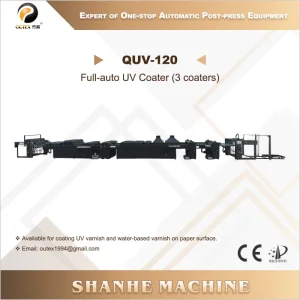
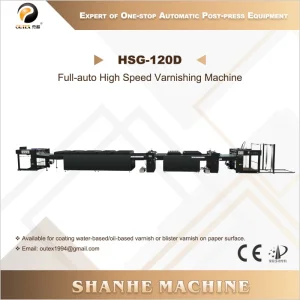
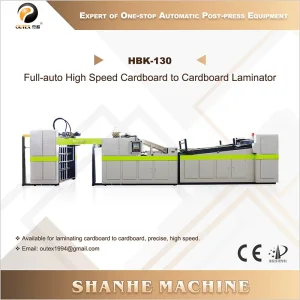
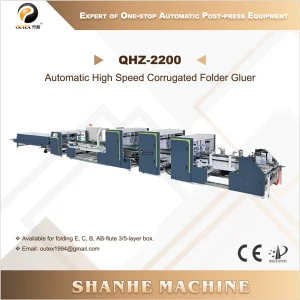
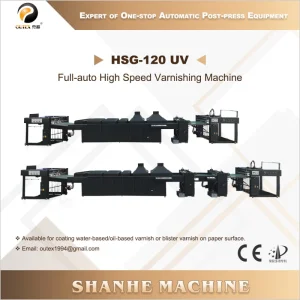
A comprehensive analysis of high-performance surface finishing technologies, mechanical kinematics, photoinitiator chemistry, and economic drivers in modern packaging production lines.
In the contemporary landscape of post-press packaging conversion, surface embellishment and structural sheet protection are no longer merely aesthetic upgrades; they are structural requirements for brand integrity, abrasion barrier performance, and moisture containment. Modern high-speed printing presses operating at speeds upwards of 15,000 sheets per hour demand downstream surface finishing infrastructure that matches their productivity without compromising registration precision, layer consistency, or thermal energy efficiency.
The industrial UV Coating Machine represents the apex of photopolymerization engineering. By leveraging free-radical or cationic curing chemistry triggered by targeted ultraviolet radiation (wavelength spectrums ranging between 250nm and 405nm), these systems instantly convert liquid photo-reactive monomer and oligomer mixtures into solid, highly cross-linked polymer matrices. This instantaneous solid-state transition eliminates the extended drying times and volatile organic compound (VOC) emissions associated with traditional solvent-based varnishes.
The global packaging sector has undergone a paradigm shift driven by stringent environmental compliance frameworks (such as REACH, RoHS, and local VOC emission mandates) and intense market demand for high-end tactile effects (matte contrast, high-gloss flood, textured embossing, and selective spot UV). OEM manufacturers and packaging converters face critical trade-offs when evaluating machine architectures:
| Operational Metric | Traditional Aqueous / Solvent Coater | Standard Mercury-Lamp UV System | Next-Gen Intelligent LED-UV Coater |
|---|---|---|---|
| Curing Mechanism | Thermal evaporation / hot air infrared | High-pressure mercury vapor arc radiation | Solid-state UV-LED semiconductor array |
| Drying / Curing Time | Slow (Requires extended drying tunnels) | Instantaneous (< 0.1 seconds cross-linking) | Instantaneous (Cold curing photopolymerization) |
| VOC Emissions | Moderate to High (Solvent recovery required) | Zero VOC (Requires ozone extraction) | Zero VOC / Zero Ozone production |
| Substrate Heat Transfer | High thermal stress (Substrate deformation risk) | Moderate-High (Requires infrared filters/cold mirrors) | Minimal (< 5°C substrate temperature rise) |
| Energy Consumption | High thermal kw/h demand | Baseline standard energy consumption | 35% - 50% Reduction in Electrical Power |
| Layer Thickness Linearity | 2.0 - 4.0 g/m² wet coat weight | 2.5 - 6.0 g/m² adjustable weight | 1.5 - 8.0 g/m² High-Precision Control |
Deconstructing the structural sub-systems that dictate registration stability, coating uniformities, thermal dissipation, and sheet transport dynamics.
Utilizes non-stop continuous top-suction feeding mechanisms backed by dual-sheet ultrasonic detection and high-resolution optical fiber registration sensors. Guarantees smooth, scratch-free sheet separation for paperboard ranging from 100 g/m² up to 600 g/m² thick board and corrugated flutes.
Employs flexographic ceramic anilox rollers paired with chambered doctor blade systems or three-roll reverse metering configurations. Dynamic hydraulic pressure control ensures micron-accurate coat weight distribution across the entire web length, preventing orange-peel artifacts and pinholes.
Integrates variable-power electronic ballasts with medium-pressure mercury vapor lamps, metal-halide lamps, or solid-state UV-LED modules. Equipped with dichroic cold reflectors that reflect UV energy toward the substrate while absorbing heat-generating infrared rays to protect delicate films and thin papers.
Engineered with water-chilled impression cylinders and continuous vacuum suction belts to prevent sheet flutter and mechanical curl. Pneumatic air-knife cooling assemblies maintain substrate ambient temperatures under critical thermal glass transition limits.
Centralized human-machine interface (HMI) built upon bus-based servo control systems (such as Siemens, Schneider, or Mitsubishi PLC engines). Real-time telemetry provides automated diagnostic warnings, recipe management, and line-speed synchronization.
Features non-stop delivery stackers with automatic sheet-leveling grippers, side-jogging alignment plates, and integrated anti-static ionizer bars. Eliminates stack blocking, offset transfer, and edge smudging during high-speed continuous runs.
Aligning engineering specifications with OEM purchasing criteria, Total Cost of Ownership (TCO) calculations, and macro packaging application scenarios.
When enterprise-level procurement officers, print house technical directors, and plant operational leaders evaluate a UV Coating Machine Factory, their search intent transitions from basic product awareness to rigorous technical due diligence. A structural purchasing evaluation spans several operational parameters:
Industrial folding carton operations require machines capable of seamlessly shifting between thin paper stock (such as 120 g/m² luxury labels) and heavy corrugated board substrates (E, F, B flute, or solid bleached sulfate board up to 1.5mm thickness). High-performance coaters utilize adjustable impression cylinder gaps, pneumatic gripper bar tensioning, and dual-purpose feeder heads to handle diverse stocks without manual re-tooling delays.
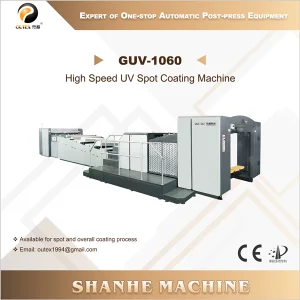
While flood coating provides complete surface protection and uniform gloss levels (exceeding 95 GU measured at a 60-degree angle), spot UV coating demands exact registration capabilities. Machines such as the GUV-1060 High Speed UV Spot Coating Machine utilize photopolymer plates mounted on sleeve cylinders combined with precision side-lay registers to apply varnish exclusively onto targeted graphics, logos, or tactile text zones with tolerances under ±0.05 mm.
Procurement teams must calculate the long-term ROI beyond initial machinery capital expenditure (CAPEX). Operational expenditure (OPEX) factors include:
Ensuring global export readiness through rigorous mechanical integrity, electrical safety certifications, and localized field engineering support.
Operating industrial machinery in international markets across Europe, North America, Southeast Asia, and South America requires strict adherence to regional safety norms, electrical compatibility codes, and environmental regulations. Guangdong Shanhe Industrial Co., Ltd. builds every post-press machine in accordance with international industrial benchmarks:
Full compliance with European Machinery Directive 2006/42/EC and Low Voltage Directive 2014/35/EU. Integrated safety interlocks, light curtains, emergency stop circuits, and shielded UV radiation zones ensure zero operator hazard exposure.
Every sub-component—from CNC-machined frame side-plates to precision ground steel rollers—undergoes rigorous coordinate measuring machine (CMM) inspections and dynamic balancing tests prior to factory assembly.
Built-in IoT gateways allow SHANHE engineers to execute remote PLC updates, real-time diagnostic troubleshooting, and operational optimization parameter tuning, minimizing plant downtime globally.
Anticipating technological convergence in intelligent post-press automation, eco-friendly photo-curing chemistry, and smart factory integrations.
The future of industrial surface coating is defined by the intersection of artificial intelligence, high-density LED semiconductor development, and sustainable chemistry formulation. Key technology vectors driving the next decade of machinery R&D include:
Variations in ambient factory temperature and humidity alter varnish viscosity during extended production shifts. Next-generation coaters incorporate inline viscometers and micro-adjustment pumps that communicate continuously with the PLC. If varnish viscosity drifts beyond defined centipoise (cP) parameters, the system automatically adjusts temperature control units or coat-roller speed ratios to preserve coat-weight consistency.
Integrating high-resolution 8K line-scan camera arrays directly inside the delivery module allows real-time automated inspection for coating flaws, pinholes, register misalignments, or gloss degradation. Defective sheets are automatically flagged or diverted into a secondary waste stacker at full line speed without stopping production.
As sustainability requirements tighten, machine designs are being optimized to handle low-viscosity, water-dispersible UV varnishes and bio-derived oligomers harvested from renewable plant resins. These formulations require modified UV spectral peaks (specifically 385nm and 395nm LED wavelengths) to achieve complete through-curing without yellowing or unpleasant odor retention.
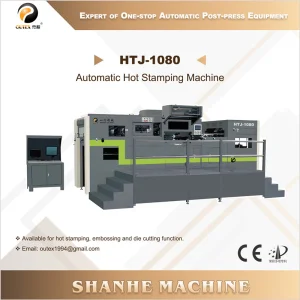
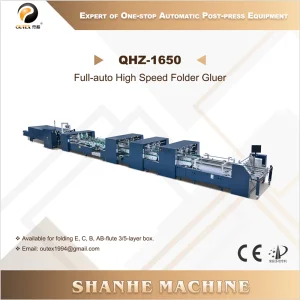
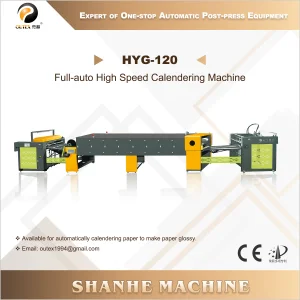
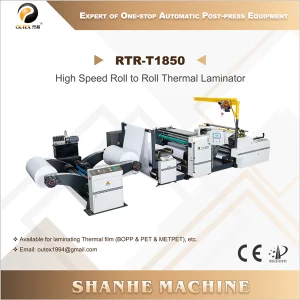
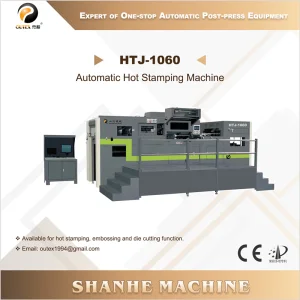
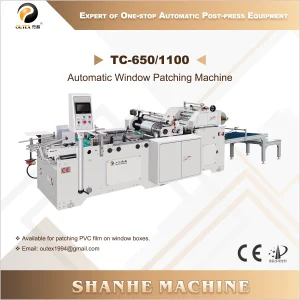
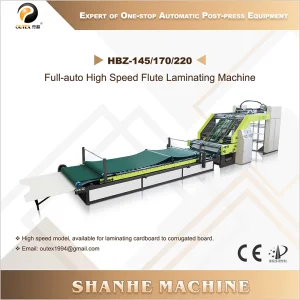
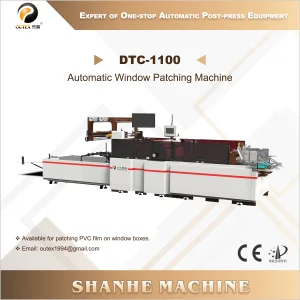
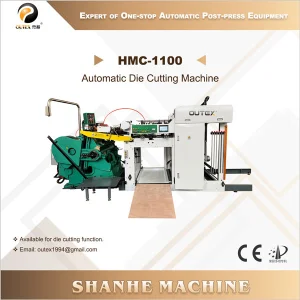
Complete line solutions including calendering systems, laminators, die-cutters, hot-stamping units, and window patchers designed for end-to-end plant efficiency.
Expert answers regarding UV coating machinery selection, maintenance, troubleshooting, and global factory integration.