Top Automatic Flute Laminating Machine Manufacturers

Time:2026-10-09 Author:Ethan
0%

The global corrugated packaging market is entering a more demanding phase. Smithers’ The Future of Global Corrugated Packaging to 2028 estimates market value could reach approximately US$267.8 billion by 2028. This growth increases pressure on converters to improve speed, bonding accuracy, and waste control.

An Automatic Flute Laminating Machine supports these goals by joining printed sheets with corrugated boards at consistent pressure and speed. Modern systems may include servo-driven feeding, automatic alignment, glue monitoring, and rapid format adjustment. These features matter on the factory floor. A misaligned sheet can create visible edges, weak bonding, and expensive rework.

FEFCO Director General Elie Jouen has emphasized that packaging efficiency must develop alongside quality and sustainability. His practical message is simple: “Efficiency matters only when quality remains consistent.” That principle explains why buyers should evaluate more than machine speed. Energy consumption, adhesive stability, operator safety, spare-parts access, and after-sales training deserve equal attention.

Reports from Smithers and PMMI also indicate that automation is becoming central to packaging productivity. However, published market figures vary by region, machine category, and reporting method. That limitation deserves attention. A fast machine is not automatically the best investment.

This guide examines top Automatic Flute Laminating Machine manufacturers through engineering capability, production experience, service reliability, and real operating value. Some suppliers advertise impressive output figures. Actual performance may depend on board quality, adhesive selection, operator skill, and maintenance discipline. The details matter.
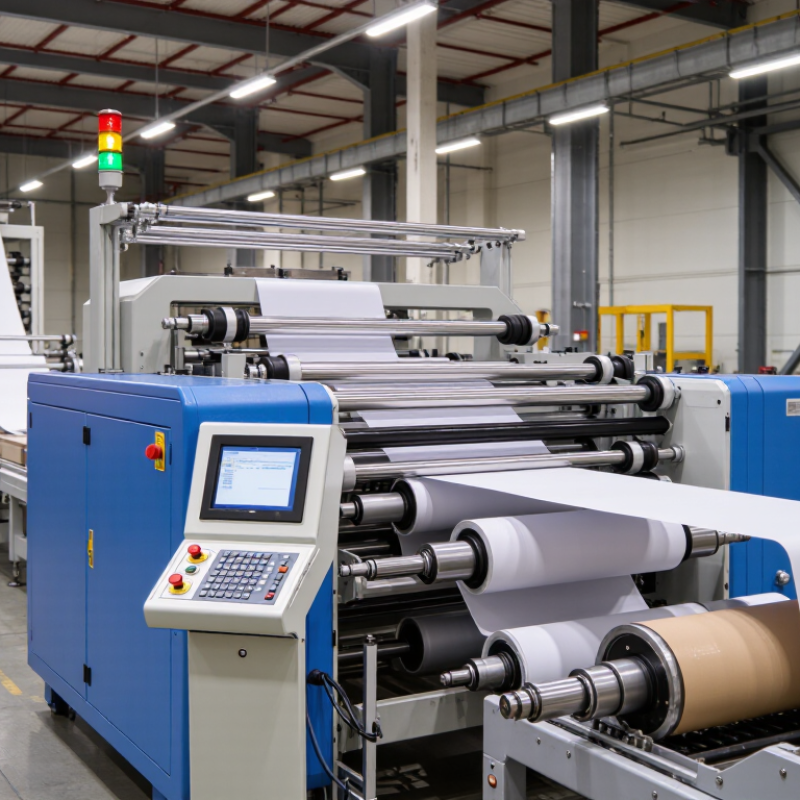
Top Automatic Flute Laminating Machine Manufacturers

Automatic Flute Laminating Machines: Definition, Structure, and Main Applications

An automatic flute laminating machine bonds printed sheets to corrugated flute boards with limited manual handling. It joins two layers accurately. The system feeds sheets, applies adhesive, aligns surfaces, presses materials, and delivers finished boards. Unlike basic laminators, it manages continuous production through sensors, rollers, and programmable controls. Operators still monitor paper quality, adhesive viscosity, and feeding accuracy. Automation reduces repetitive work, but it does not remove practical judgment.

The main structure includes a sheet feeder, flute-board feeder, glue unit, alignment section, pressing rollers, and delivery conveyor. Servo-driven components control speed and positioning during operation. Sensors detect paper overlap, feeding errors, and material shortages. Rubber rollers apply steady pressure without crushing the flute profile. A touchscreen interface stores production settings for different sheet sizes. Small adjustments matter. Excessive pressure may flatten the flute and weaken packaging performance.

These machines serve packaging plants, printing companies, and display manufacturers. Common products include shipping cartons, retail boxes, shelf displays, and laminated promotional boards. In daily use, operators select the correct flute type, test adhesive coverage, and inspect sample sheets under normal lighting. Some substrates absorb glue faster than expected, creating weak corners or surface marks. This limitation deserves attention. Machine capacity also depends on board thickness, sheet stiffness, and workshop temperature. A reliable purchasing decision should examine changeover time, maintenance access, safety controls, and after-sales technical support rather than speed alone.

Key Criteria for Evaluating Flute Laminating Machine Manufacturers

Top Automatic Flute Laminating Machine Manufacturers
Key Criteria for Evaluating Flute Laminating Machine Manufacturers

Corrugated demand makes supplier evaluation more important than brochure comparison. FEFCO’s 2023 European Database reported over 48 billion square metres of corrugated board production. This scale rewards stable machines, not impressive peak speed alone. Ask manufacturers for documented output under real conditions. Check registration accuracy, glue coverage, pressure consistency, and waste rates.

A serious evaluation should include a factory trial with your actual materials. Test E-flute and B-flute board, coated sheets, and uneven surfaces. Record setup time, hourly output, rejected sheets, and cleaning time. A claimed speed of 10,000 sheets per hour means little if operators frequently stop the line. Smithers’ corrugated packaging research forecasts the global market will exceed 200 billion dollars within this decade. That growth increases pressure on throughput and reliability.

Look closely at engineering support. Ask about spare-part availability, remote diagnostics, operator training, and preventive maintenance schedules. Energy monitoring also matters; request consumption data per 1,000 laminated sheets. Safety guarding and electrical documentation should match the destination market’s requirements. Total cost matters more than purchase price. One weakness remains easy to overlook: sample tests may not represent humid production floors. Insist on longer trials. Paper behaves differently in July.

Leading Automatic Flute Laminating Machine Manufacturers by Product Strengths

Top Automatic Flute Laminating Machine Manufacturers

Leading Automatic Flute Laminating Machine Manufacturers by Product Strengths

Automatic flute laminating machines are judged by measurable product strengths, not attractive brochures. Speed matters, but sheet accuracy matters more. FEFCO’s 2023 statistics report recorded about 48.5 billion square metres of European corrugated production. This volume increases pressure on converters to reduce waste and maintain stable output. Strong machines therefore combine servo positioning, automatic feeding, pressure control, and reliable glue application. Operators should also check flute compatibility, maximum sheet size, and real changeover time.

Smithers’ report, The Future of Global Corrugated Packaging to 2029, identifies continued growth in corrugated packaging demand. This supports investment in flexible automation and shorter production cycles. However, faster is not always better. Excessive speed can expose warped sheets, uneven glue lines, or weak bonding. A practical manufacturer should provide test samples, documented tolerance data, and accessible technical support. Energy monitoring is another useful strength. It reveals whether a high-output machine remains efficient during slower orders.

Tips: Ask for a live demonstration using your own board grades. Measure waste, setup time, glue usage, and finished bond strength. Do not trust one impressive speed figure. Review maintenance access, sensor quality, operator training, and spare-parts availability. A small weakness in feeding can become a costly daily problem. Industry reports offer direction, but your floor conditions may tell a different story.

Technology, Performance, and Service Comparison Among Top Manufacturers

Automatic flute laminating machine manufacturers differ most in integration, not brochure speed. Modern systems combine servo-driven feeding, vacuum transfer, automatic alignment, and PLC controls. These features reduce manual adjustment when flute profiles or sheet sizes change. Yet automation is useful only when sensors remain stable in dusty production rooms. A machine reaching 10,000 sheets per hour may underperform if glue control drifts. Real output matters more.

Performance comparisons should examine bonding strength, registration accuracy, waste rate, and recovery after stoppages. Ask for test runs using your own liner, flute board, adhesive, and target dimensions. Inspect the first and last sheets, not only the fastest batch. Energy consumption and changeover time also affect operating cost. Some manufacturers provide impressive demonstrations, but demonstrations can hide setup time. That deserves scrutiny. Operators should record pressure settings, glue temperature, speed, and rejected sheets during acceptance trials.

Service separates capable suppliers from merely competent builders. Look for documented commissioning, remote diagnostics, spare-parts availability, and technician response procedures. Training should cover cleaning, sensor calibration, roller inspection, and safe fault recovery. Clear manuals help, although many manuals remain too generic. A strong supplier shares maintenance intervals and realistic performance limits. Buyers should confirm warranty coverage, software support, and local service capacity. The fastest machine may not be the most practical. Consistent operation requires measurable procedures, responsive support, and honest performance records.

Top Automatic Flute Laminating Machine Manufacturers: Technology, Performance, and Service Benchmarks

The chart summarizes commonly published specification ranges for modern automatic flute laminating machines. Higher speed, wider sheet capacity, and broader board compatibility indicate stronger production performance, while shorter setup time and faster technical response represent better operational service.

How to Select the Right Flute Laminating Machine Manufacturer for Your Needs

Choosing the right flute laminating machine manufacturer requires more than comparing hourly speed. Grand View Research estimates the global corrugated packaging market at approximately USD 191.5 billion in 2023, with steady growth expected through 2030. That growth increases pressure on converters to reduce waste, stabilize quality, and shorten changeover time. A suitable manufacturer should provide test runs using your actual liner, flute profile, adhesive, and sheet dimensions. Ask for measured results, not catalog claims.

Look closely at registration accuracy, glue control, drying performance, and feeder stability. FEFCO industry statistics report that European corrugated plants produced over 42 billion square metres in 2023. Small alignment errors can therefore become expensive across large production volumes. Request data for startup waste, operating speed, energy use, and downtime. Also inspect the machine directly. Watch a full production cycle.

Service matters more than polished sales material. Confirm spare-parts availability, remote diagnostics, operator training, and local response times. A manufacturer with documented commissioning procedures usually presents lower operational risk. ISO 9001 certification can support process reliability, but it cannot replace practical verification. I have seen buyers focus too heavily on maximum speed. That can be a mistake. A slower machine with stable feeding may deliver more saleable sheets per shift. Review maintenance records, reference installations, and warranty exclusions carefully. The cheapest quotation may become the costliest choice. Recheck every assumption.

Top Automatic Flute Laminating Machine Manufacturers - How to Select the Right Flute Laminating Machine Manufacturer for Your Needs
Evaluation Dimension What to Compare Typical Industry Range or Requirement Recommended Selection Benchmark How to Verify Before Purchase
Machine Type Automatic flute laminator, semi-automatic laminator, or inline laminating system Automatic systems are designed for continuous feeding, alignment, gluing, pressing, and delivery. Review the complete process layout, automation sequence, and video of a full production cycle.
Applicable Board Structure Compatibility with single-wall corrugated board, double-wall corrugated board, folding carton, and printed sheets Common applications include E-flute, B-flute, C-flute, and mixed flute board structures, depending on machine design. Send actual board and printed-sheet samples for a documented lamination trial.
Maximum Sheet Size Maximum length and width of the corrugated sheet and facing sheet Commercial equipment is available in different format classes; maximum sizes commonly range from approximately 1,200 × 1,000 mm to over 2,500 × 1,300 mm. Compare the technical data sheet with current and forecasted order sizes.
Minimum Sheet Size Smallest supported sheet dimensions and minimum overlap allowance Minimum format depends on feeder design, sheet stiffness, alignment method, and gripper or belt configuration. Request a sample test using the smallest sheet, narrowest strips, and most demanding artwork.
Production Speed Rated sheets per hour and practical output under normal operating conditions Automatic flute laminators commonly advertise approximately 3,000 to 12,000 sheets per hour, depending on format and material. Ask for a factory acceptance test report showing speed, waste rate, and continuous running time.
Registration Accuracy Alignment between the printed facing sheet and the corrugated board Typical claimed alignment accuracy is often within approximately ±1.0 to ±2.0 mm, depending on materials and machine settings. Measure several consecutive sheets from a representative production trial.
Feeding System Sheet feeding method, automatic pile change, vacuum assistance, and anti-double-sheet control Features may include servo-controlled feeding, vacuum belts, side-lay alignment, and sensors for double-sheet detection. Test coated paper, recycled board, low-grammage liner, and sheets with realistic humidity conditions.
Adhesive System Water-based cold glue, starch adhesive, hot-melt adhesive, glue viscosity range, and cleaning method Water-based adhesives are widely used for paperboard lamination; adhesive requirements vary with paper coating and production speed. Confirm supported adhesive specifications, viscosity limits, pump type, filtration, and cleaning procedures.
Drying and Pressing Pressing length, belt pressure, curing time, and delivery stacking arrangement Longer pressing sections generally improve bonding stability, especially for heavier board and coated surfaces. Inspect bond strength after delivery and after a defined conditioning period.
Board Thickness Range Supported combined thickness, flute height, liner grammage, and substrate stiffness Actual working ranges vary by equipment design and may cover lightweight cartons through heavy-duty corrugated packaging. Run trials at minimum, average, and maximum combined thickness.
Changeover Time Time required to change sheet format, glue settings, feeder position, and pressure settings Manual changeovers may take 20–60 minutes; automated positioning can reduce setup time, depending on format changes. Observe a complete changeover between two different production formats.
Control and Automation PLC control, touchscreen interface, servo drives, alarm history, recipe management, and remote diagnostics Modern systems commonly use touchscreen controls and electronically synchronized feeding and conveying sections. Review the control cabinet, operating screens, backup procedure, and cybersecurity arrangements for remote access.
Energy and Utility Requirements Installed electrical power, compressed-air consumption, vacuum demand, and adhesive heating requirements Utility consumption depends on machine size, drive configuration, vacuum equipment, and adhesive technology. Request rated electrical load, air pressure and flow requirements, and estimated consumption per production hour.
Quality Control Capability Detection of missing sheets, skewed sheets, glue defects, double sheets, and delivery accumulation Sensor packages vary from basic sheet detection to camera-based inspection and automatic rejection. Test detection using deliberate faults such as skew, double feeding, incomplete glue coverage, and missing sheets.
Safety Compliance Guarding, emergency stops, interlocks, electrical protection, noise control, and operator access Industrial machinery should be supplied with documented risk assessment and safety devices appropriate to the installation location. Inspect safety circuits, guards, emergency-stop locations, manuals, and conformity declarations.
After-Sales Support Installation, commissioning, operator training, spare parts, troubleshooting, and response time Support quality depends on regional service coverage, technician availability, and spare-parts logistics. Request service contact details, warranty terms, reference installations, and recommended critical spares.
Total Cost of Ownership Purchase price, installation, tooling, adhesive consumption, energy, labor, maintenance, and downtime Initial price alone does not represent the lifetime cost of an automatic laminating system. Obtain a formal quotation with exclusions, consumables, warranty coverage, delivery terms, and upgrade costs.
Best-Fit Manufacturer Profile Technical capability, application experience, customization ability, and support infrastructure Suitable suppliers should demonstrate successful production with comparable board types, formats, speeds, and adhesive systems. Use sample trials, customer references, factory inspection, and a signed acceptance specification before placing the order.

FAQS

What is an automatic flute laminating machine?

It bonds printed sheets to corrugated flute boards. The machine feeds, glues, aligns, presses, and delivers finished boards.

Which parts form the main structure?

Key sections include sheet feeders, board feeders, glue units, alignment systems, pressing rollers, sensors, and delivery conveyors. Each section affects final accuracy.

What products can these machines produce?

Common products include shipping cartons, retail boxes, shelf displays, and laminated promotional boards. A small alignment error can spoil a visible panel.

Does automation eliminate operator involvement?

No. Operators still monitor paper quality, adhesive viscosity, feeding accuracy, and sample sheets. Automation reduces repetitive work, not practical judgment.

Why is flute pressure control important?

Excessive roller pressure may flatten the flute profile. This can weaken packaging performance and create uneven surfaces.

What materials and conditions affect machine capacity?

Board thickness, sheet stiffness, flute type, glue absorption, and workshop temperature all matter. Warped sheets can reduce stable output.

How should buyers compare machine performance?

Check sheet accuracy, changeover time, glue usage, waste, maintenance access, and safety controls. Speed alone can mislead.

What should a practical machine test include?

Use your own board grades during a live demonstration. Measure setup time, finished bond strength, waste, and glue coverage under normal lighting.

What common bonding problems should operators watch for?

Some substrates absorb glue too quickly, causing weak corners or surface marks. The first sample may look acceptable, but hidden weakness can remain.

Is faster production always better?

Not always. Higher speed may expose feeding errors, uneven glue lines, or weak bonding. A slower, stable run may waste less material.

Conclusion

This guide explains the role of an Automatic Flute Laminating Machine in modern packaging production, including its basic definition, structural components, operating process, and main applications. It highlights how these machines combine corrugated flute sheets with printed paper or other substrates to improve product appearance, strength, and production efficiency. The article also outlines the key criteria for evaluating manufacturers, such as machine stability, laminating accuracy, speed, material compatibility, energy efficiency, automation level, quality control, and after-sales support.

It further compares leading manufacturers according to product strengths, technical capabilities, performance, customization options, maintenance requirements, and service responsiveness. By understanding these differences, buyers can make more informed decisions based on their production volume, material types, required precision, available workspace, budget, and long-term development plans. The goal is to help users select a reliable manufacturer and a suitable solution that delivers consistent quality, efficient operation, and sustainable value for their packaging business.


Ethan

Ethan

Ethan is a seasoned marketing professional with a deep expertise in our company's innovative product line. With a passion for sharing knowledge and insights, he takes the lead in regularly updating our corporate blog, where he explores industry trends, product features, and effective marketing......