China’s corrugated packaging sector has become a major manufacturing base for converting equipment. However, identifying the best Corrugated Laminator manufacturers requires more than comparing prices or catalog photographs. Buyers should examine bonding consistency, flute compatibility, maximum sheet size, production speed, glue control, and after-sales support.
Packaging machinery consultant Michael R. Hayes offers a useful reminder: “A laminator is judged by stable output, not its fastest demonstration.” This principle matters on a busy factory floor. A reliable machine should maintain even pressure across the sheet, prevent edge lifting, and control adhesive use during long production runs. Operators also need accessible rollers, clear settings, and practical maintenance instructions.
The manufacturers discussed in this guide are assessed through equipment capability, engineering experience, customer feedback, export performance, and service responsiveness. Factory audits, sample testing, and reference checks remain valuable. A polished website proves little.
Important details can be easy to miss. A machine may advertise high speed, yet perform poorly with warped boards or delicate printed sheets. Another model may cost more but reduce waste through accurate alignment and stable feeding. That difference becomes visible beside a pallet of rejected cartons.
This overview also recognizes uncertainty. Supplier rankings can change with technology upgrades, local service quality, and customer requirements. The right Corrugated Laminator depends on product specifications, labor conditions, factory space, and expected production volume. Buyers should verify every claim before signing a contract. Real performance matters most.
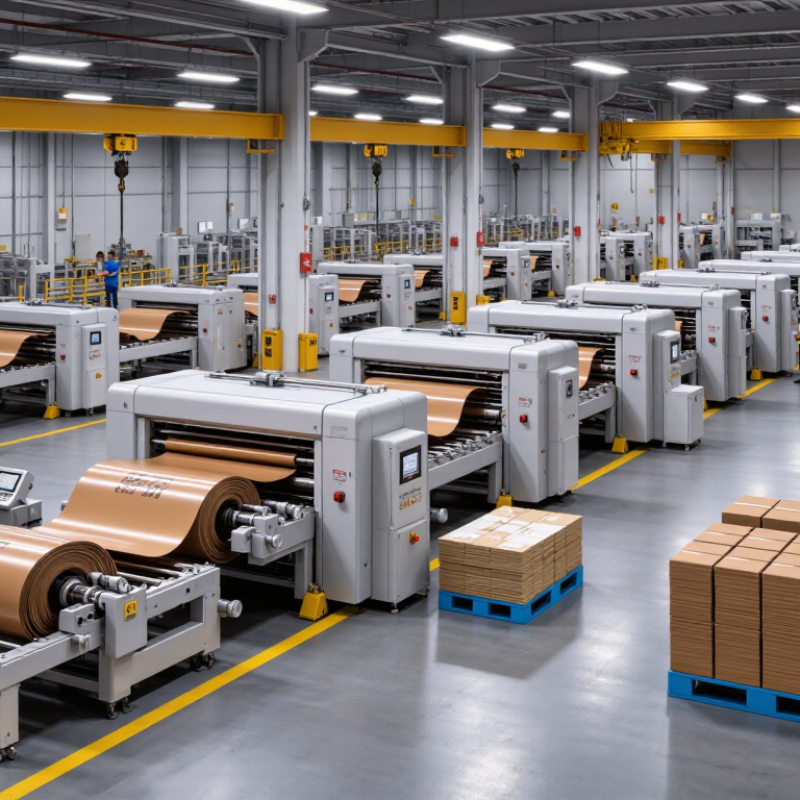
A corrugated laminator bonds a printed sheet to corrugated board. It combines adhesive control, accurate feeding, and steady pressure. The machine first guides the flute board through alignment rollers. A coating unit applies adhesive to the exposed surface. The printed liner then meets the board under controlled pressure. Pressure rollers remove air pockets and support a flat bond. Heat or airflow helps the adhesive set before stacking. The exact process varies with board thickness, paper weight, and production speed.
In practical operation, alignment matters more than many buyers expect. A small feeding error can create exposed edges, wrinkles, or uneven registration. Experienced operators check glue coverage, roller pressure, and sheet moisture during production. They also inspect the first finished sheets instead of trusting the display panel. That habit prevents larger waste. Some machines perform well at high speed but struggle with delicate printed liners. This is where specifications can feel less convincing than real testing.
Tips: Ask manufacturers for sample trials using your actual paper and board. Check edge bonding, surface flatness, and stacking quality. Keep adhesive viscosity stable, and clean rollers regularly. Record pressure settings for each board grade. Do not chase maximum speed too quickly. A slower, stable line may produce better margins. I would also leave room for adjustment, because workshop conditions are rarely perfect.
| Data Dimension | Verified Technical Information | Practical Importance When Evaluating a Laminator |
|---|---|---|
| What a Corrugated Laminator Is | A corrugated laminator is a converting machine that bonds a printed paper sheet, coated sheet, or other facing material to corrugated board using adhesive and controlled pressure. | It improves graphics, surface appearance, stiffness, and packaging presentation while retaining the cushioning structure of corrugated board. |
| Basic Working Principle | The machine feeds two substrates, applies adhesive to one surface, accurately aligns the sheets, presses them together, and transfers the laminated board to a delivery section for setting or curing. | Stable feeding, alignment, pressure, and adhesive control determine bonding quality and reduce waste. |
| Main Material Layers | Corrugated board normally consists of one or more flat liner sheets bonded to a fluted medium. The top facing may be printed paper, coated paper, kraft paper, or a pre-printed sheet. | The material combination affects board stiffness, print quality, adhesive consumption, and the machine's allowable operating range. |
| Common Flute Profiles | Typical flute heights are approximately: A flute 4.5–5.0 mm, C flute 3.5–4.0 mm, B flute 2.5–3.0 mm, E flute 1.0–1.8 mm, and F flute about 0.6–0.8 mm. Actual dimensions vary by paper grades and corrugator standards. | The flute profile influences compression strength, board thickness, feeding stability, and the pressure setting required during lamination. |
| Compatible Board Structures | Machines may process single-wall boards such as BC, BE, and double-wall combinations, provided the board thickness and rigidity are within the equipment specification. | A wider board compatibility range supports more carton, display, retail packaging, and protective packaging applications. |
| Adhesive Commonly Used | Water-based starch adhesive is widely used for paper-to-corrugated-board lamination. Some applications use other water-based or specialty adhesive systems according to substrate and production requirements. | Adhesive viscosity, solids content, temperature, and application quantity directly affect bond strength, drying time, warping, and surface cleanliness. |
| Typical Adhesive Application Methods | Common systems include roller coating, glue-wheel application, and metered adhesive rollers. The application system should provide an even coating without excessive adhesive transfer. | Uniform adhesive distribution helps prevent bubbles, dry spots, edge lifting, sheet curling, and unnecessary material consumption. |
| Feeding Systems | Corrugated laminators generally use either sheet feeding or a combination of sheet and board feeding. Automatic systems may include vacuum belts, suction heads, pile lifting, and continuous feeding mechanisms. | The feeder affects production continuity, sheet separation, registration accuracy, and performance with lightweight or warped materials. |
| Registration Accuracy | Registration performance depends on feeder design, side-lay control, substrate quality, machine adjustment, and operating speed. Specifications should be checked under defined material and speed conditions. | Accurate registration is essential for cartons and displays where printed graphics must align closely with board edges or die-cut features. |
| Production Speed | Commercial sheet laminators commonly operate across a broad range from several thousand sheets per hour to more than ten thousand sheets per hour, depending on format, board type, feeding mode, and automation level. | Rated maximum speed is not the same as sustainable production speed; actual output should account for setup, cleaning, stoppages, and material changes. |
| Sheet and Board Size | Available formats vary by machine design. Typical equipment ranges from compact formats for small packaging to large-format systems for retail displays and oversized cartons. | The maximum and minimum sheet sizes should match the intended product range, while allowance must also be made for gripper margins and registration requirements. |
| Pressure and Nip Section | After alignment, the substrates pass through a controlled pressure zone or nip. Pressure must be sufficient for bonding but low enough to avoid crushing flutes, marking the print, or deforming the board. | Correct pressure settings protect board strength and surface appearance, especially when processing E- and F-flute materials. |
| Drying and Setting | Water-based adhesive sets as moisture is absorbed into the paper and released through the board structure. Setting time depends on adhesive formulation, coat weight, paper absorbency, temperature, and humidity. | Adequate setting prevents delamination, blocking, sliding, and deformation during stacking, die cutting, folding, or shipment. |
| Surface Finish Options | Laminated sheets may receive additional finishing such as aqueous coating, film lamination, varnishing, embossing, or die cutting, subject to substrate compatibility and production-line configuration. | Finishing options help achieve required gloss, scuff resistance, moisture resistance, tactile effects, and retail presentation quality. |
| Quality Control Indicators | Important checks include bond strength, sheet alignment, edge adhesion, bubble-free surface, board flatness, flute preservation, adhesive coverage, print cleanliness, and finished dimensions. | A defined inspection routine makes it easier to identify feeder, adhesive, pressure, or substrate problems before large quantities are produced. |
| Common Production Problems | Typical defects include delamination, bubbles, wrinkles, skewed sheets, edge lifting, board crushing, warping, adhesive splashes, and inaccurate registration. | Most defects can be reduced through correct substrate conditioning, adhesive control, feeder adjustment, pressure calibration, and regular cleaning. |
| Recommended Environmental Conditions | Paper and corrugated board are hygroscopic materials. Stable temperature and relative humidity help reduce dimensional changes, curling, static, and feeding instability. | Consistent storage and production conditions improve registration, bonding, flatness, and repeatability between production batches. |
| Key Selection Criteria for a Manufacturer | Compare format range, compatible flute profiles, feeding technology, adhesive system, registration capability, operating speed, automation, spare-parts support, safety functions, installation, and operator training. | A suitable supplier should be evaluated against the complete production process rather than maximum speed or purchase price alone. |
| Typical Applications | Corrugated lamination is used for printed cartons, point-of-sale displays, shelf-ready packaging, gift packaging, consumer-product packaging, promotional boards, and high-quality shipping containers. | The application determines the required combination of graphic quality, structural strength, board thickness, surface protection, and finishing capability. |
It bonds a printed sheet to corrugated board. The machine applies adhesive, aligns both layers, and presses them together. Airflow or heat helps the bond set.
Feed rollers guide the corrugated board into position. A coating unit spreads adhesive across the exposed surface. Pressure rollers join the printed liner and board, reducing air pockets.
Small feeding errors can expose edges, create wrinkles, or shift printed images. Operators should inspect the first finished sheets. The display panel may not show every problem.
Servo-driven rollers synchronize feeding, gluing, and pressing. PLC controls can store settings for different carton orders. Camera inspection may detect missing adhesive, skewed sheets, or damaged edges.
No. High speed can increase waste when paper is humid or lightweight. A slower, stable line may produce flatter sheets and better margins. Speed claims need real testing.
Test the actual board, printed liner, and adhesive together. Check edge bonding, surface flatness, and stacking quality. Keep viscosity stable and clean glue rollers regularly.
Request sample trials with actual paper and board grades. Check registration after continuous running, not only during startup. Ask about access to rollers, sensors, and glue stations.
Clean rollers regularly and record pressure settings for each board grade. Monitor sheet moisture during production. Inspect fault history when repeated defects appear. Maintenance still depends on trained operators.
Not completely. Automation can reduce variation, but it cannot correct every workshop condition. Humidity, recycled board, and delicate liners may still cause trouble. My view may be too optimistic without long-run data.
A Corrugated Laminator is an industrial machine designed to bond printed sheets, films, or other materials to corrugated board, improving its appearance, strength, and functional performance. The process typically involves accurate feeding, adhesive application, sheet alignment, pressing, drying, and quality inspection. China’s leading manufacturers can be identified through their engineering experience, production standards, equipment reliability, technical support, and ability to provide complete solutions for different packaging requirements.
When comparing manufacturers, buyers should evaluate laminating speed, material compatibility, automation level, bonding accuracy, energy efficiency, maintenance requirements, and overall production capacity. Customization is also important, especially for businesses handling different board sizes, paper types, or specialized packaging designs. The right Corrugated Laminator manufacturer should offer stable machine performance, clear specifications, responsive after-sales service, operator training, and dependable spare-parts support. A careful assessment of quality, cost, delivery capability, and long-term cooperation potential can help buyers select a suitable manufacturing partner in China.

给我发一封邮件,我会尽快回复你。
发送邮件