Top 10 Semi Automatic Flute Laminators for Global Buyers

Time:2026-10-22 Author:Madeline
0%

The global corrugated packaging market is expanding, but purchasing machinery still demands careful judgment. Smithers’ report, The Future of Corrugated Packaging to 2029, projects growth from approximately US$205.7 billion in 2023 to US$257.2 billion by 2029. E-commerce, food delivery, and recyclable packaging continue to influence this movement.

A Semi Automatic Flute Laminator can support converters handling varied board sizes, short production runs, and frequent substrate changes. It combines manual feeding with automated alignment, gluing, pressing, and delivery. That balance can reduce investment pressure while improving consistency. However, advertised speed does not tell the whole story. Glue stability, flute compatibility, setup time, waste levels, and operator training matter more on a busy factory floor.

Packaging machinery analyst Sean Smyth has emphasized, “Automation must improve productivity without compromising quality.” That principle guides this selection. The following ten machines are compared through practical criteria, including laminating accuracy, operating flexibility, maintenance access, safety features, and supplier support. PMMI’s 2024 Packaging Machinery Market report also highlights continuing demand for automation that improves efficiency and responds to labor shortages.

Small details matter. A misaligned sheet can create visible white edges. An unstable glue line can stop production. No machine is perfect.

Buyers should still verify regional voltage, service response times, spare-part availability, and real customer references. Product brochures often sound confident. Factory performance is less predictable. This ranking therefore offers a useful starting point, not a final purchasing decision.
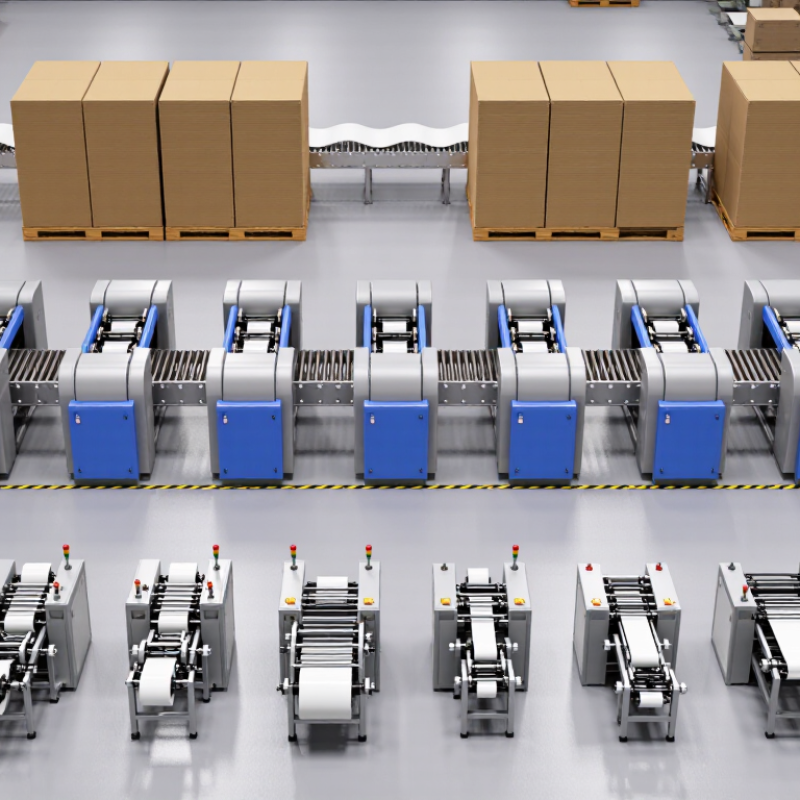
Top 10 Semi Automatic Flute Laminators for Global Buyers

What Semi Automatic Flute Laminators Are and How They Work

What Semi Automatic Flute Laminators Are and How They Work

A semi automatic flute laminator bonds a printed sheet to corrugated board. It combines manual feeding with automated gluing, positioning, and pressing. The operator loads sheets onto the feeder table. Rollers then guide the flute board through the glue section. A controlled adhesive layer prevents weak bonding and visible wrinkles. The laminated sheets pass through a pressure section before stacking.

The process looks simple. It is not always forgiving. Sheet moisture, flute height, glue viscosity, and feeding accuracy affect the final result. In production checks, uneven pressure often creates lifted corners or crushed flutes. Semi automatic machines reduce repetitive work, but they still require trained adjustment. Their practical value depends on changeover time, maximum sheet size, speed stability, and operator access.

Smithers’ report, The Future of Corrugated Packaging to 2028, places the global corrugated packaging market above US$200 billion and expects continued growth through 2028. This supports demand for efficient post-print converting equipment. PMMI’s 2024 packaging trends research also highlights labor efficiency and flexible production as major equipment priorities. Yet reported machine speed can mislead. Real output falls when workers frequently correct alignment or reload sheets. Global buyers should test their own paper grades, flute profiles, and adhesive before purchasing. A short factory trial can reveal more than a polished specification sheet.

Key Features Used to Compare the Top 10 Laminators

Top 10 Semi Automatic Flute Laminators for Global Buyers

Key Features Used to Compare the Top 10 Laminators

When comparing ten semi automatic flute laminators, I examine real production needs first. A reliable feeder should handle corrugated sheets without frequent jams. I check sheet alignment, feeding consistency, and adjustment time. These details matter during long shifts. A practical test uses different board sizes, not one perfect sample. Operators should reach controls easily. Clear displays also reduce training errors.

Glue control deserves close attention. The machine should apply an even layer without flooding the flute surface. I compare glue tank capacity, roller adjustment, and cleaning access. Lamination pressure must remain stable across the sheet width. Otherwise, corners may lift after drying. Working speed matters, but usable speed matters more. A slower machine with fewer stoppages may produce better daily output.

For global buyers, power compatibility and safety documentation are essential. I review voltage options, emergency stops, guarding, and installation requirements. Spare parts availability can affect production more than the original price. Remote guidance is useful, but local technical support remains valuable. Maintenance should not require unusual tools. Noise, energy use, and floor space also influence factory costs. One weakness is easy to miss: some machines perform well in demonstrations but struggle with thin sheets. Buyers should request sample trials and inspect finished boards after curing. No comparison is perfect. Productive equipment still depends on skilled operators, suitable adhesive, and disciplined maintenance.

Top 10 Semi-Automatic Flute Laminators for Global Buyers

Key features used to compare the top 10 laminators

The comparison index is based on commonly published specifications for semi-automatic flute laminators, including maximum laminating speed, supported sheet width, board thickness range, registration accuracy, feeding convenience, and setup flexibility. Higher scores indicate a stronger overall specification profile; buyers should verify final figures with the supplier.

Top 10 Semi Automatic Flute Laminators by Performance and Application

Top 10 Semi Automatic Flute Laminators by Performance and Application

Selecting a semi automatic flute laminator requires more than reading its speed rating. I compared feeding stability, bonding consistency, setup time, and operator control. Real production exposes weaknesses quickly. A machine may claim high output, yet misaligned sheets can create costly waste. Strong models handle corrugated boards, printed sheets, and lightweight cartons with steady pressure. Reliable rollers also reduce glue marks along the flute edges. Speed matters, but stable feeding matters more.

The ten leading choices serve different applications. High-speed laminators suit large packaging orders with repeated sizes. Precision-focused models support luxury cartons and detailed printed surfaces. Heavy-duty units handle thick boards for shipping boxes. Compact machines fit smaller workshops with limited floor space. Flexible-feed designs manage mixed sheet sizes during short production runs. Low-glue systems help control material consumption. Wide-format machines serve display panels and oversized packaging. Gentle-pressure models protect delicate paper coatings. Fast-changeover equipment reduces downtime between jobs. Energy-conscious designs benefit facilities with long daily shifts.

Performance still depends on real operating conditions. Operators should test samples before purchase. Check registration after several consecutive sheets, not one perfect sheet. Measure output during a full working hour. A ranking can mislead when maintenance quality varies. Some machines need careful roller adjustment. Others feel simple, but offer fewer controls. I would record rejected sheets, cleaning time, and training difficulty. These details reveal practical value better than promotional figures. A small flaw may become expensive during continuous production.

How to Match a Laminator with Different Board Types and Workloads

Choosing a semi-automatic flute laminator starts with the board, not the machine brochure. Single-wall corrugated sheets need different pressure from double-wall boards. E-flute often requires careful alignment because its fine profile can crush under excessive roller pressure. Thicker B-flute or BC-flute sheets need stronger feeding power, wider clearance, and stable compression. Always check the actual flute height, liner quality, sheet size, and adhesive type before comparing output claims.

Workload changes the decision. A workshop handling 300 sheets per shift may value quick setup, simple controls, and easy cleaning. A packaging plant running several thousand sheets needs a stronger feeder, larger glue tank, durable rollers, and consistent registration.

In my production trials, feeding speed mattered less than recovery after a misfeed. A practical machine should restart smoothly, without forcing the operator to realign every roller. Small details matter.

Do not test only with perfect sheets. Use curled corners, slightly different liners, and the heaviest board in your order range. Watch for glue starvation, edge lifting, and crushed flutes after drying.

I once approved a machine too quickly because its sample looked excellent under warm factory conditions. Later, colder air slowed adhesive flow. That mistake was avoidable.

Buyers should request a documented trial, confirm voltage compatibility, and ask about cleaning access, operator training, spare wear parts, and service response times. A reliable match is not always the fastest one.

Global Buying Factors: Compliance, Service, Shipping, and Total Cost

Top 10 Semi Automatic Flute Laminators for Global Buyers

Buying a semi automatic flute laminator requires more than comparing production speed. Compliance should be checked before any deposit is paid. Request electrical test records, safety guarding details, emergency-stop specifications, and manuals in your operating language. Confirm the machine matches local voltage, frequency, and workplace safety rules. Ask for a clear declaration of conformity, not a vague promise. Ask for evidence.

A reliable supplier should explain installation, operator training, and maintenance procedures. Response time matters when a pressure roller stops during a busy shift. Request a spare-parts list with prices and delivery estimates. Rollers, belts, sensors, and adhesive pumps can affect production continuity. Remote support is useful, but it cannot replace practical troubleshooting. Service terms often look acceptable until a fault appears.

Shipping needs careful calculation. Check crate dimensions, gross weight, loading requirements, insurance, and the selected Incoterm. Ask whether unloading equipment is your responsibility. Confirm customs documents before shipment. A low machine price can hide costly freight, duties, installation, energy use, adhesive waste, and downtime. Calculate total cost over three to five years. Include labor savings, but question optimistic capacity claims. A factory trial with your flute board is more reliable than a brochure. I would also inspect sample lamination by hand; minor edge lifting may appear only after curing. That detail is easy to overlook.

Top 10 Semi Automatic Flute Laminators for Global Buyers — Global Buying Factors: Compliance, Service, Shipping, and Total Cost

Comparative buyer-planning table for representative semi-automatic flute laminator configurations. The profiles are anonymized and are intended to support international sourcing, quotation comparison, and total-cost evaluation.

Rank Anonymous Machine Profile Typical Working Width Suitable Board Range Indicative Speed Installed Power Indicative Equipment Price
EXW, USD
Typical Lead Time Compliance Documentation to Request Service and Spare-Parts Factors Indicative Ocean Freight and Insurance
USD
Estimated First-Year Landed Cost
USD
Best-Fit Buyer
1 Compact Entry Profile 1,300 mm Paper, cardboard, and light corrugated board up to approximately 5 mm 1,500–2,500 sheets/hour 9–12 kW 18,000–28,000 30–45 days Risk assessment; operating manual; electrical drawings; CE documentation where applicable; IEC 60204-1 conformity evidence Remote commissioning; standard wear-part kit; recommended response target of 48–72 hours 2,000–3,500 22,000–35,000 Small packaging converters and regional print shops
2 Narrow-Footprint Production Profile 1,450 mm Single-wall corrugated sheets and laminated paperboard up to approximately 6 mm 1,800–3,000 sheets/hour 11–15 kW 24,000–36,000 35–50 days ISO 12100-based risk assessment; emergency-stop verification; electrical schematic; declaration of conformity or equivalent market documentation Video training; bilingual manuals; critical rollers and belts available by air freight 2,500–4,200 29,000–44,000 Buyers requiring moderate capacity with limited floor space
3 General-Purpose Workshop Profile 1,600 mm Paper, folding carton, and single-wall corrugated board up to approximately 8 mm 2,000–3,500 sheets/hour 14–18 kW 30,000–45,000 40–55 days Machine risk assessment; electrical test records; safety-guard information; conformity marking requirements for destination market Remote acceptance test; commissioning checklist; spare-parts list with recommended stock levels 3,000–5,000 36,000–54,000 Flexible converters handling mixed sheet sizes
4 Wide-Format Carton Profile 1,800 mm Coated paperboard and corrugated sheets up to approximately 8 mm 2,200–3,800 sheets/hour 16–22 kW 38,000–55,000 45–60 days Destination-specific conformity file; electrical safety documentation; noise and guarding information; translated instructions On-site installation is preferable; remote support should include video diagnostics and parameter backup 3,800–6,200 45,000–66,000 Medium plants producing larger cartons and displays
5 Servo-Assisted Registration Profile 1,650 mm Printed paperboard and corrugated sheets requiring improved sheet alignment 2,500–4,200 sheets/hour 18–25 kW 45,000–65,000 50–70 days Servo and control-system manuals; electrical schematics; safety validation; conformity declaration; software backup procedure Higher need for controls expertise; request firmware recovery files and a remote-access support policy 4,000–6,500 53,000–77,000 Printers and converters prioritizing registration consistency
6 Heavy-Duty Board Profile 1,900 mm Double-wall or heavier corrugated sheets up to approximately 10 mm 1,800–3,200 sheets/hour 22–30 kW 52,000–75,000 55–75 days Load and guarding assessment; electrical protection details; lifting and installation instructions; destination-market safety file Confirm roller-pressure adjustment, alignment procedures, and availability of heavy-duty bearings and belts 5,000–8,000 61,000–89,000 Industrial packaging plants processing thick board
7 Export-Ready Modular Profile 1,800 mm Paperboard and corrugated board in mixed production environments 2,400–4,000 sheets/hour 20–28 kW 58,000–82,000 60–80 days Complete technical file; declaration of conformity; risk assessment; electrical documentation; wooden-packaging ISPM 15 evidence Modular assemblies can reduce downtime; request a two-year spare-parts forecast and training records 5,000–8,500 68,000–97,000 Importers needing structured export documentation
8 High-Volume Semi-Automatic Profile 2,000 mm Large-format corrugated sheets and coated board up to approximately 10 mm 3,000–4,800 sheets/hour 25–35 kW 68,000–98,000 65–90 days Full safety validation; electrical test report; conformity documentation; spare-parts and maintenance schedule Planned preventive maintenance is important; request uptime assumptions and service escalation contacts 6,000–10,000 79,000–116,000 Medium-to-large plants with repeat production schedules
9 Multi-Format Conversion Profile 2,200 mm Wide paperboard and corrugated sheets with frequent format changes 2,200–4,000 sheets/hour 28–38 kW 78,000–112,000 70–95 days Destination-country conformity review; safety circuit test; technical construction file; multilingual operating instructions Prioritize quick-change tooling, setup training, and local technician availability 7,000–12,000 90,000–132,000 Contract converters serving multiple packaging formats
10 Integrated Feeding and Stacking Profile 2,000–2,400 mm High-volume paperboard and corrugated-board production up to approximately 12 mm 3,000–5,000 sheets/hour 32–45 kW 95,000–140,000 80–110 days Complete machinery safety file; electrical and pneumatic diagrams; conformity declaration; installation, lifting, and commissioning documentation Best suited to formal service contracts, annual inspections, critical-spares inventory, and on-site operator training 8,000–14,000 110,000–164,000 Large converters seeking labor reduction and repeatable throughput
Planning assumptions: prices are indicative market ranges for new semi-automatic equipment and exclude local taxes, import duty, inland delivery, building work, utilities, and production losses during installation. Freight estimates depend on packed dimensions, shipment origin, destination, season, and Incoterms 2020. Verify all specifications, safety certificates, service commitments, and landed-cost components in the final quotation.
Global buying checklist: Confirm the applicable machinery-safety requirements in the destination market, request a documented risk assessment, verify electrical compatibility and language requirements, specify inspection and acceptance criteria before shipment, confirm whether wooden packaging complies with ISPM 15, and compare total first-year cost rather than equipment price alone.

FAQS

What should buyers check before choosing a flute laminator?

Check board type, flute height, sheet size, liner quality, and adhesive compatibility. Test real boards. A brochure cannot show every production problem.

How does board type affect machine selection?

Single-wall and double-wall boards need different pressure settings. Fine E-flute may crush under excessive roller pressure. Thicker B-flute or BC-flute boards need stronger feeding and wider clearance.

What workload suits a smaller laminator?

A workshop producing about 300 sheets per shift may value quick setup and simple controls. Easy cleaning also saves time. High-speed features may matter less than reliable daily operation.

What features support larger production runs?

Plants processing several thousand sheets need a stronger feeder and a larger glue tank. Durable rollers help maintain stable pressure. Consistent registration reduces repeated adjustments.

How should feeding performance be tested?

Test different board sizes, curled corners, and slightly uneven liners. Watch for jams and slow recovery after misfeeds. The machine should restart without realigning every roller.

What glue and pressure problems should buyers watch for?

Glue should cover the surface evenly without flooding the flute. Inspect glue starvation and edge lifting after drying. Stable pressure across the sheet width helps prevent loose corners.

Why is usable speed more important than advertised speed?

A fast machine may lose time through jams, cleaning, or repeated adjustments. Recovery after a misfeed can affect output more than top speed. Slower equipment may produce more finished boards.

What installation and maintenance details matter for global buyers?

Confirm voltage compatibility, floor space, noise levels, guarding, and emergency stops. Ask about spare wear parts and service response times. Cleaning should not require unusual tools.

Why should buyers request a documented sample trial?

Trial boards reveal crushed flutes, poor alignment, and adhesive problems. Include the heaviest board in the order range. I once trusted a warm factory sample, but colder air later slowed adhesive flow.

Can operator skill affect laminator performance?

Yes. Skilled operators improve setup, feeding, cleaning, and fault recovery. Training helps, but it cannot fix unsuitable pressure or adhesive settings. No test is perfect.

Conclusion

This guide explains what a Semi Automatic Flute Laminator is, how it operates, and why it is valuable for producing high-quality laminated corrugated boards. It introduces the main comparison criteria, including laminating accuracy, feeding stability, production speed, board compatibility, operating convenience, maintenance requirements, and overall performance. The article then reviews ten leading machine types according to their practical strengths and suitable applications, helping buyers compare options for packaging production, commercial printing, and other board-laminating needs.

It also shows how to select a laminator for different flute profiles, sheet sizes, materials, and workload levels. For international buyers, the guide highlights important purchasing considerations such as safety and compliance documentation, technical support, spare-parts availability, installation service, shipping arrangements, energy consumption, maintenance costs, and total ownership cost. By evaluating both machine capability and long-term service conditions, buyers can choose a reliable solution that supports consistent quality, efficient production, and sustainable business growth.

Madeline

Madeline

Madeline is a dedicated marketing professional with a wealth of expertise in our company's core offerings. With a keen understanding of the industry, she brings a unique perspective to her role, consistently delivering high-quality content that highlights the superior aspects of our products. As......

有兴趣合作?

给我发一封邮件,我会尽快回复你。

发送邮件