High-speed automatic calendering, varnishing, deep embossing, and die-cutting systems deployed across printing centers in Edoméx, Naucalpan, and Vallejo.
An analysis of supply chain realignments, pharmaceutical compliance, premium spirits packaging, and consumer goods growth driving demand for high-performance post-press machinery in Mexico's capital region.
The Metropolitan Area of the Valley of Mexico (ZMVM), comprising Mexico City (CDMX) and adjacent industrial municipalities in the State of Mexico (such as Naucalpan, Tlalnepantla, Cuautitlán Izcalli, and Ecatepec), represents one of North America’s most concentrated packaging conversion and post-press printing ecosystems. Fueled by the economic mechanisms of the United States-Mexico-Canada Agreement (USMCA) and global nearshoring dynamics, multinational consumer packaged goods (CPG) brands, pharmaceutical giants, and luxury beverage distillers have shifted significant production volumes to Mexico Central Region.
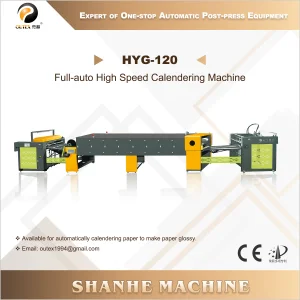
This macro-economic migration demands unprecedented consistency in surface finishing, thermal resistance, and optical gloss levels. Calendering machines play a critical operational role in turning offset-printed cardboard, folding cartons, and micro-flute corrugated structures into scuff-resistant, high-brightness retail packaging capable of enduring international logistics without surface degradation.
Deep dive into thermodynamics, mechanical press force, roller geometry, and inline chemical interaction during high-speed paperboard surface consolidation.
In standard UV coating, a liquid resin is applied and cured instantly via ultraviolet radiation. While fast, this method often creates a "textured pinhole" effect on porous recycled boxboard commonly processed in Mexican mills. Thermal calendering introduces a crucial mechanical-thermodynamic phase: applying precise heat (110°C to 150°C) and hydraulic pressure (up to 20 MPa) via mirror-finished chrome rollers onto pre-varnished paperboard.
Under elevated temperature and pressure, thermoplastic varnish resins undergo plastic deformation, flowing smoothly into paperboard surface voids. The result is a glass-smooth optical surface with vastly superior clarity, depth of color, and rub resistance compared to un-calendered UV finishes, while consuming up to 35% less chemical coat weight per square meter.
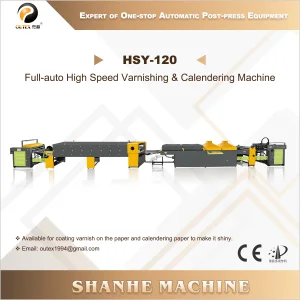
| Performance Parameter | Standard UV Coater | Inline Varnishing & Calendering (HSY-120 Series) | Standalone Thermal Calender (HYG-120 Series) |
|---|---|---|---|
| Gloss Units (60° Angle) | 65 - 75 GU | 85 - 92 GU (Mirror Level) | 80 - 88 GU |
| Coat Weight Required | 5 - 8 g/m² | 3 - 5 g/m² (Chemical Saving) | N/A (Pre-coated substrates) |
| Scuff / Rub Resistance | Moderate (Prone to flaking) | Ultra-High (Fused film structure) | High |
| Substrate Compatibility | Primary Virgin Paperboard | Virgin, Recycled, & Kraft Board | Pre-printed Coated Duplex Board |
| Max Line Speed | 80 m/min | 120 m/min | 100 m/min |
How advanced manufacturing infrastructure, centralized component sourcing, and rigorous quality control deliver unbeatable total cost of ownership (TCO) for packaging converters in Mexico City.
Our 34,175 m² smart facility in Shantou utilizes heavy-duty CNC gantry milling machines to fabricate machine frames from single-cast iron beds. This eliminates frame flex under high hydraulic roll pressure, guaranteeing micrometer-level parallelism across 1200mm sheet widths.
Industrial power grids in Mexico City and Edoméx operate across various three-phase standard voltages (e.g., 220V, 440V, or 480V at 60Hz). All SHANHE equipment bound for Mexico is custom-engineered with Schneider/Siemens control cabinets built specifically for local grid stability.
With direct vessel calls from Chinese major ports (Shanghai/Shenzhen) to the Port of Manzanillo (Pacific) and Port of Veracruz (Gulf), transit times are optimized. Machine shipping assemblies are vacuum-sealed in anti-corrosion barrier foil to withstand ocean transit humidity.
Real-world operational setups optimized for specific print finishing and packaging clusters within Mexico City and neighboring states.
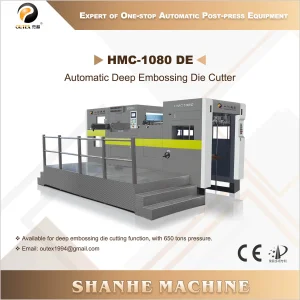
Luxury beverage brand packaging produced in Central Mexico requires deep metallic foils, high gloss contrasts, and zero cracking along die-cut fold lines. By deploying the HSY-120 Inline Varnishing & Calendering Machine, local converters achieve a glass-like finish on 350-450 gsm coated SBS board. Subsequent die-cutting on the HMC-1080DE Deep Embossing Machine produces crisp 3D registered embossing for brand logos, increasing shelf appeal across North American export markets.
High-volume pharmaceutical plants operating out of Edoméx require clean-room compatible post-press processing with zero chemical solvent off-gassing. Utilizing water-based gloss varnishes passed through the thermal oil-heated chrome mirror roller of the HYG-120 Calendering Machine delivers scratch-proof barrier coatings for medicine boxes. This inline approach meets COFEPRIS compliance standards while maximizing line throughput to 10,000 sheets/hour.
Request tailored technical specifications, custom voltage configurations, and factory-direct pricing for delivery to Manzanillo or Veracruz port.
Send Inquiry NowDirect engineering answers regarding installation, power compatibility, spare parts availability, and after-sales support in Greater Mexico City.
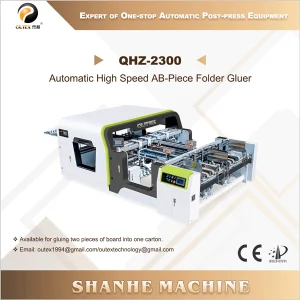
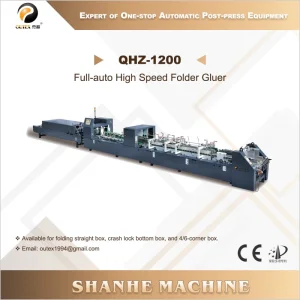
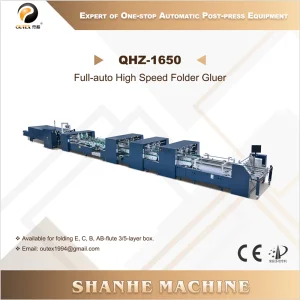
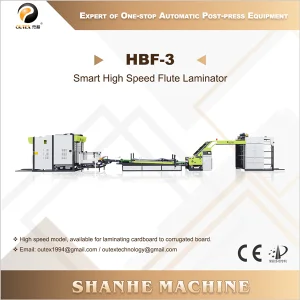
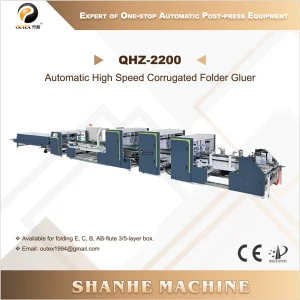
Explore our full catalog of high-speed laminators, folder gluers, film coaters, and die cutting systems engineered for maximum productivity in packaging plants.



Partner directly with China's leading post-press equipment manufacturer. Over 30 years of engineering innovation, 34,175 m² of smart manufacturing facilities, and complete door-to-port export services for Mexico City, Guadalajara, and Monterrey printing plants.