Industry Whitepaper & Technical Sourcing Guide

China Semi-auto Flute Laminating Machine Suppliers & Product Directory

Engineering Specifications, Mechanical Innovations, Localized Applications, and Global Supply Chain Evaluation for High-Precision Post-Press Board Mounting Systems

Integrated Machinery Fleet

Top-Tier Post-Press & Converting Machinery Range

Explore our high-performance post-press solutions, including die cutters, folder gluers, hot stamping units, and specialized laminating systems manufactured under strict ISO9001 and CE standards.
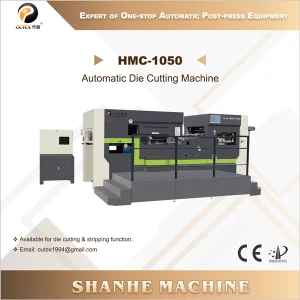
High-Quality HMC-1050 Automatic Die Cutting Machine Manufacturer
High-Quality HMC-1050 Automatic Die Cutting Machine Manufacturer, Factories
View Specifications
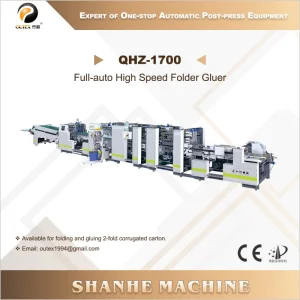
CE Certification QHZ-1700 Full-auto High Speed Folder Gluer Supplier
CE Certification QHZ-1700 Full-auto High Speed Folder Gluer Supplier, Company
View Specifications
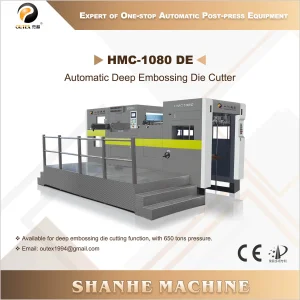
High-Quality HMC-1080DE Automatic Deep Embossing Die Cutter
High-Quality HMC-1080DE Automatic Deep Embossing Die Cutter (650T) Factories, Products
View Specifications
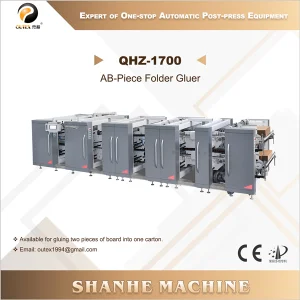
High-Quality QHZ-1700 AB-Piece Folder Gluer Suppliers
High-Quality QHZ-1700 AB-Piece Folder Gluer Suppliers, Products
View Specifications
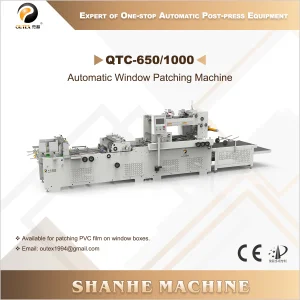
High-Quality QTC-650/1000 Automatic Window Patching Machine
High-Quality QTC-650/1000 Automatic Window Patching Machine Suppliers, Companies
View Specifications
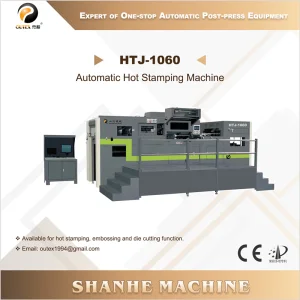
CE Certification HTJ-1060 Automatic Hot Stamping Machine Factory
CE Certification HTJ-1060 Automatic Hot Stamping Machine Factory, Company
View Specifications
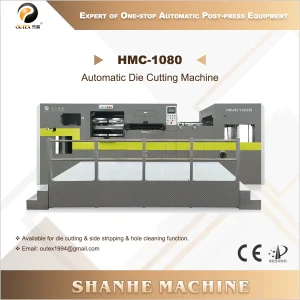
High-Quality HMC-1080 Automatic Die-cutting Machine
High-Quality HMC-1080 Automatic Die-cutting Machine Product, Products
View Specifications
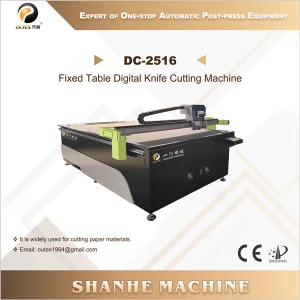
High-Quality DC-2516 Fixed Table Digital Knife Cutting Machine
High-Quality DC-2516 Fixed Table Digital Knife Cutting Machine Factories, Product
View Specifications
Performance Benchmarks

Empirical Metrics: Why Semi-Automatic Flute Laminators Lead Packaging ROI

Semi-automatic flute laminating machines bridge the operational gap between manual board mounting and high-speed fully automatic production lines. Engineered for flexibility, fast order changeover, and low maintenance overheads, these systems deliver exceptional capital efficiency for corrugated box manufacturers and litho-laminated packaging suppliers.

±0.75mm
Registration Precision
9,000
Sheets / Hour Max Output
35%
Lower Capital Expenditure
5-10 Mins
Job Changeover Time
Industrial Context

Global Packaging Landscape & The Strategic Role of Semi-Auto Flute Laminators

The global packaging sector is undergoing a profound structural shift driven by e-commerce expansion, sustainable paper-based substrate substitution, and increasing demand for high-graphics corrugated boxes. Litho-laminated packaging—combining offset-printed top sheets (coated duplex board or kraft paper) with structural single-face or double-face corrugated flutes (A, B, C, E, F, N flutes or solid greyboard)—represents the premium benchmark for retail packaging, consumer electronics, agricultural produce, and heavy-duty industrial containers.

In this dynamic manufacturing eco-system, plant managers often encounter a strategic dilemma when selecting laminating machinery: choosing between high-speed fully automatic flute laminators and semi-automatic board mounting systems. While fully automatic lines excel at long, uninterrupted runs exceeding 50,000 sheets, semi-automatic flute laminating machines offer unmatched versatility for short-to-medium runs, irregular sheet formats, delicate substrates, and frequent job switches.

Operational Flexibility

Semi-automatic laminators allow manual or semi-assisted feeding of the printed top sheet while automatically feeding the bottom corrugated substrate via suction belt mechanisms. This hybrid approach enables precise alignment of warped or non-standard sheets that often jam fully automatic feeders.

Superior Cost-to-Yield Ratio

Requiring significantly lower initial investment (CAPEX) and minimal electronic calibration costs during setup, semi-auto flute laminating units achieve full return on investment within 8 to 14 months of commercial operation in typical packaging plants.

Adhesive Efficiency

Equipped with advanced glue metering systems and stainless-steel applicator rollers, modern Chinese semi-auto laminators control PVA or starch adhesive film thickness down to 0.02mm, preventing board warp and reducing glue consumption by up to 22%.

Deep-Dive Engineering

Technical Engineering Architecture & Mechanical Roadmap

Understanding the mechanical engineering behind semi-automatic flute laminators is essential for plant engineers evaluating equipment robustness, registration stability, and long-term durability. Below is an architectural overview of key sub-systems that dictate machine performance.

1. Bottom Sheet Automatic Feeder & Suction Mechanics

The bottom corrugated sheet feeding mechanism utilizes a high-torque vacuum suction belt drive combined with adjustable side gauges. Key technical features include:

  • High-Pressure Blower Integration: Ensures continuous bottom sheet feeding without double-sheet pulls, accommodating E, F, B, C, and A flute corrugated profiles as well as solid cardboard up to 8mm thickness.
  • Non-Stop Bottom Loader: Allows operators to replenish corrugated stacks during continuous operation, maximizing hourly sheet output.
  • Wear-Resistant Friction Belts: Synthetic rubber belts imported from Germany or Japan ensure high traction without marking delicate flute liners.

2. Precision Registration & Front-Lay Gauge Assembly

Registration accuracy is the single most critical quality index in litho-lamination. Modern semi-automatic laminators utilize dual-register positioning system:

  • Elastic Front-Lay Alignment: The top sheet is fed manually or via assist-wheels to meet the bottom sheet at elastic front stops, compensating for manual feeding timing variations.
  • Optical Fiber Sensor Tracking: Photoelectric sensors detect sheet leading edges in real-time, signaling PLC-controlled servo motors to synchronize bottom sheet acceleration for perfect overlap (±0.75mm tolerance).

3. Glue Metering & Recirculation Circuitry

Adhesive application directly impacts board flat-ness, bond strength, and drying times. Technical refinements in Chinese semi-auto laminators include:

  • Anodized Anilox / Chrome Metering Rollers: Micro-grooved or ultra-smooth chrome-plated rollers ensure uniform film distribution without splatter at high speeds.
  • Automatic Liquid-Level Sensing: Pneumatic diaphragm pumps continuously recirculate adhesive, while ultrasonic sensors maintain precise glue bath depth.
  • Wipe-Clean Doctor Blade Assemblies: Quick-release doctor blades allow rapid washdowns between shift changes, reducing maintenance labor.

4. Pressing Conveyor & Curing Belt Unit

Post-lamination pressing establishes strong fiber-to-fiber bonding between the paperboard liner and corrugated flute tips:

  • Floating Pressure Rollers: Spring-loaded or pneumatic pressure rollers apply uniform downward force without crushing corrugated flute geometry (maintaining structural ECT/BCT values).
  • Extended Curing Belt Belt Conveyor: Variable-speed synthetic conveyor belts allow adequate open time for water-based PVA adhesives to tack, delivering flat, stack-ready sheets to the delivery table.

Standard Engineering Specifications Matrix

Machine Model Series Max Sheet Size (LxW) Min Sheet Size (LxW) Top Sheet Weight Bottom Sheet Range Laminating Speed Registration Accuracy
SAL-1300 Semi-Auto 1300 x 1100 mm 350 x 350 mm 180 - 800 g/m² Flute A/B/C/E/F & Greyboard 0 - 7,000 sheets/hr ± 0.75 mm
SAL-1450 High-Speed 1450 x 1200 mm 400 x 400 mm 180 - 800 g/m² Flute A/B/C/E/F & 3/5-Ply Board 0 - 8,500 sheets/hr ± 0.75 mm
SAL-1650 Heavy Duty 1650 x 1400 mm 500 x 500 mm 200 - 900 g/m² Flute A/B/C/E/F & Double Wall 0 - 8,000 sheets/hr ± 1.00 mm
SAL-2000 Jumbo Format 2000 x 1650 mm 650 x 650 mm 250 - 1000 g/m² Corrugated Board 1.5 - 10 mm 0 - 6,500 sheets/hr ± 1.20 mm
Industrial Sourcing Excellence

China Supply Chain Resilience & Manufacturing Efficiency Advantages

China has established itself as the undisputed manufacturing center for post-press converting machinery. Regional industrial clusters—most notably in Shantou (Guangdong), Dongguan, and Eastern China—have created a hyper-dense supply ecosystem that yields major competitive advantages for international machinery buyers.

1. Vertical Industrial Integration

Chinese OEM manufacturers maintain in-house CNC machining centers, flame hardening units, precision grinding workshops, and dynamic balancing test rigs. Over 85% of structural components—including heavy cast-iron wallboards, shaft drives, and glue pans—are machined within a 50km radius of production centers like Shantou.

2. Global Brand Component Standardization

Leading Chinese semi-auto flute laminator suppliers integrate world-class electrical and mechanical components as standard configurations. Machines routinely incorporate Siemens PLCs, Schneider contactors, NSK/SKF bearings, Delta/Yaskawa inverter drives, and Omron optical sensors, ensuring plug-and-play global spare part availability.

3. Custom Engineering Flexibility

Unlike rigid European equipment suppliers, Chinese manufacturers excel at engineering custom modifications. Whether clients require extended delivery tables, high-frame clearances for heavy pallet loads, custom voltage configurations (220V/380V/415V/480V), or integrated flip-flop stackers, Chinese factories implement modifications rapidly with short lead times.

E-E-A-T Quality Insights: Guangdong Shanhe Industrial Co., Ltd. Benchmark

Founded in 1994 in Shantou, Guangdong, Guangdong Shanhe Industrial Co., Ltd. (SHANHE MACHINE) operates a 34,175 m² modern manufacturing campus. With 30 years of continuous specialization in post-press converting equipment, SHANHE integrates CNC precision machining, heavy assembly bays, and full-load pre-shipment operation testing. Holding direct export authorization, SHANHE exports high-precision flute laminators, die cutters, hot stamping units, and folder gluers directly to over 60 countries across Europe, the Americas, Middle East, and Southeast Asia.

Operational Scenarios

Localized Application Scenarios & Packaging Sector Integration

Semi-automatic flute laminating machines operate at the nexus of offset printing and corrugated converting. Their technical characteristics make them indispensable across diverse regional packaging sub-sectors.

1. E-Commerce & Retail Outer Shipping Boxes

The surge in direct-to-consumer delivery requires packaging that combines structural crush resistance with premium unboxing aesthetics. Semi-auto laminators mount 250-350gsm offset-printed coated kraft top sheets onto heavy B-flute or E-flute corrugated liners. The resulting boxes deliver vibrant branding without sacrificing stackability during transit.

2. Micro-Flute Luxury Cosmetic & Electronics Cartons

Micro-flute boards (F-flute, N-flute, 0.7mm - 1.2mm thickness) are rapidly replacing solid bleached sulfate (SBS) cartonboard in luxury cosmetic, spirit, and mobile device packaging. Semi-automatic laminating machines preserve micro-flute integrity through delicate pressure nip control, avoiding flute crushing while ensuring pinhole-free fiber bonding.

3. Heavy-Duty Point-of-Purchase (POP) Display Stands

Floor-standing display units require mounting large-format printed sheets (up to 1650mm x 1400mm) onto double-wall (EB flute or BC flute) corrugated board or thick 3mm greyboard. The semi-automatic feeding format enables two operators to safely guide giant top sheets into register, eliminating sheet tearing or mis-registration inherent to high-speed automatic feeders.

4. Tropical & High-Humidity Food Packaging Adaptations

In humid regions such as Southeast Asia, Central America, and West Africa, moisture absorption can cause litho-laminated board delamination and severe warp. Chinese semi-auto laminators configured for tropical climates incorporate heated glue pans, fast-tack water-resistant PVA adhesive circuits, and forced-air drying zones on the pressing conveyor to maintain flat, durable boards.

Sourcing Evaluation

Comprehensive Procurement Checklist & TCO Evaluation Model

When sourcing a semi-automatic flute laminating machine from Chinese suppliers, procurement directors and engineering teams should conduct a structured Total Cost of Ownership (TCO) evaluation. Below is an inspection roadmap covering key hardware and supplier metrics.

Hardware & Mechanical Inspection

  • Wallboard Thickness: Ensure main frame wallboards are solid cast iron (minimum 25mm - 30mm thickness) to absorb operational vibration.
  • Roller Plating: Verify chrome plating depth on glue and metering rollers (minimum 0.05mm hardness chrome).
  • Bearings & Drives: Confirm brand origin of critical bearings (NSK, SKF) and main drive motors (Siemens, ABB).

Electrical & Safety Compliance

  • CE / UL Standards: Ensure full electrical enclosure compliance with IP54 rating, dual-circuit emergency stops, and light-curtain safety barriers.
  • PLC Architecture: Require open-source or un-locked PLC programs with touchscreen HMI supporting multi-lingual interfaces (English, Spanish, French, Russian).

Factory Audit & Service SLA

  • Pre-Shipment Testing: Demand 8-hour continuous test runs using buyer-supplied paper substrates prior to container packing.
  • Spare Parts Kit: Guarantee inclusion of critical wear items: suction belts, doctor blades, photoelectric sensors, and pneumatic valves.
Extended Equipment Catalogue

Full Post-Press Machinery Portfolio & High-Speed Converting Lines

In addition to flute laminating machinery, our plant manufactures a comprehensive suite of automatic finishing systems engineered to optimize packaging plant throughput.
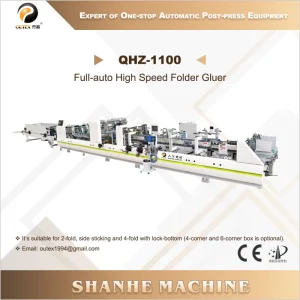
CE Certification QHZ-1100 Full-auto High Speed Folder Gluer Supplier
CE Certification QHZ-1100 Full-auto High Speed Folder Gluer Supplier, Company
View Specifications
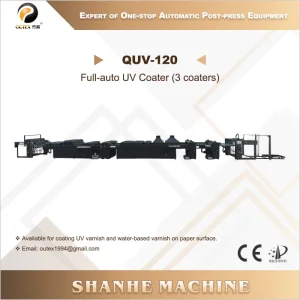
China QUV-120 Full-auto UV Coating Machine Companies
China QUV-120 Full-auto UV Coating Machine Companies, Product
View Specifications
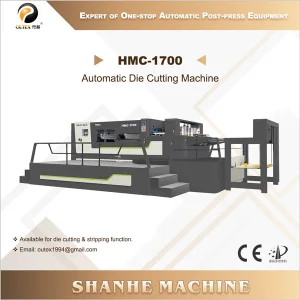
CE Certification HMC-1700 Automatic Die Cutting Machine Manufacturer
CE Certification HMC-1700 Automatic Die Cutting Machine Manufacturer, Factories
View Specifications
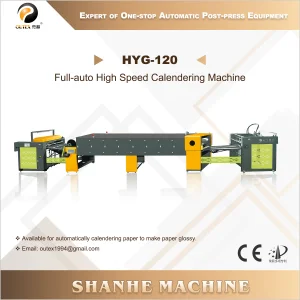
High-Quality HYG-120 Full-auto High Speed Calendering Machine
High-Quality HYG-120 Full-auto High Speed Calendering Machine Manufacturers, Companies
View Specifications
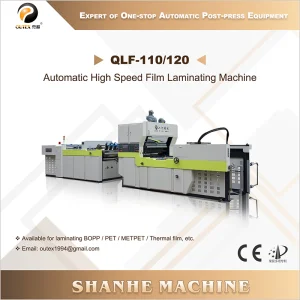
CE Certification QLF-110/120 Automatic High Speed Film Laminating Machine
CE Certification QLF-110/120 Automatic High Speed Film Laminating Machine Company, Products
View Specifications
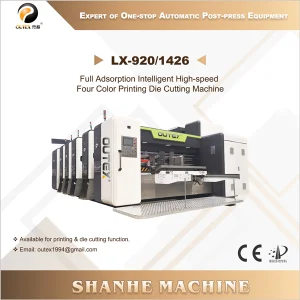
High-Quality LX-920/1426 Full Adsorption Four Color Printing Die Cutting Machine
High-Quality LX-920/1426 Full Adsorption Intelligent High-speed Four Color Printing Die Cutting Machine Company, Companies
View Specifications
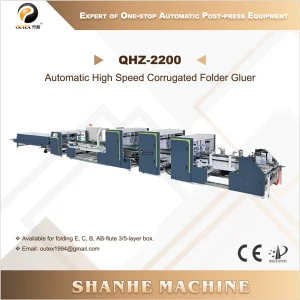
High-Quality QHZ- 2000/ 2200/ 2400/ 2800 Corrugated Folder Gluer
High-Quality QHZ- 2000/ 2200/ 2400/ 2800 Automatic High Speed Corrugated Folder Gluer Manufacturer, Manufacturers
View Specifications
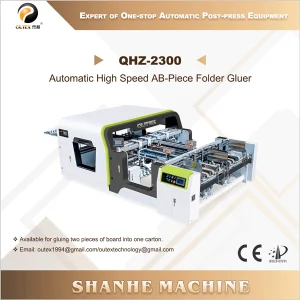
CE Certification QHZ-2300/2600/3000/3300/4500 AB-Piece Folder Gluer Factory
CE Certification QHZ-2300/2600/3000/3300/4500 Automatic High Speed AB-Piece Folder Gluer Factory, Factories
View Specifications
Global Compliance & Service

Compliance Framework, Localized Technical Support & Warranty SLA

Deploying heavy industrial post-press equipment requires continuous technical backing to guarantee uninterrupted production. Reliable Chinese suppliers back their machinery export programs with comprehensive international service structures.

International Safety & Certification Standards

Export-grade semi-automatic flute laminators are built in full compliance with European CE Directives (2006/42/EC Machinery Directive and 2014/35/EU Low Voltage Directive). Mechanical guarding features interlocked safety switches, full-width emergency stop bars, low-voltage 24V control circuits, and shielded drive chains, ensuring compliance with OSHA and European workplace safety regulations.

Remote Diagnostics & On-Site Engineering Response

Modern machines feature Ethernet/Wi-Fi remote PLC access modules. In the event of an operational anomaly or parameter loss, factory automation engineers in China can connect directly to the machine's HMI to perform real-time diagnostics, software updates, and parameter optimization. For physical installation and commission, senior technicians are dispatched globally within 7 working days.

Knowledge Base

Frequently Asked Questions (Technical Q&A)

Detailed engineering answers to standard questions raised by machinery buyers, plant operators, and maintenance teams.

Q1: What is the key operational difference between a semi-auto and a fully automatic flute laminator?
A: In a fully automatic flute laminator, both top printed sheets and bottom corrugated sheets are fed automatically via dual vacuum feeder heads (Feeder). In a semi-automatic flute laminator, the bottom corrugated board is fed automatically via bottom suction belts, while the top printed sheet is placed manually or assisted by an operator onto the registration table. Semi-auto units allow significantly faster setup (5-10 minutes vs 30-45 minutes), lower capital investment, and easier handling of warped, heavy, or non-standard sheets.
Q2: What substrates can be processed on a standard semi-automatic flute laminating machine?
A: Semi-auto laminators handle a broad substrate spectrum. Top sheets typically range from 180 g/m² to 800 g/m² offset-printed duplex board, cardboard, or kraft paper. Bottom sheets include single-face corrugated board (F, E, B, C, A flutes), 3-ply and 5-ply double-wall corrugated board up to 8mm or 10mm thickness, as well as solid greyboard for luxury rigid box applications.
Q3: How do operators prevent board warp (cupping) after flute lamination?
A: Board warp is primarily caused by excess moisture absorption from water-based adhesives. To prevent warp: (1) Use high-solids (45%-55%) PVA or modified starch adhesives; (2) Calibrate the metering roller to maintain an ultra-thin adhesive film (0.02mm - 0.04mm); (3) Ensure proper tension on the pressing conveyor belt; and (4) Turn laminated board stacks upside down during initial pallet curing to equalize tension across fibers.
Q4: What registration accuracy can be realistically achieved under production conditions?
A: Precision-engineered Chinese semi-automatic laminators equipped with optical fiber tracking sensors and elastic front-lay gauges consistently achieve a registration accuracy of ±0.75mm on standard sheet sizes (e.g., 1100mm x 1300mm) at operating speeds of 5,000 to 7,000 sheets per hour.
Q5: What maintenance routine is required to maintain long-term machine accuracy?
A: Daily maintenance requires washing down the glue pan, metering roller, and doctor blades at the end of each shift to prevent dried glue accumulation. Weekly routines include lubricating main drive chains, inspecting bottom suction belt tension, and cleaning optical sensors. Monthly checks should focus on inspecting bearing play, checking pneumatic pressure seals, and verifying electrical terminal tightness inside the main cabinet.