Explore our core portfolio of heavy-duty post-press machinery engineered for extreme accuracy, high throughput, and seamless integration into modern corrugated plants.
Understanding the transition toward double-wall structural packaging in global supply chains, e-commerce fulfillment, and heavy-duty industrial shipping.
The global corrugated packaging industry is experiencing a structural shift toward heavy-duty, high-graphics containerboard. As international logistics channels demand higher stacking strength without compromising visual branding, double-wall corrugated boards (5-ply structures such as AB-flute, BC-flute, and EB-flute combinations) have become essential.
Standard 3-ply single-wall boxes often fail under vertical compressions exceeding 800 kg during long-haul intermodal shipping. By integrating high-quality offset or flexo pre-printed liners with robust 5-ply substrates, packaging converters supply brands with retail-ready packaging (RRP) that withstands extreme stacking stresses while maintaining flawless shelf appeal.
Traditional manually assisted or semi-automatic flute laminators suffer severe mechanical limitations when handling 5-ply corrugated sheets. The cumulative thickness (often ranging between 4.5mm to 8.5mm), combined with variable board warp and high liner Grams per Square Meter (GSM), creates substantial registration errors.
Leading manufacturers like Guangdong Shanhe Industrial Co., Ltd. (SHANHE MACHINE) have pioneered fully automatic 5-ply flute laminating lines equipped with multi-axis servo synchronization systems. These intelligent lines eliminate edge skewing, lower adhesive consumption, and operate reliably at linear speeds up to 150–200 meters per minute.
Information Gain Analysis: Deconstructing motion control, optical registration, fluid dynamics in glue metering, and automated inline flip-flop stacking.
Unlike mechanical chain-driven pushers that introduce physical wear and mechanical backlash, modern high-speed 5-ply laminators employ independent dual-servo positioning systems. High-resolution encoders track the leading edge of both the top printed paper (ranging from 180 GSM to 450 GSM) and the 5-ply corrugated substrate in real time.
The motion controller dynamically adjusts the speed of the bottom sheet suction belt, guaranteeing sub-millimeter matching (+/- 0.75mm) even during rapid acceleration up to 12,000 sheets per hour.
Adhesive application on 5-ply corrugated flutes presents unique fluid dynamic challenges. Excessive starch or PVA glue causes sheet warping and washboarding effects, while insufficient coating leads to delamination under damp warehouse storage.
Advanced 5-ply laminating units feature precision-ground ceramic or stainless steel anilox doctor rolls coupled with automated fluid level sensors. The machine automatically regulates glue film thickness proportional to operating speed, keeping adhesive consumption below 25-30 g/m².
Heavy double-wall corrugated substrates (AB or BC flutes) often exhibit memory-effect curvature. To maintain absolute flat transport through the gluing bridge, high-torque vacuum suction belts apply continuous negative pressure across the sheet width.
Adjustable pneumatic press rollers ensure the top liner bonds firmly without crushing the internal corrugated arches, preserving the structural ECT (Edge Crush Test) value of the final box.
Selecting the correct machinery configuration depends on substrate GSM, flute profile combination, and expected line output. Below is an engineering comparison matrix for plant planning:
| Performance Metric | Standard 3-Ply Laminator | Automatic Heavy-Duty 5-Ply Laminator | High-Speed Inline System (with Stacker) |
|---|---|---|---|
| Compatible Board Thickness | 1.0 mm – 4.5 mm (A, B, C, E, F) | 1.5 mm – 10.0 mm (3-Ply & 5-Ply AB, BC, EB) | 1.2 mm – 8.5 mm (3-Ply & 5-Ply) |
| Top Sheet Paper Range | 150 – 350 GSM | 180 – 800 GSM (Cardboard & Grayboard) | 150 – 450 GSM |
| Maximum Linear Speed | 120 m/min | 160 m/min | 200 m/min |
| Registration Accuracy | ±1.5 mm | ±1.0 mm | ±0.75 mm (Servo Driven) |
| Glue Metering Control | Manual Mechanical Gap | PLC Auto-Adjusting Fluid Gap | Closed-Loop Servo Anilox Metering |
| Stacking Automation | Manual Catch Table | Integrated Pressing Belt | Automatic Flip-Flop Stacker Line |
Deploying high-precision 5-ply flute laminating technology across heavy-duty industrial sectors, agricultural export lines, and luxury FMCG display units.
Washing machines, air conditioners, and industrial machinery parts require high bursting strength and vertical crush resistance. Packaging converters utilize 5-ply AB and BC flute structures laminated with heavy kraft top liners. Automatic laminators ensure uniform glue distribution across the double-wall ridges, guaranteeing that packaging does not collapse during multi-tier containerized transport.
Fresh fruit and vegetable export boxes undergo high humidity conditions in cold rooms. Standard single-wall boxes absorb ambient moisture and lose up to 50% of structural rigidity. 5-ply corrugated board laminated with water-resistant coated top paper provides moisture barrier protection and maintains crate integrity during ocean freight.
Heavy retail floor displays demand a combination of structural rigidity and high-definition graphic printing. Utilizing EB or EE fine 5-ply flutes allows packaging designers to print ultra-sharp imagery on the top sheet while providing the structural strength needed to hold heavy FMCG goods on retail floors.
How high-performance automatic 5-ply laminators adapt to diverse paper qualities, local humidity variances, and international energy standards.
In regions with high utilization of recycled test liners (such as Southeast Asia, India, and South America), paper porosity and fiber strength vary significantly between batches. Low-GSM recycled paper absorbs moisture unpredictably, leading to sheet curling during lamination.
Modern 5-ply laminating machines integrate pre-heating rollers and intelligent moisture conditioning units. By pre-treating the bottom 5-ply liner and fine-tuning glue viscosity, plants achieve flat, warp-free finished boards despite fluctuations in raw material quality.
European and North American packaging plants enforce strict energy consumption targets and operator safety norms (CE, UL, OSHA). High-end laminators incorporate inverter-driven main motors, smart standby power management, and fully enclosed safety guarding with interlocking optical light curtains.
Advanced diagnostic interfaces provide real-time telemetry on kilowatt-hour usage per thousand sheets, enabling plant managers to track carbon footprints and optimize production economics.
Key technological transformations driving the next generation of intelligent, zero-defect board laminating lines through 2030.
Future 5-ply laminators are adopting camera-based AI vision inspection systems. High-speed cameras capture sheet edges and printed registration marks in microseconds. Micro-servo guide rails automatically compensate for sheet skew prior to adhesive contact, guaranteeing zero alignment errors even at maximum line velocities.
Industry 4.0 connectivity enables laminators to continuously transmit sensor telemetry (vibration, bearing temperature, motor torque, and pneumatic pressure) to secure cloud analytics platforms. Maintenance teams receive automated alerts before mechanical component failure occurs, dramatically decreasing unscheduled plant downtime.
In response to stringent corporate sustainability mandates, laminating equipment is being engineered to run bio-derived cold-curing starches and water-based adhesives. Advanced metering rollers and thermal conditioning chambers preserve adhesive bonding chemistry while eliminating energy-intensive heat drying tunnels.
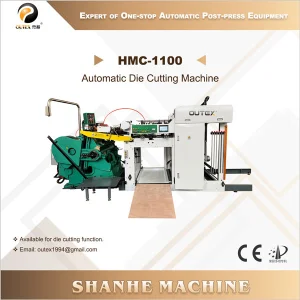
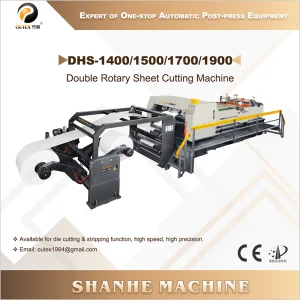
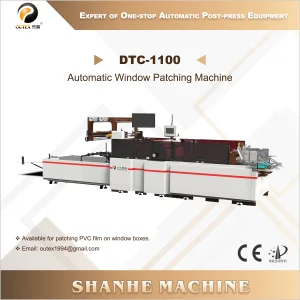
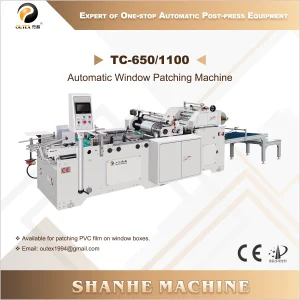
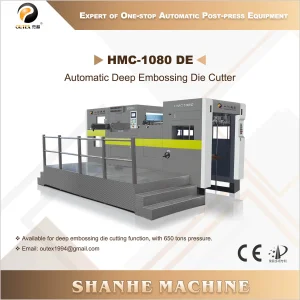
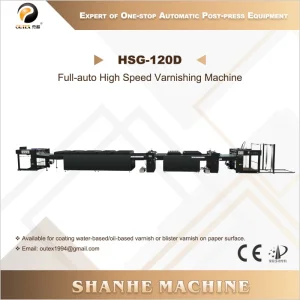
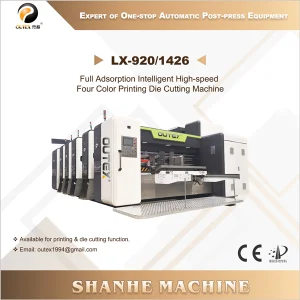
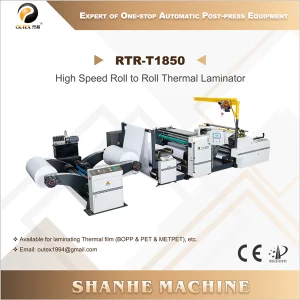
Complete your end-to-end packaging production line with our high-precision die cutters, window patchers, rotary paper slitters, and specialized laminators.
Technical domain solutions addressing alignment tolerances, glue selection, warp prevention, and machine maintenance for plant directors.
Automatic 5-ply flute laminators utilize multi-axis servo control systems synchronized with high-precision optical sensors. As the top printed sheet is fed via a non-stop suction header, optical sensors read its leading edge. Simultaneously, servo-driven suction belts deliver the 5-ply corrugated substrate (such as AB or BC flutes). The PLC calculates speed deviations in micro-seconds and dynamically adjusts the bottom feeder belt velocity, ensuring top-to-bottom registration accuracy within ±0.75 mm even at speeds up to 160–200 m/min.
3-ply cardboard consists of a single corrugated medium sandwiched between two linerboards (single wall). 5-ply cardboard consists of two corrugated media and three linerboards (double wall, e.g., A+B flute or B+C flute). Laminating 5-ply cardboard requires significantly higher mechanical drive torque, wider pressure belt gaps, specialized curved board suction systems, and robust glue metering to prevent crushed flutes while ensuring permanent adhesive bonding across thick board structures (up to 10mm).
Warping is caused by excessive water absorption into paper fibers. High-quality 5-ply laminators mitigate warp by utilizing precision-ground anilox glue rollers with automated gap controls that apply a ultra-thin, uniform adhesive film (typically 25–30 g/m²). Additionally, integrated inline pressing belts and flip-flop stackers alternate sheet direction in neat bundles, neutralizing residual paper tension as the adhesive cures under uniform pressure.
Yes. Heavy-duty automatic flute laminators engineered by SHANHE MACHINE feature digital touchscreen parameter switching. Operators can quickly adjust roller nip clearances, vacuum suction pressure, and feeder timing presets. This allows seamless transitions between light F-flute 3-ply micro-corrugated sheets and heavy-duty 5-ply BC double-wall master cartons on the same production line.
As a premier factory manufacturer with independent import and export rights, Guangdong Shanhe Industrial Co., Ltd. provides full lifecycle technical support. Services include pre-delivery plant foundation planning, on-site installation by senior technicians, comprehensive operator training, remote PLC fault diagnostics, and rapid dispatch of original spare parts from major logistics hubs (Shantou, Shanghai, Shenzhen ports).
To preserve sub-millimeter registration, plants should enforce daily cleaning of glue rollers and photo-electric optical sensors to prevent dust accumulation. Weekly checks should inspect timing belt tension, vacuum suction filters, and automatic lubrication oil reservoirs. Calibrating servo drive encoders bi-annually ensures persistent tracking accuracy across millions of sheets.