Explore high-performance conversion, lamination, and automated coating auxiliary equipment certified for demanding manufacturing operations.
An Executive Overview of Surface Modification, Photopolymerization, and Precision Liquid Application Systems
Hydrophilic coating machines represent the apex of biomedical and industrial surface modification technology. In medical device manufacturing, particularly for minimally invasive surgical tools such as PTCA balloon catheters, neurovascular guidewires, endoscopic sheaths, and urological stents, applying a uniform, ultra-thin, and durable hydrophilic coating is vital. This coating drastically reduces the Coefficient of Friction (CoF) down to levels below 0.03 upon hydration, ensuring seamless anatomical navigation and significantly reducing vascular trauma.
Selecting reliable high-quality hydrophilic coating machine suppliers & factories requires an in-depth understanding of kinetic dip-coating dynamics, ultraviolet (UV) curing optics, atmospheric fluid control, and particulate control standards (such as USP <788>). Modern automated hydrophilic coating equipment eliminates manual variance by employing multi-axis closed-loop servo control systems, precise solvent extraction modules, and real-time UV intensity calibration.
Dissecting the Mechanothermal & Optical Components of Advanced Coating Platforms
Utilizes ultra-smooth linear servo actuators with absolute encoder feedback to execute multi-stage immersion, dwell, and withdrawal profiles without micro-vibrations that cause coating striations.
Custom water-cooled UV-LED irradiance modules (365nm / 395nm wavelength) configured in an elliptical reflector matrix to deliver precise, cold-light UV intensity, eliminating thermal distortion of sensitive polymer substrates.
Integrated micro-climate chambers maintaining positive pressure, laminar airflow, real-time solvent vapor extraction, and temperature/humidity control to lock in chemical flash-off rates.
| Subsystem Feature | Standard Coating Machine | High-End Medical Hydrophilic Machine | Process Advantage |
|---|---|---|---|
| Withdrawal Motion | Standard AC Motor / Stepper | Zero-Backlash Servo + Direct Drive | Eliminates coating thickness variations along device length |
| Curing Light Source | Broadband UV Mercury Lamps | Monochromatic UV-LED (365nm) Array | Prevents substrate melting; 20,000+ hour lamp life stability |
| Fluid Management | Open Chemical Baths | N2-Blanketed Recirculating Manifolds | Prevents solvent evaporation and polymer degradation |
| Process Validation | Manual Timer & Gauge Logs | Audit Trail PLC + CFR 21 Part 11 Compliance | Seamless FDA 510(k) and CE MDR technical file generation |
Engineered for Superior Adhesion across Complex Polymers and Nitinol Alloys
Hydrophilic coatings typically rely on polymeric matrices such as Polyvinylpyrrolidone (PVP), Polyacrylic Acid (PAA), or Polyacrylamide (PAAm) crosslinked onto substrate surfaces using covalent photo-grafting. The machine platform must provide pre-treatment options (such as atmospheric plasma activation or UV photo-primer application) to handle diverse medical polymers:
Without controlled withdrawal kinetic speeds (often tuned between 0.5 mm/s and 15 mm/s depending on solution viscosity), capillary forces create non-uniform coating collars or droplets at device tips. Modern equipment from top-tier Chinese manufacturers utilizes computational dip-profiling software that lets engineers adjust speed continuously across complex tapered catheters.
Why Global OEM/ODM Buyers Turn to Leading Chinese Hydrophilic Equipment Suppliers
Chinese factories leverage vertically integrated supply chains for precision CNC machining, sheet metal fabrication, and control panel assembly, delivering high-spec equipment at 30% to 50% lower capital expenditure than European or US equivalents.
Leading Chinese machinery builders outfit systems with premium global componentry: Beckhoff or Siemens PLCs, THK linear motion guides, SMC pneumatics, and Hamamatsu/Excelitas UV light engines, ensuring international reliability.
From custom multi-device holding fixtures to scalable continuous reel-to-reel coating systems, Chinese factories offer turnaround times for customized engineering changes in weeks rather than months.
Ensuring Audit-Ready Compliance for FDA 510(k), CE MDR, and NMPA Submissions
Deploying medical device manufacturing machinery into Cleanroom environments requires extensive validation support. Qualified hydrophilic coating machine factories provide comprehensive IQ (Installation Qualification), OQ (Operational Qualification), and PQ (Performance Qualification) protocol documentation packages.
Furthermore, reliable global vendors back up their equipment with localized field service engineering, remote augmented-reality troubleshooting, emergency spare parts warehousing, and comprehensive operator maintenance training modules.
Smart Factory Integration, AI-Assisted Machine Vision Inspection, and Drug-Eluting Matrixes
Next-gen coaters incorporate high-speed machine vision optics that detect micro-bubbles, pinholes, dry spots, and coating thickness variance in real-time right after UV curing.
Modern hydrophilic machines are expanding into active chemistry application—applying combination coatings containing antimicrobial silver ions, heparin anti-thrombogenic agents, or drug-eluting matrices.
Full integration with plant-wide MES (Manufacturing Execution Systems), providing real-time telemetry on lamp degradation, solution bath aging, cycle times, and batch traceability.
Where High-Precision Hydrophilic Equipment Creates Value Across Medical & Technical Domains
Hydrophilic surface treatment is essential across multiple specialized sectors:
PTCA Balloon Catheters, Micro-catheters, Hydrophilic Guidewires, Sheath Introducers.
Intermittent Self-Catheters, JJ Ureteral Stents, Foley Catheters with Low-Friction Coatings.
Intraocular Lens Inserters, Endoscopic Biopsy Channels, Laparoscopic Sheaths.
Anti-Fog Optical Lenses, Anti-Fouling Filtration Membranes, Water-Repellent Functional Films.
Technical and Commercial Clarifications for Procurement Directors & Device Engineers
Depending on device length, solvent flash-off requirements, and cure dose chemistry, cycle times typically range between 3 to 8 minutes per batch. Automated multi-mandrel systems dipping 16 to 32 devices simultaneously can achieve throughputs exceeding 200 to 400 units per hour.
High-end machines utilize integrated laminar flow HEPA fans directly over the dipping zone, continuous solution filtering systems, micro-polished stainless steel or PTFE dipping tubes, and static eliminator bars to maintain strict USP <788> compliance.
Yes. Premium equipment features inline UV radiometer sensors mounted directly inside the curing chamber. The machine's PLC performs automatic closed-loop feedback adjustments to UV LED power output to compensate for optical degradation over time.
Leading exporters provide complete IQ/OQ/PQ documentation templates, material trace certificates (CE, RoHS compliance), electrical schematics (UL/CE standards), software code documentation, and operator training records.
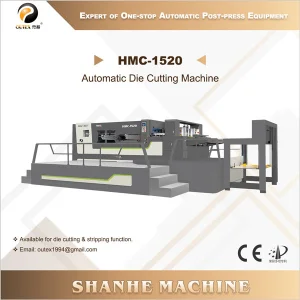
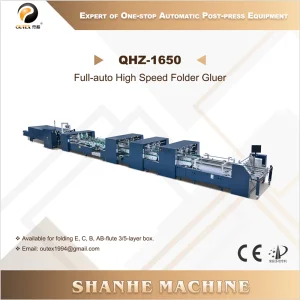
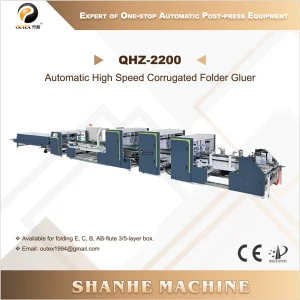
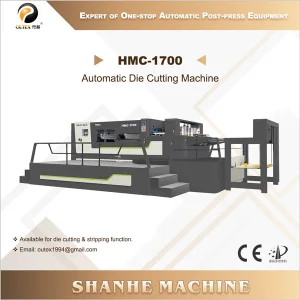
Complete your facility setup with engineered converting, post-press, die cutting, and folder gluer equipment.