
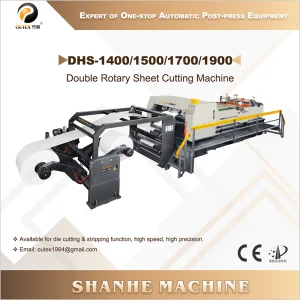
Designed to meet the stringent accuracy standards of Tokyo’s commercial printing districts (such as Itabashi and Ota Ward), these flagship systems combine high-speed dual rotary sheeting with automated stack handling.

The Greater Tokyo Metropolitan Area represents one of the world's most concentrated and sophisticated markets for high-grade paper products, luxury retail packaging, and precision-printed materials. Anchored by major industrial zones across Kanagawa, Saitama, Chiba, and the inner Tokyo prefectures (such as Itabashi Ward, Ota Ward, and Koto Ward), the local converting sector operates under unique macroeconomic dynamics.
Industrial real estate in Tokyo commands some of the highest price-per-square-meter rates globally. Converting plants cannot afford sprawling, inefficient machine layouts. Chinese machinery suppliers catering to Tokyo must engineer compact, modular paper roll cutting systems that maximize vertical space, streamline material handling, and integrate roll-to-sheet operations directly into tight factory footprints.
Following recent national energy grid restructuring in Japan and rising global fuel tariffs, industrial electricity prices in Tokyo have scaled up significantly. Modern paper roll slitting and sheeting machinery must incorporate regenerative servo drives (KERS), smart standby modes, and ultra-efficient variable frequency AC drives to minimize overall kilowatt-hour consumption during continuous 24/7 production runs.
Japan's structural demographic shift has led to an aging skilled workforce within traditional pressrooms. Paper converters in Tokyo are urgently transitioning away from manual roll handling, offline trimming, and labor-intensive stacking. There is an accelerating demand for automated twin-rotary paper cutters featuring automated tension control, auto-splicing, defect sorting, and robotic palletizing.
The Tokyo paper converting ecosystem is undergoing a dramatic technological shift driven by changing consumer behaviors, stringent environmental legislation, and the surge in high-end luxury e-commerce. Key structural trends include:
Traditional paper converting relied heavily on master roll slitting followed by manual guillotine re-trimming to achieve acceptable squareness. Today, Tokyo’s high-speed offset printing presses (such as Komori and Mitsubishi platforms) demand pre-cut sheets with micro-precision right off the roll. Chinese suppliers are supplying direct Twin-Rotary Knife Sheeters capable of dead-accurate cuts (±0.2mm) with zero edge fluff or dust, eliminating the secondary guillotine step entirely.
In accordance with Japan’s Container and Packaging Recycling Law and corporate ESG directives from Tokyo retail giants in Ginza and Shinjuku, converters are replacing plastic films with aqueous-coated barrier papers and biodegradable substrates. Cutting these sensitive, coated paper rolls without damaging surface barriers requires specialized anti-static technology, non-marking vacuum tension rolls, and ultra-sharp tungsten carbide blades.
Sourcing heavy machinery from China into the Japanese domestic market requires meeting some of the world's most detailed quality assurance and technical compliance parameters. Japanese procurement officers look beyond basic machinery specifications to evaluate long-term Total Cost of Ownership (TCO).
All industrial paper roll cutters destined for Tokyo must strictly conform to JIS (Japanese Industrial Standards) and PSE electrical safety frameworks. Control cabinets require Omron or Mitsubishi PLCs, Yaskawa servo drives, and industrial wiring labeled to Japanese color codes, rated for 200V 3-Phase 50Hz grid operation typical of Eastern Japan.
For paper rolls converted for pharmaceutical, food packaging, or electronics protection applications in Kanagawa and Tokyo, cut edge cleanliness is paramount. Shear-cut slitting knives and double-rotary knife cylinders must be dynamically balanced to eliminate vibration, preventing paper micro-dust from contaminating downstream high-speed printing presses.
Due to strict urban noise pollution laws in Tokyo residential-industrial mixed zones, heavy machinery must operate under tight decibel limits. Chinese suppliers engineer heavy cast-iron frames (HT300 grade) with helical gear transmissions enclosed in sound-dampening acoustic covers to keep noise under 72 dB at maximum operating speeds (300-350 m/min).
Leading Chinese post-press machinery OEMs, such as Guangdong Shanhe Industrial Co., Ltd. (SHANHE MACHINE), have spent decades refining paper roll cutting technology to bridge the gap between high-end European performance and cost-effective capital deployment.
Unlike traditional single-rotary cutters that drag a stationary bottom knife against a moving top knife, Chinese twin-rotary sheeters utilize dual synchronized knife cylinders driven by direct-drive helical gears. Both blades match the precise velocity of the moving web at the exact millisecond of impact. This delivers a clean shear-cut action across paperweights ranging from light 50 gsm paper up to heavy 500 gsm paperboard, completely eliminating burrs, edge curl, and dust generation.
Master rolls sourced from global mills often contain internal stress, thickness variations, or humidity deformation. Advanced Chinese sheeters incorporate load-cell tension sensors linked via EtherCAT real-time fieldbus to pneumatic braking systems. Integrated multi-stage paper de-curling units automatically adjust geometry to flatten heavy paperboard, ensuring that sheets lie perfectly flat on the delivery stack for immediate feed into Tokyo's printing presses.
Engineered for heavy master rolls up to 2,000 kg and 1,800 mm diameters, featuring automatic floor pickup, hydraulic lateral adjustment, and core chuck adaptation for 3-inch, 6-inch, and 12-inch paper cores.
High-speed web friction generates thousands of static volts, especially in air-conditioned Tokyo cleanrooms. Dual ion-discharge bars neutralize static charges prior to overlapping delivery, preventing sheet jamming.
Integrated CCD vision sensors detect splices, color spots, or surface defects, automatically firing a high-speed pneumatic reject gate to divert faulty sheets to a waste bin without slowing down production.
Purchasing international heavy equipment involves operational risk management. Top-tier Chinese manufacturers establish comprehensive localization ecosystems to provide Japanese clients with seamless integration and ongoing reliability.
All touch-screen control panels (HMI) feature native Japanese software interfaces, complete with clear operational workflows, graphic diagnostic displays, and real-time error logging translated by native industry technical experts.
To minimize operational downtime, leading Chinese suppliers maintain localized spare parts inventories (blades, pneumatic sensors, drive belts, air chucks) in logistics hubs across Yokohama and Chiba, offering guaranteed 24-hour dispatch to Tokyo plants.
Equipped with secure IoT VPN gateways, engineering specialists in China can conduct remote real-time PLC diagnostics, software updates, and drive tuning alongside local Japanese field service engineers.
As smart factory initiatives (Society 5.0 in Japan) continue to transform traditional pressrooms, next-generation paper roll cutting systems are introducing intelligent automation features:
Using acoustic emission sensors and vibration monitoring mounted directly on the knife cylinders, machine algorithms detect micro-wear on blade edges before it affects cutting quality. Systems trigger automatic lubrication or prompt operators to schedule blade rotations during non-peak hours, avoiding unscheduled downtime.
Future factory layouts in Tokyo are connecting unwind stands directly to Automated Guided Vehicles (AGVs). Paper rolls are fetched from automated high-density warehouses, auto-loaded onto hydraulic unwind arms, stripped of outer wrapping, and converted to pallets without human intervention.
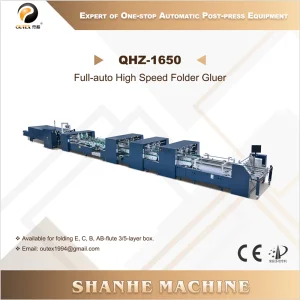
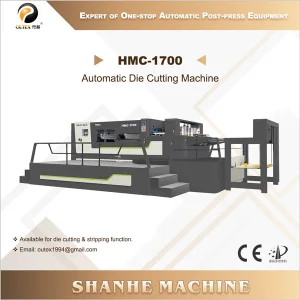
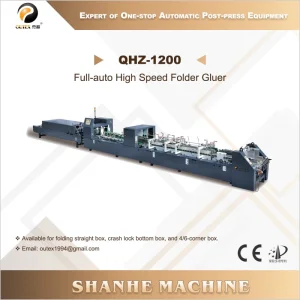
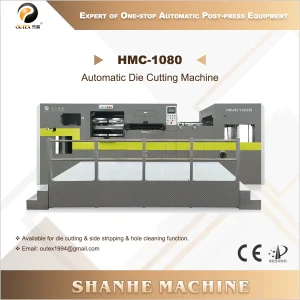
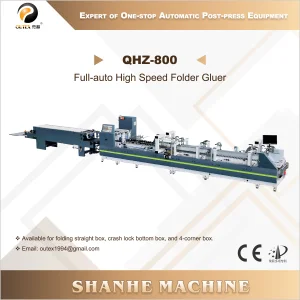
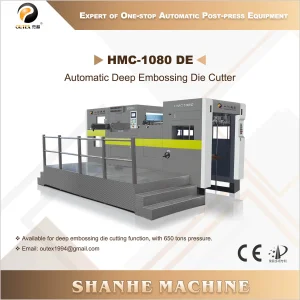
Explore our comprehensive lineup of folder gluers, UV coaters, die cutters, window patchers, and intelligent turning units designed for high-efficiency post-press workflows in Greater Tokyo.
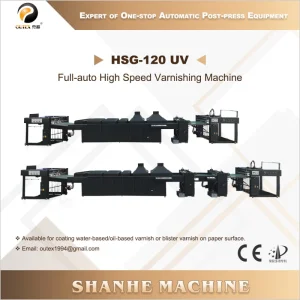
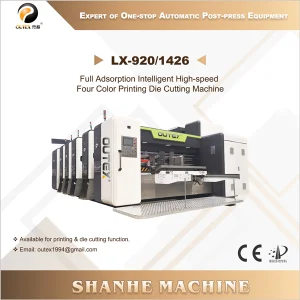
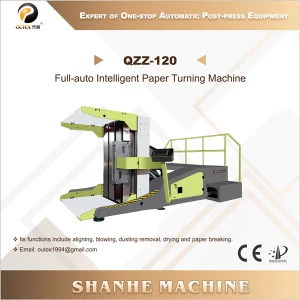
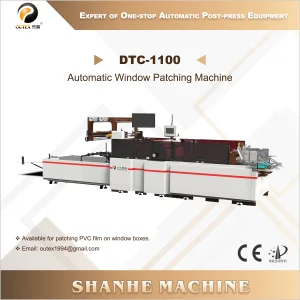
Detailed engineering and commercial answers to help procurement directors evaluate paper roll cutting and post-press equipment for installation in Greater Tokyo.
High cutting precision at high speeds is achieved through synchronous twin-rotary knife cylinders engineered with zero-backlash direct-drive helical gears, paired with ultra-responsive servo motors (such as Yaskawa or Siemens). Real-time web tracking is maintained via optical encoders and closed-loop ultrasonic web guides that continuously adjust lateral paper position before the knife cylinder impact. This eliminates paper drift, squareness error, and edge tearing.
Tokyo and Eastern Japan operate on a 200V / 3-Phase / 50Hz electrical grid (distinct from Western Japan’s 60Hz system). All machinery supplied to Tokyo by SHANHE MACHINE is custom-configured with industrial transformers, JIS-standard electrical panels, PSE-compliant wiring insulation, and 50Hz-optimized AC drives to ensure plug-and-play installation without electrical overheating or frequency mismatch.
Support is delivered via a hybrid approach: local Japanese field technicians manage on-site mechanical setup, electrical hookup, calibration, and routine operator training. Simultaneously, machine control cabinets feature built-in IoT telemetry gateways, allowing master factory engineers in Shantou, China to log in securely for real-time diagnostic checks, drive parameter tuning, and firmware updates.
Yes. Systems like the DHS Double Rotary Knife Sheeter accommodate a wide grammage range from 50 gsm lightweight offset paper up to 500 gsm solid bleached sulfate (SBS) or coated duplex board. The secret lies in the adjustable pneumatic nip roller pressure, variable vacuum overlap delivery belts, and precision anti-static air bars that prevent light papers from floating while providing solid drive force for heavy board stocks.
Standard manufacturing lead time is 45 to 60 days from design sign-off. Shipping directly from Shantou or Shenzhen ports to Tokyo Port or Yokohama Port typically takes 4 to 7 ocean transit days. SHANHE MACHINE’s export logistics unit handles all export documentation, seaworthy vacuum packing in wooden cases, and coordination with Japanese customs brokers for smooth import tariff clearance.
Consult directly with our senior post-press machinery engineers. We provide custom layout designs, detailed ROI analysis, and competitive factory-direct quotations tailored to Japanese industrial requirements.