Featured high-efficiency machinery tailored for continuous roll-fed and high-volume sheet processing across Portugal's print manufacturing hubs.
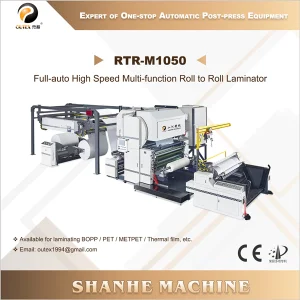
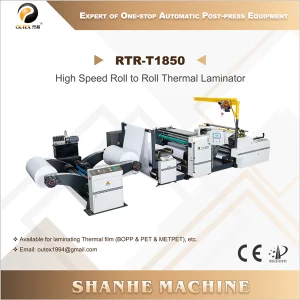
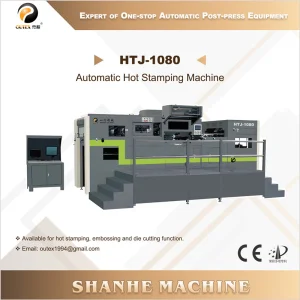
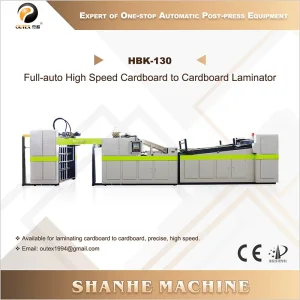
Portugal’s industrial landscape is undergoing a significant transformation driven by automation, digital integration, and stringent EU environmental directives. As one of Southern Europe’s key manufacturing hubs—spanning regional powerhouses from Porto and Vila Nova de Gaia in the North to Leiria, Coimbra, and the Greater Lisbon metropolitan zone—the demand for advanced post-press finishing equipment has escalated dramatically. In particular, the deployment of high-performance Roll to Roll (RTR) laminators and multi-functional lamination systems has become a critical operational lever for Portuguese converters seeking to maintain international competitiveness.
Historically recognized for its robust footwear, textile, wine export, and paper converting industries, Portugal’s manufacturing framework now requires unprecedented precision in substrate finishing. Modern consumer packaging—ranging from premium Port wine folding cartons to eco-friendly corrugated shelf-ready containers—demands flawless film surface lamination. Roll to roll lamination systems cater precisely to these requirements by providing continuous surface barrier protections, water resistance, enhanced mechanical durability, and tactile aesthetic value (such as soft-touch, gloss, matte, and anti-scratch BOPP/PET film applications).
Portuguese packaging suppliers operating under the EU PPWR framework are shifting rapidly toward ultra-thin film laminates, bio-based thermal films, and solventless adhesive systems. Equipment installed in Portugal must demonstrate precise temperature control, minimal energy consumption per square meter, and zero-defect tension control to avoid film degradation and excess waste.
Procurement intent for Roll to Roll and post-press laminating machinery in Portugal clusters heavily around key industrial zones:
Focused heavily on textiles, luxury footwear boxes, and high-volume printed packaging. Converters here demand ultra-high-speed roll-to-roll and sheet thermal laminators capable of handling delicate web tensions without curl.
Known for plastics, glass, and heavy-duty industrial paper packaging. Industrial operations require durable cardboard-to-cardboard and thick-flute film laminating lines capable of continuous 24/7 operation.
Driven by wine exports (Douro/Alentejo labels), olive oil presentation packaging, and pharmaceutical cartons requiring high-end hot stamping, UV varnish, and film barrier lamination.
Engineering standards built for high-yield industrial plants across Portugal and the European Continent.
For Portuguese industrial buyers, evaluating a Roll to Roll laminator or high-speed laminating system goes beyond superficial throughput stats. E-E-A-T validated machinery design demands a granular breakdown of mechanical tension control, heating cylinder dynamics, corona discharge integration, and automated rewind mechanisms.
Flexible films (such as 12-micron BOPP, PET, or thermal film substrates) are highly susceptible to thermal expansion and mechanical stretching. In high-speed roll processing, tension variance leads to downstream curl, delamination, or web breaks. SHANHE machinery incorporates multi-point closed-loop magnetic powder tensioning paired with high-precision Panasonic/Siemens servo drives. An integrated hydraulic or pneumatic anti-curl bar dynamically alters substrate angle, ensuring flat sheet output post-bursting or slitting.
Traditional oil-heated rollers suffer from thermal lag and non-uniform surface temperature distribution (±3°C variances), which lead to cloudy spot lamination on dark offset prints. Our CE-certified Roll to Roll Thermal Laminators employ internal electromagnetic induction heating. This delivers uniform surface temperature across widths up to 2050 mm with a tolerance under ±1°C, reducing warm-up times from 45 minutes down to 10 minutes while cutting electrical power consumption by up to 30%—a major cost saver considering Portuguese industrial electricity tariffs.
To maximize Return on Investment (ROI), modern Portuguese converters require machines that handle multiple converting modes seamlessly:
| Lamination Mode | Substrate Compatibility | Adhesive / Film Type | Target Portuguese Market Application |
|---|---|---|---|
| Thermal Roll to Roll | Paper, Cardboard, Synthetic Web | Pre-coated Thermal BOPP / PET / Nylon | Book covers, luxury folding cartons, cosmetics |
| Water-Based Wet Lamination | Printed Board, Kraft, Micro-Flute | Water-soluble acrylic glue + raw BOPP | Eco-conscious food packaging, retail containers |
| Solventless Lamination | Flexible packaging films, Foils | Two-component polyurethane | Industrial pouches, agricultural chemical packaging |
| Cardboard-to-Cardboard | Heavy greyboard, Kraftliner | Cold PVA / Starch Adhesives | Game boards, luxury rigid shoe boxes, display stands |
Printing inks and varnishes used in Portuguese printing houses often contain slip additives that lower surface energy below 38 dynes/cm, leading to poor lamination bonding. Our integrated high-frequency Corona treating units raise substrate surface energy above 44 dynes/cm instantly prior to film contact, eliminating film peeling issues during subsequent die-cutting or embossing steps.
Bridging Chinese manufacturing scale with rigorous European operational, environmental, and financial criteria.
For Portuguese purchasing managers, equipment cost extends beyond initial purchase price. Our lines are engineered to minimize waste scrap (<0.5% setup waste), drastically reduce kVA power draw, and utilize standard off-the-shelf electronic components (Schneider, Siemens, Omron) available across Europe.
Full adherence to EU Machinery Directive 2006/42/EC. Features light-curtain safety guards, emergency stop circuits, pneumatic safety locks, and quiet acoustic enclosures (<78 dB operating noise level) meeting strict European workplace standards.
Equipped with Ethernet/Wi-Fi telemetry modules for direct fault diagnosis, maintenance scheduling, and real-time integration with plant MES/ERP systems via OPC-UA protocols.
Consult with our senior machinery engineers to configure custom roll-width, speed, and finishing modules suited to your facility in Portugal.
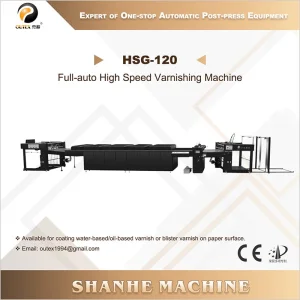
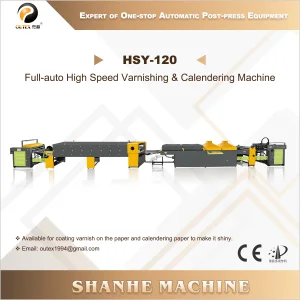
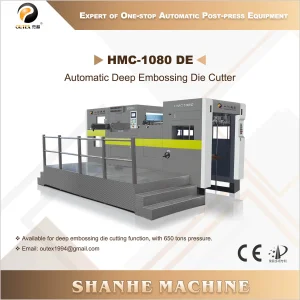
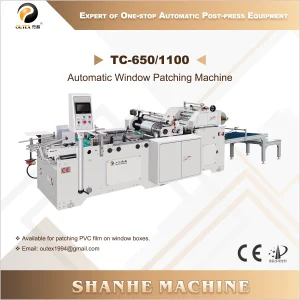
Send Inquiry NowExplore our comprehensive lineup of automatic post-press systems, including varnishing, calendering, die cutting, window patching, and cardboard laminators.
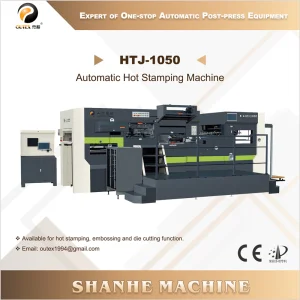
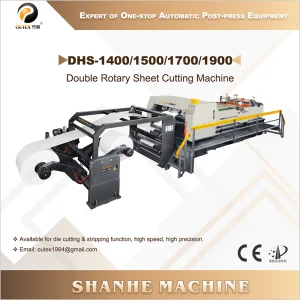
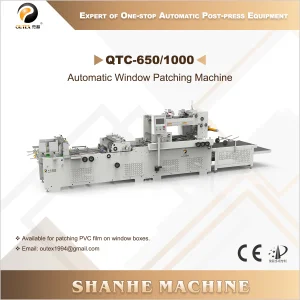
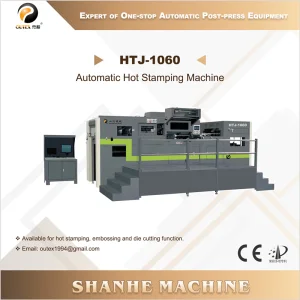
Importing heavy industrial machinery into Portugal requires transparent freight handling, compliant customs clearance documentation, and reliable local technical deployment. Guangdong Shanhe Industrial Co., Ltd. (SHANHE MACHINE) maintains direct self-export operations with proven logistics networks connecting major export hubs in Shantou, Shenzhen, Shanghai, and Ningbo directly to Portuguese maritime ports (Port of Leixões / Porto, Port of Sines, and Port of Lisbon).
We eliminate intermediary export houses, handling FOB, CIF, or DDP shipping terms straight to your facility in Portugal. Full marine insurance, moisture-proof vacuum wrapping, and reinforced ocean freight containerizing standard on all shipments.
Our senior field technicians travel directly to your facility in Lisbon, Porto, Leiria, or surrounding regions to conduct physical positioning, electrical hookups, line calibration, and hands-on operator safety training.
All machinery ships with standard wearing spare parts included. During the warranty period, replacement components damaged by quality defects are dispatched via fast courier (DHL/FedEx) at zero cost to the customer.
Comprehensive answers regarding machine specifications, installation, compliance, and ordering procedures for buyers in Portugal.
For high-volume web converting, the RTR-M1450/1650/1850/2050 Full-auto Multi-function series is highly recommended. It offers web widths up to 2050 mm, dual-shaft tension control, high-speed electromagnetic thermal rollers, and modular slitting/rewinding units. If your plant processes sheet-fed offset work requiring film application prior to die cutting, the RTR-T Thermal Laminator Series provides exceptional thermal bonding accuracy and anti-curl sheet separation.
Yes. All SHANHE machinery exported to Portugal and the European Union fully complies with the EU Machinery Directive 2006/42/EC and Electromagnetic Compatibility Directive 2014/30/EU. Electrical cabinets utilize 380V/50Hz 3-Phase European standard wiring, Siemens PLCs, and Schneider low-voltage control gear.
Ocean freight transit time from South China ports to the Port of Leixões (Porto) or Port of Sines typically ranges between 28 to 35 days depending on the shipping line (e.g., MSC, Maersk, COSCO). Factory production and testing lead time varies between 30 and 45 days based on custom configurations.
Our machines come equipped with integrated remote telemetry modules. Our engineering team in Shantou can access PLC diagnostics via secure internet protocols to update software, adjust motion control parameters, or identify electrical faults instantly. Furthermore, we provide HD instructional video manuals and 24/7 technical assistance via video call.
Absolutely. Our lamination lines are engineered with precise tension and low-temperature thermal roller controls tailored for handling PLA (polylactic acid) bio-films, cellulose-derived eco-films, and thin micron recyclable BOPP films without thermal deformation or film stretching.
Contact Guangdong Shanhe Industrial Co., Ltd. today. Get detailed equipment quotes, technical datasheets, and layout drawings engineered for your facility.
Send Inquiry Now