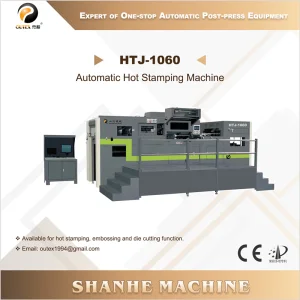
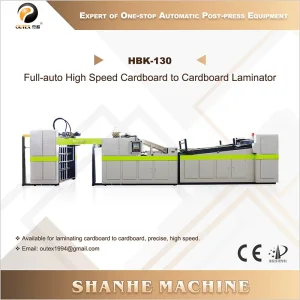
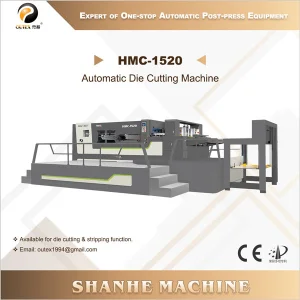
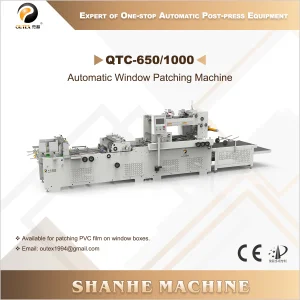
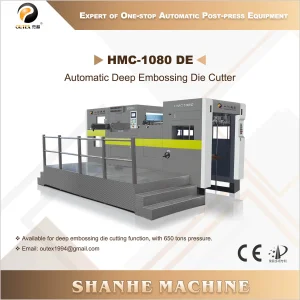
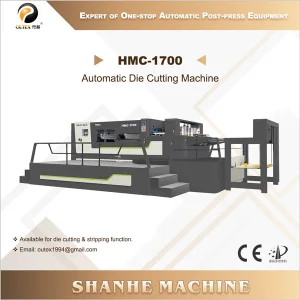
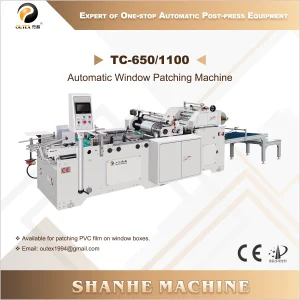
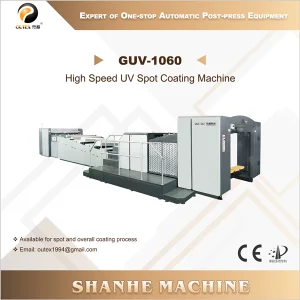
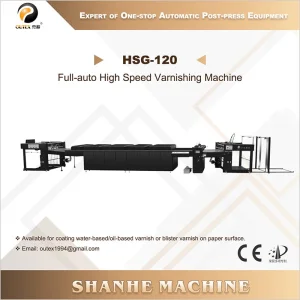
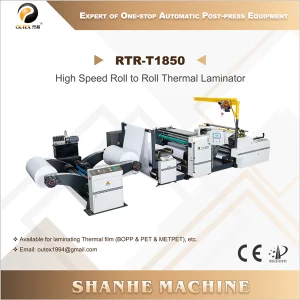
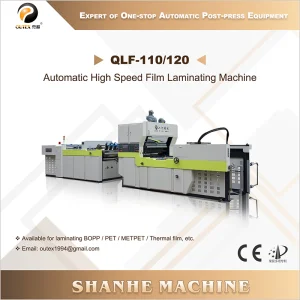
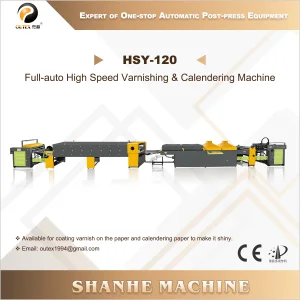
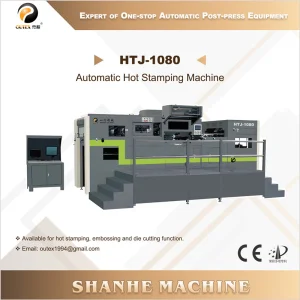
Explore our flagship CE-certified hot foil stamping, heavy-duty die cutting, and automated post-press converting systems built for high-throughput packaging facilities.
The global packaging and print finishing sector is undergoing a profound transformation. As brand owners in luxury retail, pharmaceuticals, cosmetics, and premium spirits intensify their anti-counterfeiting strategies and shelf-appeal dynamics, the demand for high-speed automatic foil stamping machinery has reached an unprecedented peak. Contemporary post-press operations are no longer evaluated merely by raw mechanical throughput; they are judged by Overall Equipment Effectiveness (OEE), waste minimization algorithms, thermal transfer stability, and rigorous international safety certifications—most notably the European CE compliance mark.
In mature markets across North America and Western Europe, converting plants are aggressively replacing legacy manual and semi-automatic platen presses with fully automated, servo-driven high-speed foil stamping systems. The imperative is clear: offset rising labor overheads while eliminating registration drift during continuous runs. Meanwhile, rapid industrialization across Asia-Pacific and Latin America has elevated regional packaging converters into global supply chain hubs. These manufacturers require robust, high-tonnage machines capable of executing intricate micro-embossing, holographic security foil placement, and multi-foil directional feed in a single pass.
Platen structures engineered to deliver 300T to 650T of uniform pressure across expansive sheet areas, ensuring sharp metallic transfer on heavy cardboard and corrugated flutes.
Integrated dual-circuit safety systems, light curtains, emergency brake clutches, and low-voltage control circuits adhering strictly to European EN 1010-1 and EN 1010-2 directives.
Independent multi-axis servo drives regulating longitudinal and transverse foil stepping, maximizing foil utilization efficiency while eliminating sheet drag.
Achieving consistent metallic brilliance and flawless micro-embossing at production speeds exceeding 7,000 sheets per hour requires complex mechanical engineering, thermal control precision, and advanced electronic synchronization. A primary challenge in hot foil stamping on high-speed automatic equipment is managing the dwell time and heat distribution matrix. Modern automatic presses utilize multi-zone PID thermal regulation systems that dynamically maintain heating plates within ±1°C of the target temperature, preventing foil blistering or incomplete transfer caused by localized thermal loss.
The mechanical heart of a high-speed foil stamper consists of a high-grade nodular cast-iron platen structure. Driven by an eccentric crankshaft mechanism equipped with heavy-duty toggle joints, the moving platen delivers immense tonnage (often ranging between 300 Tons and 650 Tons). This force must be distributed evenly across the sheet surface. Modern machine designs incorporate finite element analysis (FEA) optimized bed-plates, ensuring that under maximum load, structural deflection is virtually zero. This rigidity is essential when performing simultaneous deep embossing and foil transfer on heavy cardboard or laminated substrates.
Foil cost accounts for a major portion of job expenses. Advanced CE-certified machines employ independent servo motor systems for longitudinal and transverse foil advance. Equipped with automatic foil tension sensors and dynamic calculation algorithms, these systems adjust foil advance increments according to the die pattern length. Features such as "foil-saving advance"—where the machine skips unprinted dead zones automatically—can reduce raw foil waste by up to 45% on specialized packaging runs.
| Engineering Parameter | Standard Specification (HTJ-1060 Series) | Heavy-Duty Industrial Class (HMC-1080HD) | Process Impact / Benefit |
|---|---|---|---|
| Max Operating Speed | 7,000 – 7,500 sheets/hour | 6,500 – 7,000 sheets/hour | Delivers massive daily output for large converting runs |
| Max Impression Tonnage | 300 – 400 Tons | 600 Tons (Heavy-Duty) | Enables deep micro-embossing & solid block foil stamping |
| Temperature Control Zones | 12 – 20 Independent PID Zones | 24 Independent PID Zones | Prevents thermal gradient drops across wide sheet formats |
| Substrate Range | 90 – 2,000 g/m² Paperboard; ≤ 4mm Corrugated | 100 – 3,000 g/m² Board; ≤ 8mm E/B Flute | Handles diverse packaging mediums from retail folding boxes to thick displays |
| Registration Precision | ±0.075 mm | ±0.05 mm | Ensures pinpoint optical alignment for luxury holographic foils |
European conformity (CE) certification for post-press paper processing machinery requires adherence to safety parameters outlined in EN 1010-1 (General Safety Requirements for Printing and Paper Converting Machines) and EN 1010-2 (Specific Requirements for Die Cutting and Foil Stamping Presses). Key engineering implementations include:
A high-speed foil stamping machine does not operate in isolation. In modern print converting plants, maximizing productivity requires a seamless workflow that links offset/digital printing presses, film laminators, cardboard mounting systems, die cutters, window patchers, and folder-gluers. Equipment manufacturers must supply comprehensive macro solutions that eliminate bottleneck points between processes.
Integrating automatic high-speed thermal or water-based film laminators (such as the QLF Series) prior to foil stamping ensures maximum surface tension and ink protection, establishing a pristine foundation for metallic foil bonding.
For heavy-duty display cartons, pairing high-speed automatic flute laminators (HBF Series) with specialized card-to-board machines (HBK Series) ensures smooth corrugated blanks that can withstand heavy stamping tonnage without flute crushing.
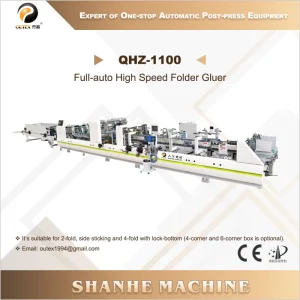
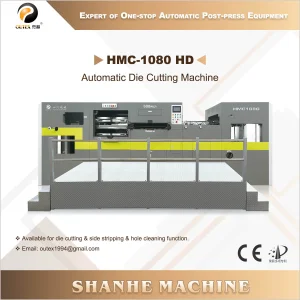
Following the foil stamping pass, downstream automatic die-cutting machines equipped with full stripping units (HMC Series) feed directly into high-speed folder gluers (QHZ Series), delivering finished, shelf-ready cartons.
Different industrial sectors and geographic regions present unique demands regarding substrate compatibility, foil types, and structural finishing standards. CE-certified high-speed foil stamping machines are flexible systems built to accommodate diverse market-specific applications:
High-end cosmetic cartons frequently combine soft-touch film lamination with combination hot stamping and micro-embossing. Achieving ultra-fine vector lines without foil bridge bleed requires tight temperature control across multiple heating zones. High registration precision (±0.075 mm) prevents misalignments between process colors and foil accents on small folding boxes.
Pharmaceutical packaging relies on registered holographic security foils to prevent product counterfeiting. High-speed automatic stamping machines utilize optical eye register sensors to verify foil position continuously, stopping the feed automatically if registration shifts. This functionality protects brand integrity while meeting international pharmaceutical packaging regulations.
High-volume tobacco and liquor packaging often demands multi-color foil stamping combined with deep structural grain embossing on heavy board (up to 600 g/m²). Heavy-duty machine variants featuring 600T impression force (such as the HMC-1080HD) deliver uniform relief depth without damaging structural fibers or compromising box folding lines.
The global surge in e-commerce has led brand owners to upgrade unboxing experiences. Micro-flute corrugated boxes (E, F, and N flute) require high-speed stamping machines equipped with modified non-crushing stream feeders and gentle suction transfer systems, protecting structural integrity while applying bold metallic accents.
As the converting sector moves toward Industry 4.0 smart factory integration, high-speed foil stamping equipment is evolving rapidly. Next-generation machine architectures prioritize intelligent diagnostics, energy efficiency, and operational simplicity.
Integration of high-resolution vision systems that inspect stamped foil quality inline at full line speeds. AI models instantly adjust servo foil tension and platen dwell time to correct micro-variations, minimizing manual quality checks.
Smart sensors installed on critical mechanical bearings, heating plates, and main drive clutches monitor thermal signatures and vibration profiles continuously. Cloud analytics alert operators to perform maintenance before unexpected downtime occurs.
Next-generation heating zones utilize targeted induction technologies, reducing electrical energy consumption by up to 30%. Intelligent standby modes cut thermal idle usage while maintaining instant readiness for production restarts.
Investing in a industrial high-speed foil stamping machine is a long-term capital decision. Packaging plant directors and procurement managers must evaluate potential machinery suppliers against a rigorous Total Cost of Ownership (TCO) matrix, looking beyond initial purchase price:
| Evaluation Pillar | Critical Key Performance Indicators (KPIs) | Operational ROI Impact |
|---|---|---|
| Mechanical Engineering Rigidity | Nodular cast iron frame grade; Platen wall thickness; Maximum pressure rating (Tons); Main drive gear heat treatment. | Prevents machine flex under heavy load; preserves alignment accuracy over 10–15 years of continuous operation. |
| Foil Utilization Efficiency | Number of servo foil advance shafts; Transverse vs. longitudinal feeding options; Automatic foil-stepping software algorithms. | Directly reduces expensive metallic foil waste by 20%–45%, driving significant recurring savings on raw material costs. |
| Thermal Control Precision | Quantity of independent PID heating zones; Honeycomb plate thermal insulation; Temperature stability tolerance (±°C). | Eliminates foil blistering, flaking, or dull finish; cuts job setup and thermal equilibrium stabilization times. |
| Safety & International Compliance | CE Certification; EN 1010-1/2 dual-circuit safety systems; Light curtains; Emergency pneumatic brake disengagement speed. | Protects machine operators, satisfies local OSHA/European factory inspection standards, and lowers insurance premiums. |
| After-Sales Support & Ecosystem | Availability of factory technicians; Remote diagnostic capabilities; Spare parts delivery timeframes; Integrated line compatibility. | Minimizes unscheduled downtime and ensures single-source support across laminating, die cutting, and gluing systems. |
Get authoritative answers on machine selection, CE safety standards, substrate limitations, and operational ROI from our senior engineering team.
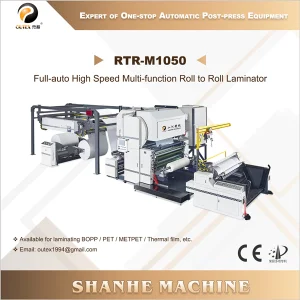
Discover our extended portfolio of automatic window patching machines, spot UV coating systems, full-auto folder gluers, and roll-to-roll laminators designed to integrate into high-output converting plants.