Explore our premier engineered machinery range developed for high-speed folding carton, corrugated board, and complex paperboard packaging lines.
Analysis of modern paperboard converting demand, micro-flute packaging trends, and regulatory compliance standards across international packaging markets.
The global packaging industry has undergone a structural transformation driven by the rapid expansion of e-commerce logistics, eco-conscious consumer demand, and strict regional regulations targeting single-use plastics. Converting operations worldwide are systematically migrating from standard single-layer cardboard boxes to high-strength, lightweight micro-corrugated structures (E, F, G, and N flutes) laminated with high-definition offset printed sheets. In this demanding manufacturing ecosystem, the high-speed laminating machine serves as the pivotal link bridging prepress graphics with post-press structural finishing.
Modern packaging plants are no longer evaluated solely on raw mechanical speed; overall equipment effectiveness (OEE), substrate versatility, automated setup protocols, and energy performance have become the primary metrics of competitiveness. Leading packaging converters require high-speed laminating equipment capable of maintaining registration accuracy within ±0.5 mm at linear line speeds exceeding 160 to 200 meters per minute, regardless of humidity fluctuations or variable paper liner weights.
For international buyers, OEM machinery procurers, and global packaging conglomerates, selecting a laminator vendor goes beyond basic mechanical capacity—it requires strict compliance with international safety and quality protocols. The CE Certification (Conformité Européenne) is a critical indicator of structural engineering safety, electromagnetic compatibility (EMC), and operational reliability.
Under the European Union Machinery Directive 2006/42/EC and Low Voltage Directive 2014/35/EU, certified high-speed laminators must integrate comprehensive physical safeguarding, fail-safe dual-channel safety relay loops, emergency braking systems, and strict noise control engineering (under 78 dB during full-speed operation). Suppliers who maintain rigorous CE compliance guarantee that their machinery protects line operators, minimizes workplace hazard liability, and facilitates seamless factory audits across North America, Europe, Asia, and Latin America.
Inside the mechanical engineering, optical tracking sensors, and dynamic glue metering technologies of modern automatic laminators.
Replaces legacy mechanical chains with high-torque motion controllers. Optical sensors track top sheet positioning in real-time, executing micro-second speed adjustments to match the bottom flute substrate perfectly.
Features stainless steel metric rollers paired with an automatic liquid-level sensor. Ensures uniform glue film application down to 12 g/m², preventing board warping and saving adhesive costs.
Engineered with multi-stage vacuum suction belts to deliver top cardboard and warped bottom corrugated sheets (A, B, C, E, F, N flutes) without surface scratching or misfeeds.
Selecting between automated flute laminating systems (cardboard-to-corrugated) and film laminating machinery (plastic/bio-film to paperboard) depends on structural requirements, barrier properties, and downstream processing steps:
| Performance Metric | High-Speed Flute Laminator (HBF Series) | High-Speed Film Laminator (QLF Series) | Cardboard Laminator (HBK Series) |
|---|---|---|---|
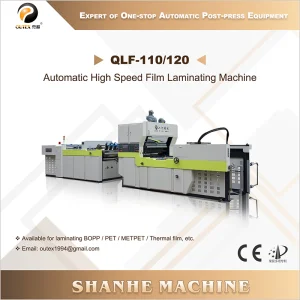
| Primary Substrate Target | Offset printed paper + Corrugated Board (A/B/C/E/F/3-layer/5-layer) | Printed Paperboard + BOPP/PET/Thermal/Biodegradable Film | Printed Cardboard + Greyboard / Rigid Paperboard |
| Maximum Linear Speed | Up to 200 m/min | 100 – 120 m/min | 9,000 – 10,000 sheets/hour |
| Registration Accuracy | ±0.5 mm (Servo Optical Tracking) | ±1.0 mm (Overlap control) | ±0.5 mm (Precision side-lay) |
| Adhesive / Bonding Type | Water-based PVA starch / cold glue | Water-based cold glue / Thermal dry pre-coating | Water-based PVA cold adhesive |
| Structural Output Benefit | High compressive strength, rigid transport packaging | Moisture-proof, scratch-resistant, glossy visual barrier | Heavy-duty folding cartons, gameboards, luxury boxes |
Connecting high-speed laminating with paper turners, flatbed die-cutters, UV coaters, and folder gluers for automated workflow productivity.
Modern packaging plants maximize margins by eliminating manual labor bottlenecks between finishing stages. Integrating a CE-certified high-speed laminator directly with complementary automated post-press equipment transforms standalone units into an intelligent, continuous converting line.
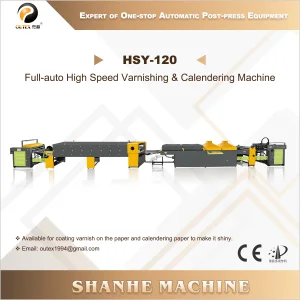
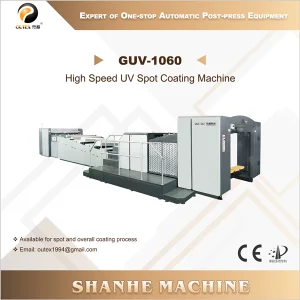
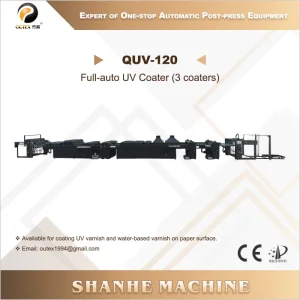
Printed sheets undergo surface enhancement using high-speed UV coaters (such as the China GUV-1060 or QUV-120) or varnishing and calendering machines (HSY-120) to establish scratch resistance and high-gloss shelf aesthetics before laminating.
Top printed sheets are accurately mounted onto single-face corrugated board or greyboard using smart high-speed flute laminators equipped with automatic flip-flop stackers (HBF-3 Smart Series) or cardboard laminators (HBK Series).
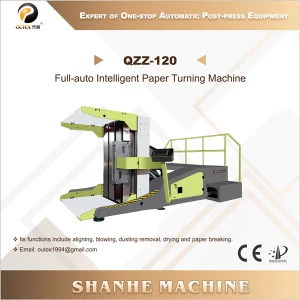
Freshly laminated corrugated sheets pass through intelligent paper turning machines (China QZZ Series) to rotate, pile, and flatten stacks automatically—eliminating sheet curl and preparing materials for high-speed die-cutting feeders.
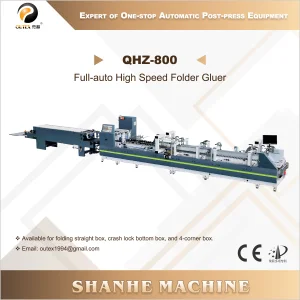
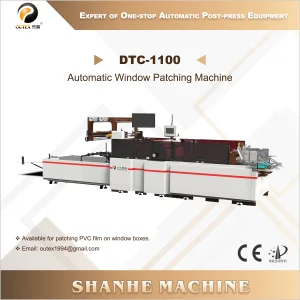
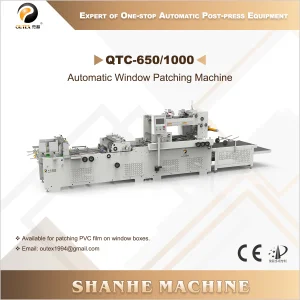
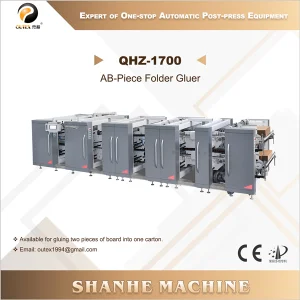
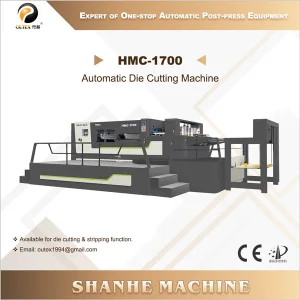
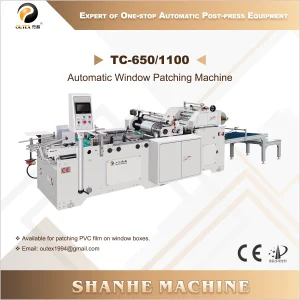
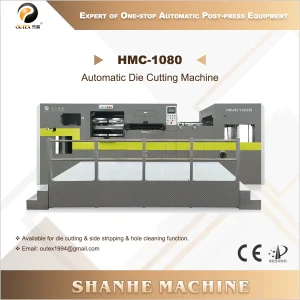
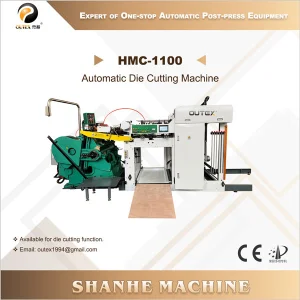
Sheets are blanked and creased using high-pressure automatic die cutters (HMC-1700 / HMC-1080 DE), window patched (DTC-1100 / QTC-650), and glued into final cartons via high-speed folder gluers (QHZ-800 / QHZ-1700 AB-Piece).
How high-speed laminating technologies adapt to regional market standards across North America, Europe, Asia, and Latin America.
In the United States and Canada, the surge in direct-to-consumer delivery has driven demand for high-strength E-flute and B-flute corrugated shipping boxes featuring retail-ready interior printing. High-speed laminators in these plants require heavy-duty pressure rollers and dual-channel feeder heads capable of running 450 gsm Kraft liners at high speeds without compression failure.
European converters prioritize strict environmental compliance under EU single-use plastic reduction directives. Machines must handle ultra-thin water-based adhesives, PLA bio-films, and plastic-free barrier coatings. CE-certified thermal laminators operating in Germany, France, and Italy utilize precise heating rolls to bond eco-friendly films onto luxury cosmetic packaging cleanly.
Manufacturing hubs across China, Southeast Asia, and India demand continuous multi-shift production. Laminators operating in these regions require non-stop pile changes, high-speed flip-flop automatic stackers, and real-time remote diagnostics to achieve maximum uptime across 24/7 manufacturing schedules.
Innovations in AI optical registration, IoT predictive maintenance, and low-carbon thermal energy systems driving next-generation laminating machinery.
Replacing conventional photo-electric eye tracking with high-definition matrix CCD cameras. Deep-learning algorithms calculate dynamic sheet distortion, compensating for paper stretch in real-time at speeds up to 250 m/min.
Integrated Industry 4.0 cloud connectivity continuously monitors bearing temperatures, servo motor torque profiles, and glue pump pressure, notifying maintenance teams before mechanical downtime occurs.
Next-generation film laminators utilize electromagnetic induction heating drums, cutting power consumption by up to 35% while providing uniform surface temperatures across wide-web formats.
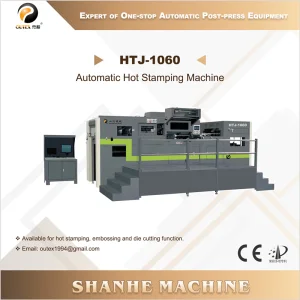
Discover our specialized line of die-cutters, hot stamping presses, rotary slitters, and coating equipment engineered to complete your post-press department.
Expert technical answers addressing registration accuracy, CE compliance verification, maintenance protocols, and line speed optimization.