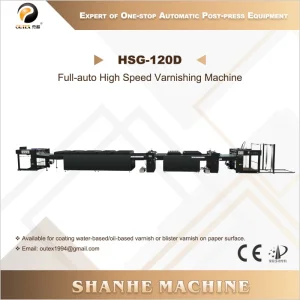
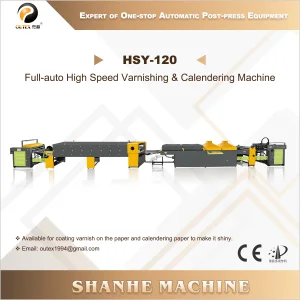
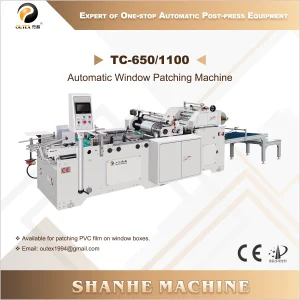
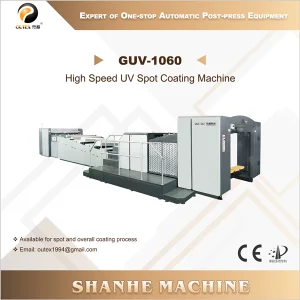
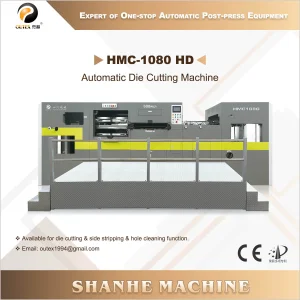
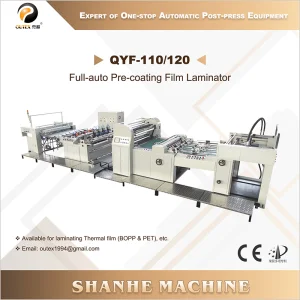
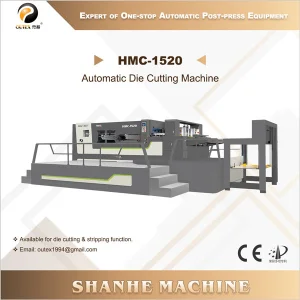
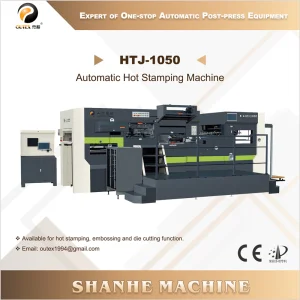
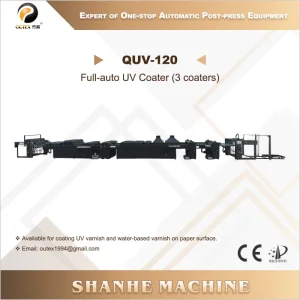
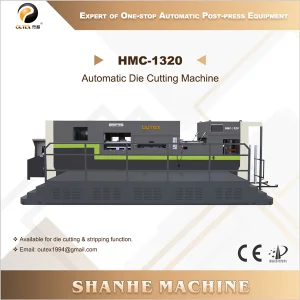
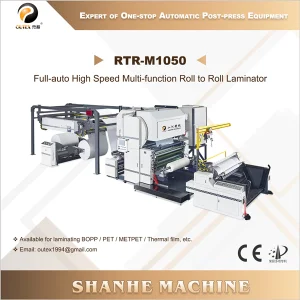
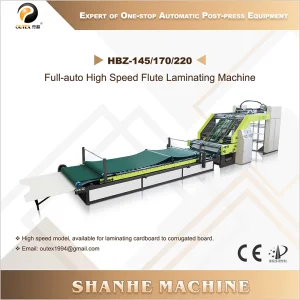
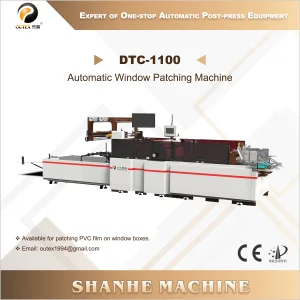
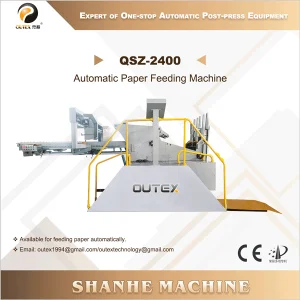
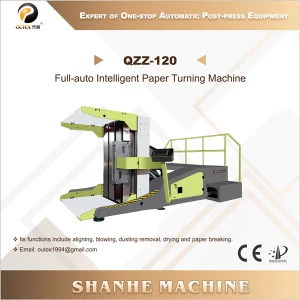
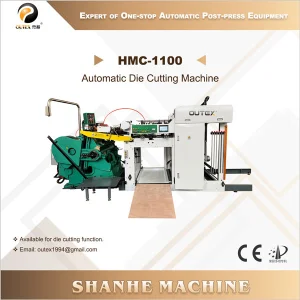
Explore our CE-compliant equipment designed for high-density cardboard-to-cardboard mounting, flute laminating, and finishing processes.
In the rapidly evolving global packaging sector, the manufacturing of premium rigid boxes, high-density board games, hardcover book covers, slipcases, and luxury consumer goods packaging requires specialized post-press converting technologies. While automated high-speed flute laminators dominate high-volume corrugated container production, manual and semi-automatic cardboard-to-cardboard laminating machines represent an indispensable, strategically critical machinery segment for specialized converters worldwide.
Cardboard-to-cardboard lamination—frequently designated in industry nomenclature as board-to-board mounting or dense substrate pasting—involves bonding two or more layers of solid greyboard, chipboard, duplex board, or fine art paper together. Unlike corrugated flute bonding, where fluting channels provide structural rigidity with air gaps, cardboard-to-cardboard lamination creates a solid, ultra-dense composite material ranging in total thickness from 1.5 mm up to 8.0 mm or greater.
Key Industry Insight: The global demand for rigid box packaging is projected to maintain a CAGR of 5.4% through 2030, driven by luxury retail, electronics, cosmetics, and premium spirit packaging. For short-to-medium production runs, custom dimensioning, and ultra-heavy board calipers (>3000 gsm combined), manual cardboard-to-cardboard laminators deliver an unmatchable combination of zero-setup agility, tight dimensional tolerance, and minimal material waste.
Handles thick greyboard substrates up to 6000 gsm without crushing paper fibers or structural deformation, maintaining pristine board flatlines.
Setup times under 5 minutes for varying sheet dimensions, offering critical operational profitability for luxury short-run job lots.
Delivers maximum return on investment (ROI) with lower capital expenditure, lower electricity demand, and minimal operational downtime.
The mechanical performance of a manual cardboard-to-cardboard laminating machine hinges upon three vital engineering sub-systems: precise adhesive film metering, front/side-lay mechanical registration, and uniform pressure-roller compression. Unlike automated paper-to-paper gluing, dense solid board requires precise moisture management to prevent sheet warping (cupping or bowing) post-drying.
Modern high-efficiency manual laminators utilize a precision ground chrome-plated steel metering roller paired with an adjustable doctor blade system or an auxiliary rubber applicator roller. The adhesive system must deposit a micro-thin layer of Cold PVA (Polyvinyl Acetate) or starch-based glue—typically between 12 to 25 micrometers in wet film thickness.
Excessive adhesive application introduces unnecessary moisture into the cellulose matrix of the greyboard, resulting in severe board distortion and extended curing times. Conversely, insufficient adhesive application leads to interfacial delamination during subsequent die-cutting or V-grooving operations.
| Parameter / Substrate Type | Top Sheet Caliper | Bottom Board Caliper | Target Wet Glue Thickness | Registration Precision |
|---|---|---|---|---|
| Luxury Rigid Box Liner | 128 - 200 gsm Art Paper | 1.5 - 3.0 mm Greyboard | 12 - 15 µm | ±0.5 mm |
| Double-Sided Mounted Board | 250 - 450 gsm Duplex | 2.0 - 4.0 mm Greyboard | 15 - 18 µm | ±0.3 mm |
| Multi-Layer Dense Gameboard | 1.5 mm Solid Board | 1.5 - 3.0 mm Solid Board | 18 - 22 µm | ±0.25 mm |
| Heavyweight Industrial Display | 300 gsm Kraft Paper | 3.0 - 6.0 mm Composite Board | 20 - 25 µm | ±0.5 mm |
Manual alignment relies on ergonomic feed tables equipped with adjustable side gauges and front push-register mechanisms. Operators position the bottom substrate onto the gluing station where glue is evenly applied to the upper surface. The top printed sheet is placed in alignment guided by mechanical stops.
Immediately following alignment, the combined substrate enters a continuous dual-belt heavy-duty press unit. The press unit employs calibrated spring-loaded or pneumatic pressure rollers that expel trapped air pockets and initiate immediate green-tack adhesion without crushing the solid core.
For international machinery buyers, machinery importers, and industrial plant managers, ensuring true CE Certification is not merely a legal import requirement for European Economic Area (EEA) markets—it is a verifiable proof of mechanical engineering integrity, electrical safety, and operator ergonomics.
Equipped with dual-channel emergency stop safety relays complying with EN ISO 13850. Physical guards feature positive-break safety switches that cut drive power instantly upon opening.
Roller entry zones feature physical barrier guards and infrared light curtains compliant with EN 1010-1/2 standards to eliminate operator entanglement risks during manual feeding.
Control cabinets are wired according to EN 60204-1, featuring IP54 protection, Schneider/Siemens switchgear, surge suppression, and short-circuit protection for reliable factory continuous operation.
Manual cardboard-to-cardboard laminating machines serve highly diversified packaging sub-sectors where automated equipment lacks flexibility or causes material degradation. Below are primary industrial use cases:
Pasting decorative embossed specialty papers onto 2.5 mm – 4.0 mm rigid greyboard for perfume, watch, and jewelry presentation boxes requiring razor-sharp edge alignment.
Double-sided mounting of printed offset sheets onto 2.0 mm solid puzzle boards. Precise glue metering prevents board warping, ensuring puzzles lay perfectly flat on consumer tables.
Laminating printed book covers and slipcases with thick binder board. Allows rapid job changes for short-run publishing, academic editions, and custom leatherette bindings.
Laminating heavy printed paperboard sheets onto thick solid board substrates to construct structural retail stands capable of supporting heavy retail weights.
The manual board-to-board machinery sector is undergoing a rapid technological evolution. Machine builders are integrating intelligent digital monitoring systems into semi-manual formats to boost output while eliminating operator error.
Next-generation models feature ultrasonic sensors and automatic water-dosing pumps to maintain constant glue viscosity, reducing adhesive consumption by up to 18%.
Equipment development focuses on optimizing roller temperature and metering geometries for non-toxic, bio-based protein glues that support 100% repulpable eco-packaging.
Transitioning manual platforms to hybrid semi-automatic setups with modular robotic vacuum feeders, allowing factories to scale throughput as order volumes expand.
Guangdong Province—specifically the specialized machinery manufacturing clusters in Shantou and the Greater Bay Area—stands as the world’s premier manufacturing ecosystem for post-press converting equipment.
By leveraging localized casting foundries, high-precision CNC machining centers, specialized surface treatment operations, and certified electrical component supply chains, Chinese manufacturers deliver outstanding equipment reliability at highly competitive price points.
Every machine undergoes a continuous 72-hour dry-run and dynamic load testing protocol using maximum caliper board prior to export clearance.
Utilizing globally accessible pneumatic and electrical parts (NSK bearings, Schneider electrics, Airtac pneumatics) ensuring simplified maintenance worldwide.
Streamlined assembly workflows allow standard CE manual cardboard laminators to be dispatched within 15–20 days from order confirmation.
Purchasing capital machinery from international manufacturers requires clear operational and technical support frameworks. Leading Chinese suppliers provide comprehensive export and lifecycle support services tailored to overseas plant requirements:
Factory configuration for regional power grids (380V 3-Phase 50Hz, 220V 3-Phase 60Hz, 460V 60Hz) to ensure immediate plug-and-play installation.
24/7 video support and augmented reality troubleshooting assistance provided directly by senior mechanical and electrical commissioning engineers.
Each unit ships with a complementary 2-year maintenance kit including doctor blades, drive belts, pneumatic seals, and scraper blades.
Discover additional high-performance machinery designed to complete your plant's die-cutting, coating, and paper handling operations.