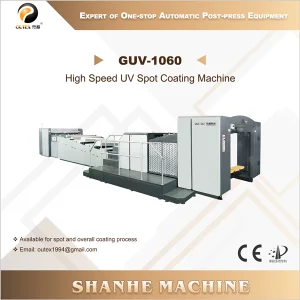
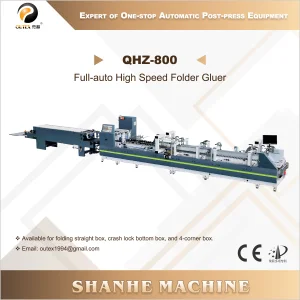
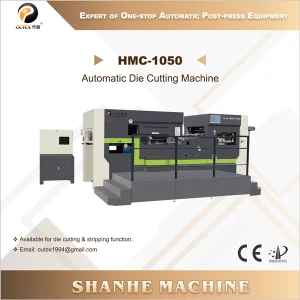
Precision-engineered die cutters, offline UV varnish coaters, flute laminators, and hot stamping systems built in Shantou, China.
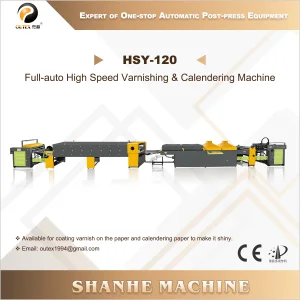
Analyzing the strategic transition from inline offset varnish towers to high-speed offline UV coating machinery across international packaging plants.
In the modern print finishing sector, surface embellishment serves a dual functional purpose: enhancing visual and tactile sensory appeal while creating a resilient protective barrier against mechanical abrasion, moisture, chemical transfer, and handling degradation. Among all post-press surface treatment modalities, Ultra-Violet (UV) coating has established itself as the global industrial benchmark for premium luxury cartons, pharmaceutical folding boxes, cosmetics packaging, and high-volume commercial paperboard graphics.
For international print procurement directors and plant operational executives, choosing between an inline UV coating module integrated directly into an offset printing press (such as Heidelberg, Manroland, or Komori) and an independent offline UV coating machine manufactured by dedicated engineering companies represents a fundamental capital expenditure (CapEx) and operational flexibility decision.
Strategic Insight: Global packaging converters are increasingly shifting toward standalone offline UV coating architectures. Offline equipment decouples printing speeds from finishing constraints, eliminating bottle-necks caused by high viscosity UV varnishes, heavy coating film weights, and specialized spot-coating plate adjustments.
To provide clear information gain for enterprise sourcing teams, the engineering data below outlines the key operational differences between inline press coating attachments and modern Chinese offline UV coating lines:
| Performance Metric | Inline Press UV Tower | China Offline UV Coating Machine | Industrial Operational Impact |
|---|---|---|---|
| Production Flexibility | Tied strictly to printing press schedule | Decoupled; accepts sheets from multiple presses | Offline units maximize total plant throughput by preventing printing press idle time. |
| Coating Film Weight Range | Limited (2.0 – 4.5 g/m²) | Broad (2.5 – 12.0+ g/m²) | Offline machines can deposit thick, high-gloss micro-embossed UV layers unachievable inline. |
| Substrate Versatility | Constrained by feeder grips & press dynamics | Handles paperboard, flutes (E/F/N), plastic sheets | Allows processing of heavy corrugated board, synthetic paper, and pre-laminated sheets. |
| Spot Coating Precision | Requires specialized flexo plate/blanket prep | Dedicated optical & registration flexo spot heads | Achieves registration tolerances within ±0.08 mm at high linear operating speeds. |
| Capital Expenditure (CapEx) | High addition cost to multi-color inline press | High ROI independent investment | Offline coaters deliver 40-60% lower initial machinery investment per finished sheet capacity. |
The global demand for offline UV coaters has experienced accelerated compound annual growth (CAGR), driven by the rapid expansion of e-commerce packaging, luxury consumer goods presentation, and the global ban on non-recyclable plastic lamination films in major markets across the European Union and North America. Water-based barrier varnishes combined with eco-friendly UV top-coats executed on offline platforms now offer a 100% recyclable alternative to traditional film laminates.
How Shantou and Guangdong industrial ecosystems deliver unmatched precision engineering, component integration, and manufacturing cost-efficiency.
Chinese factories like Guangdong Shanhe Industrial utilize high-rigidity heavy-cast iron bases, dynamically balanced ceramic anilox rollers, and ground chrome applicator rollers that prevent micro-vibrations at speeds up to 9,000 sheets/hour.
Situated within major industrial hubs like Shantou, manufacturers control every step—from CNC machining centers and thermal treatment facilities to PLC software development and final assembly lines inside facilities spanning over 34,000 m².
Modern Chinese offline coaters incorporate electronic stepless ballast control, intelligent IR pre-heating modules, air-knife sheet separators, and UV-LED hybrid curing arrays that cut energy usage by up to 35% compared to legacy European machines.
China's dominance in post-press packaging machinery is not merely based on cost efficiency, but on rapid continuous iteration and deep compliance with international safety standards (CE, ISO9001, UL). Enterprise procurement teams working with verified Chinese manufacturers gain direct OEM/ODM customization options, enabling tailor-made feeder heights, custom lamp configurations, and integrated inline web/sheet cleaning modules tailored to specific regional paper grades.
Understanding the mechanical and electronic subsystems that govern smooth varnish laydown, sheet travel, and instantaneous photo-polymerization curing.
An industrial offline UV coating system comprises several tightly synchronized mechanical and electronic subsystems. Failure or imbalance in any single station results in surface defects such as pinholes, orange peel texture, varnish blistering, or edge curling. Top-tier Chinese manufacturers engineer these machines around five core engineering subsystems:
The feeding mechanism utilizes a non-stop heavy-duty vacuum suction head designed to handle paper weights from lightweight 120 g/m² art paper up to heavy 600 g/m² duplex board and laminated corrugated board. Overlapping vacuum belts, sheet decelerators, and double-sheet detection sensors ensure uninterrupted continuous feeding at linear speeds exceeding 100 meters per minute.
The coating head is available in two main configurations depending on application needs:
Before entering the intense ultraviolet radiation chamber, sheets pass through an Infrared (IR) drying and heating tunnel. IR radiation warms the UV resin varnish, lowering its surface tension and allowing the wet film to self-level into a mirror-like finish. This step removes solvent moisture from water-based primer coatings when executing drip-off (primer + UV topcoat) combination processes.
Curing occurs under focused high-intensity UV lamps (medium-pressure mercury lamps or solid-state UV-LED arrays). Photoinitiators in the liquid varnish absorb ultraviolet light energy, triggering a split-second polymerization reaction that transforms the liquid resin into a fully cured, scratch-resistant solid polymer layer. Advanced Chinese machines incorporate stepless electronic power adjustment (ranging from 30% to 100% power) coupled with automatic lamp shutter controls to protect stopped sheets from heat damage.
Thin paper substrates tend to stick to coating rollers due to liquid surface tension. Integrated pneumatic high-pressure air knives continuously peel the leading edge of lightweight paper sheets off the applicator cylinder, conveying them safely onto the delivery grid. The downstream auto-stacker features pneumatic side tampers and height-sensing elevator platforms to form perfectly aligned stack piles ready for immediate die-cutting.
From luxury cosmetics to heavy industrial packaging—where offline UV coating machines create measurable commercial value.
High-gloss spot UV accents combined with soft-touch matte lamination create rich tactile contrast. Offline coaters ensure sharp registration around foil-stamped brand logos and fine micro-embossed text.
Provides critical rub resistance against transit friction while keeping side glue flaps uncoated. This guarantees maximum adhesive bond strength on high-speed folder-gluer lines without glue failure.
Protects book covers, magazine jackets, and luxury marketing catalogs against finger-mark smudging, moisture absorption, and edge tearing during retail shelf handling.
Essential technical and audit parameters global buyers must evaluate before issuing a Purchase Order (PO) to Chinese manufacturers.
Procuring heavy industrial post-press equipment across borders requires rigorous technical audits. Overseas buyers should evaluate prospective Chinese factories using this standardized procurement framework:
Verify machine total net weight. Heavy-duty cast iron frames (over 6,000 kg) absorb micro-vibrations, ensuring consistent coating film thickness across a 1040 mm wide sheet over years of continuous multi-shift production.
Check the bill of materials (BOM) for international electrical standards. Quality factories standardly integrate Schneider electrics, Siemens PLCs, Omron sensors, and Yaskawa servo drives for easy global spare parts sourcing.
Ensure full compliance with European CE Directives (2006/42/EC Machine Safety), equipped with interlocked safety guards, emergency push-stop circuits, ozone exhaust blowers, and light-curtain barriers.
Total Cost of Ownership (TCO) Advisory: Calculate energy consumption per thousand sheets. Modern stepless electronic UV ballasts save up to 25 kWh per production shift compared to legacy magnetic transformer ballasts, returning substantial operating savings over a machine's 15-year service lifecycle.
How digital spot coating, LED-UV curing, and smart automation are redefining post-press surface finishing.
The post-press machinery sector is undergoing a rapid technological transformation driven by digitalization, sustainability mandates, and intelligent automation:
Detailed technical answers for engineering teams, plant managers, and machinery purchasing agents.
An offline UV coater offers far greater operational flexibility and higher coating capacity. It frees up expensive multi-color printing presses from slow coating passes, allows heavier varnish laydown (up to 12 g/m²), handles diverse paperboard and corrugated flutes, and enables dedicated spot-UV registration without taking down press configurations.
Standard offline UV coaters manufactured by lead factories like Guangdong Shanhe accommodate paper weights ranging from 120 g/m² art paper up to 600 g/m² heavy cardboard, as well as micro-flute corrugated board (E, F, N flutes) up to 4.0 mm thickness using air-knife sheet separators.
High registration accuracy (±0.08 mm) is achieved through high-precision front-lay and side-lay alignment systems, optical sensor sheet positioning, servo-driven plate cylinder positioning, and ultra-rigid cast iron machine frames that eliminate micro-vibrations at speeds up to 9,000 sheets/hour.
Standard UV mercury vapor lamps typically provide an operational lifespan of 1,000 to 1,500 hours before ultraviolet intensity degrades. In contrast, modern solid-state LED-UV modules deliver operational lifespans exceeding 20,000 hours with instantaneous on/off cycling and zero warm-up delay.
Yes. Many dual-purpose offline machines are engineered with dual drying tunnels featuring both Infrared (IR) hot-air drying modules and Ultraviolet (UV) radiation chambers. This configuration enables processing of aqueous barrier coatings, UV gloss/matte varnishes, and combination drip-off finishes.
Edge curling on thin paper stock is controlled using pneumatic air-knife blowers at the coating cylinder gap, precision tension-controlled suction conveyor belts, and chilled water roller modules installed after the UV chamber to immediately lower sheet temperature before stacking.
Reputable manufacturers provide comprehensive overseas commissioning support, including on-site technician installation, operator training, remote PLC diagnostic assistance, pre-packaged emergency consumable spare parts, and nationwide local service distributor networks in key export regions.
Machines are treated with anti-rust protective oil, wrapped in vacuum-sealed moisture-proof foil packaging, mounted on heavy-duty steel channel bases, and fully enclosed in export-standard fumigated wooden crates suitable for sea container transportation.
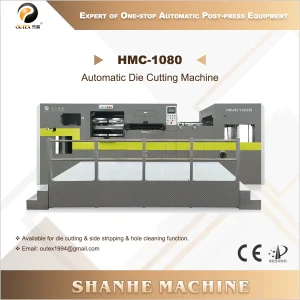
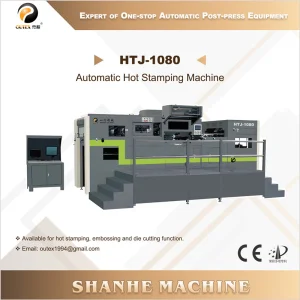
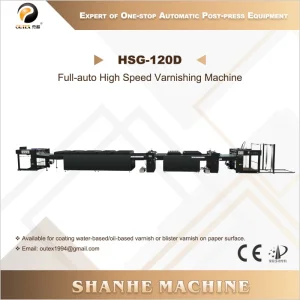
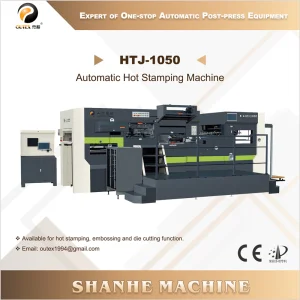
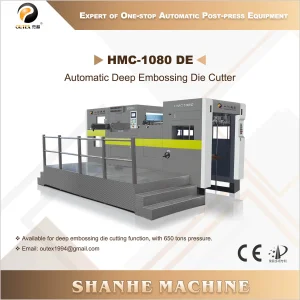
Complete post-press finishing machinery portfolio engineered for global carton and packaging converters.
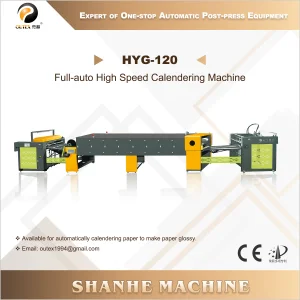
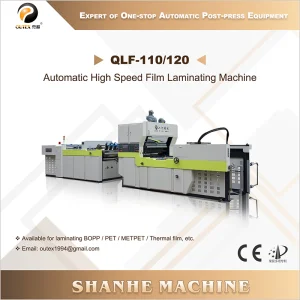
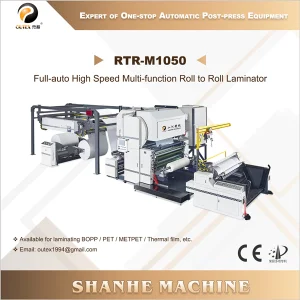
Partnering with Guangdong Shanhe Industrial Co., Ltd. for complete intelligent post-press lines.
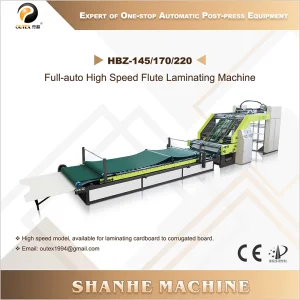
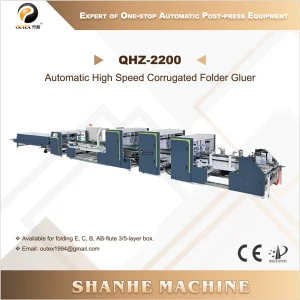
Selecting the optimal offline UV coating machine manufacturer in China requires aligning operational requirements—sheet dimensions, varnish thickness, registered spot detail, and hourly output—with a supplier offering deep mechanical heritage and global technical support. Founded in 1994 in Shantou, Guangdong, Guangdong Shanhe Industrial Co., Ltd. (SHANHE MACHINE) operates a state-of-the-art 34,175 m² manufacturing facility dedicated to engineering high-speed flute laminators, film laminators, hot stamping machines, die cutters, folder gluers, and offline UV spot/flood coaters.
With 30 years of continuous innovation, direct export capabilities across worldwide ports, and live machine demonstrations at major international expos including DRUPA Düsseldorf, Shanhe Machine empowers global packaging converters to maximize output quality while lowering overall cost per sheet.