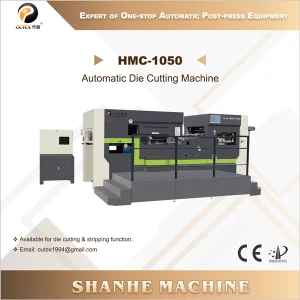
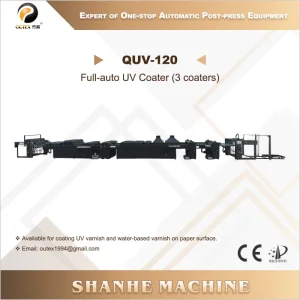
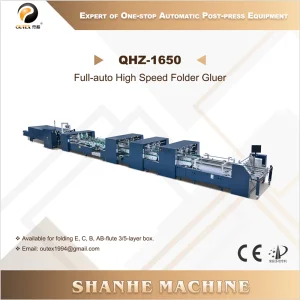
Engineered for large-format commercial printing, folding carton conversion, and high-volume corrugated packaging facilities worldwide.
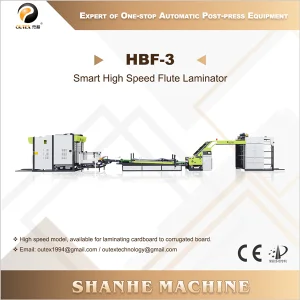
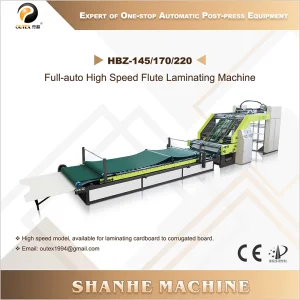
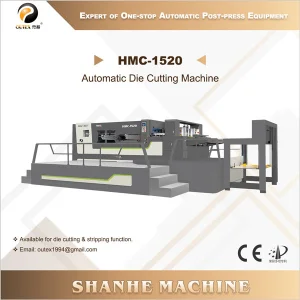
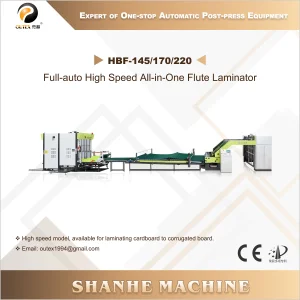
Analysis of changing consumer packaging expectations, sustainability mandates, and the shift toward automated big-size film lamination technology.
Modern packaging converters are scaling up from standard B1 sizes to wide-format sheet capacities (ranging from 1100 mm to 2200 mm). Driven by retail display packaging (POS/POP), large electronics boxing, and heavy-duty corrugated shipping sleeves, industrial packaging plants require big-size film laminating machines that can maintain high speed without compromising film-to-board register precision or introducing surface bubbling.
For international buyers in Europe, North America, and high-compliance jurisdictions, purchasing post-press machinery carrying genuine CE Certification is non-negotiable. CE marking guarantees compliance with the EU Machinery Directive 2006/42/EC, Low Voltage Directive 2014/35/EU, and Electromagnetic Compatibility (EMC) Directive 2014/30/EU, shielding enterprises from regulatory liability and operational downtime.
Overall Equipment Effectiveness (OEE) in modern post-press operations depends heavily on minimizing set-up times and continuous feeder throughput. Modern big-size laminating machinery integrates servo-driven feeder heads, dynamic overlap controls, electromagnetic roller heating, and automatic flip-flop stackers to achieve processing speeds of up to 120–200 meters/min while requiring minimal operator intervention.
Technical breakdown of core sub-systems engineered for thermal thermal efficiency, substrate flexibility, and high-speed precision performance.
| Functional Subsystem | Technical Design Architecture | Engineering Benefit & Advantage | Impact on Product Quality |
|---|---|---|---|
| High-Precision Feeder Head | Multi-suction pneumatic separation head driven by independent servo motors with pre-stacker mechanisms. | Enables non-stop continuous sheet feeding for both light paper (100 gsm) and heavy cardboard (up to 800 gsm). | Eliminates double-sheet feeding, sheet distortion, and surface scratching at high velocities. |
| Thermal Roller System | Large-diameter mirror steel roller utilizing advanced Electromagnetic Induction Heating or circulating oil thermal control. | Achieves ultra-fast heat recovery and uniform thermal distribution across the entire 1450 mm–2200 mm width. | Prevents thermal variance, ensuring crystal-clear optical transparency without film blistering or adhesive hazing. |
| Pressure Control Unit | Hydraulic station with dual-cylinder proportional pressure adjustment and micro-metric mechanical mechanical stops. | Delivers massive, evenly distributed linear nip pressure (up to 25 Mpa) across wide-format webs. | Guarantees permanent lamination adhesion even on heavily printed, dark-ink offset sheets or digital toner substrates. |
| Anti-Curl Mechanism | Multi-stage adjustable anti-curling breaker roller with dynamic tension compensation. | Neutralizes structural tension stress caused by film shrinkage during thermal bonding. | Produces flat, non-warped sheets immediately ready for downstream die-cutting, embossing, or folder-gluing. |
| Pneumatic Cutting & Separation | High-speed rotary disc knife combined with pneumatic burst shearing or hot-knife slitting systems. | Cleanly separates continuous BOPP, PET, or Thermal film webs at high operational speeds without tailing. | Ensures clean, burr-free edges essential for automatic folder-gluer feeding and precise box squaring. |
Automated pile lifting and high-speed pneumatic sheet separation ensure non-stop substrate entry into the alignment table.
Optical sensors and servo pull-guides align sheet lead edges to within ±1.0 mm tolerance before film engagement.
Substrate meets BOPP/PET film at the heated nip roller under proportional hydraulic pressure for molecular adhesion.
Dynamic anti-curl breaker flattens the web prior to precise pneumatic knife slitting into individual flat laminated sheets.
Automated flip-flop delivery turns and stacks alternating sheets to eliminate pile lean and streamline palette packaging.
Meeting global sustainability mandates through support for biodegradable films, water-based adhesives, and energy-efficient processing.
Modern big-size film laminators excel in applying thermal pre-coated BOPP, PET, Nylon, and Metallic films. Thermal film integration eliminates VOC emissions, simplifies plant environmental compliance, and allows instant processing without drying delays. Superior temperature stability ensures consistent gloss or tactile matte finishes across millions of impressions.
For large packaging enterprises seeking the absolute lowest consumable unit cost, dual-function film laminating machines support water-based acrylic adhesives. Outfitted with high-efficiency ceramic hot-air drying tunnels, these systems rapidly evaporate moisture from water-based glues before bonding, delivering high bonding strength on economical un-coated paperboard.
As global circular economy directives (such as the EU Packaging and Packaging Waste Regulation - PPWR) tighten, big-size laminating machinery must handle delicate PLA (Polylactic Acid) and cellulose-based biodegradable films. Precise tension control and micro-adjusted thermal settings prevent stretch deformation of sustainable eco-films.
A rigorous qualification framework for Chief Procurement Officers and Operations Directors conducting OEM site audits.
A premier OEM machine manufacturer must possess in-house heavy CNC machining centers, dynamic roller balancing equipment, and strict metallurgical testing. Framework structural integrity—specifically solid 40mm to 60mm heavy cast-iron wall plates—is crucial to absorb harmonic vibrations during 24/7 high-speed operation on 2200mm wide sheets.
Verifying CE certification requires inspecting physical safety interlocks, light curtains surrounding heavy nip rollers, emergency pneumatic roll separation systems, and PL-e (Performance Level e) dual-circuit safety relays. A compliant machine guarantees worker protection during high-speed film threading and roller cleaning routines.
Evaluating machinery on initial capital outlay (CAPEX) alone is inadequate. Advanced electromagnetic induction roller heating cuts electrical power consumption by up to 35% compared to traditional electrical resistance heating elements, yielding massive operational expenditure (OPEX) savings over a 10-year machine lifecycle.
Ensuring seamless international machinery deployment, commissioning support, and lifecycle spare-parts availability.
Every CE-certified laminating line is equipped with encrypted industrial IoT telemetry modules. Factory engineers can perform remote firmware updates, diagnose servo alignment faults, and assist local maintenance crews in real-time, drastically reducing emergency downtime.
Factory-trained field engineers are dispatched globally to supervise foundation placement, electrical wiring integration, FAT/SAT (Factory/Site Acceptance Testing), and extensive operator training programs in local languages to ensure swift ramp-up to full output.
Critical consumable components—such as rubber nip rollers, pneumatic rotary cutters, heating elements, and vacuum suction cups—are stocked in regional hub warehouses to guarantee rapid delivery within 24 to 48 hours anywhere in major industrial zones.
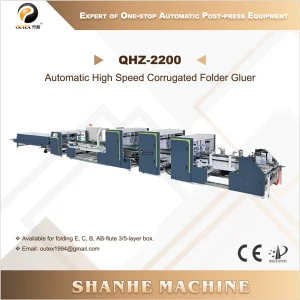
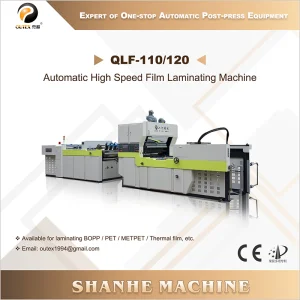
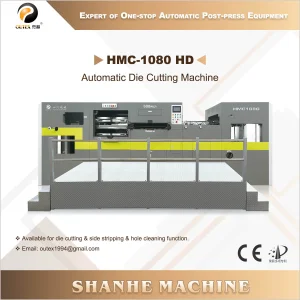
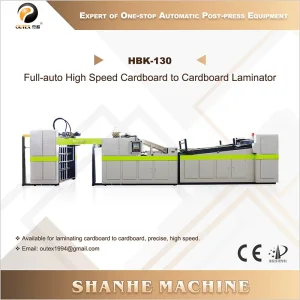
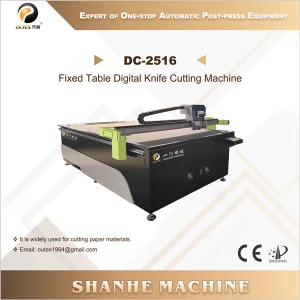
Explore our full line of automatic film laminators, heavy-duty die cutters, corrugated folder gluers, and UV coating machines.
Expert insights regarding CE compliance, substrate matching, installation requirements, and operational maintenance.
CE Certification confirms that the machinery complies fully with European Union health, safety, and environmental protection standards—specifically the Machinery Directive 2006/42/EC, EMC Directive 2014/30/EU, and Low Voltage Directive 2014/35/EU. For packaging plant operators, importing CE-certified machinery eliminates regulatory customs holds, guarantees mandatory safety features (such as light curtain interlocks, emergency stop loops, and PL-e safety relays), and protects company leadership from operational liability in industrial workplaces.
Thermal (Dry) Lamination uses pre-coated film with heat-activated adhesive. It offers rapid turnarounds, instant downstream processing (die-cutting/embossing), zero VOC emissions, and flawless visual clarity. Water-Based (Wet) Lamination applies a liquid water-based adhesive directly during production and relies on hot-air drying tunnels. While wet lamination requires longer initial setup and drying calibration, it yields significantly lower unit consumable costs on massive volume packaging runs using non-coated paperboard.
Plastic films (BOPP/PET) undergo subtle elongation under thermal hydraulic pressure. As the laminated sheet cools, film tension causes thin paperboard substrates to curl upward. An integrated anti-curl mechanism applies controlled counter-bending force across the sheet via micro-adjustable breaker rolls, neutralizing internal physical stress. This ensures perfectly flat, stackable sheets that feed smoothly into high-speed automatic die cutters and folder gluers.
Big size laminating machines typically cover working widths ranging from 1100 mm (43.3 inches) up to 2200 mm (86.6 inches). They accommodate sheet lengths up to 1650 mm or custom continuous sheet sizes, enabling multi-up folding carton layouts, massive point-of-sale (POS) displays, and heavy corrugated top-sheet lamination on a single industrial footprint.
Daily maintenance includes inspecting and cleaning the mirror-finish chromic thermal heating roller using non-abrasive solvent solutions to remove adhesive buildup or paper dust. Weekly checks require verifying hydraulic oil pressure stability, calibrating rubber pressure roller nip parallelism, inspecting pneumatic blade sharpness, and lubricating high-speed drive chains and bearings according to factory SLA schedules.
Yes. Advanced CE-certified laminators equipped with precise servo-driven tension controls and electromagnetic induction heating rollers can process delicate PLA (Polylactic Acid) and cellulose-based bio-films. The precise control over roller surface temperature prevents thermal warping or elongation of green substrates, aligning with corporate ESG targets.