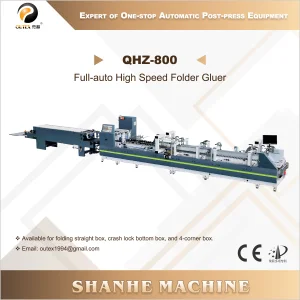
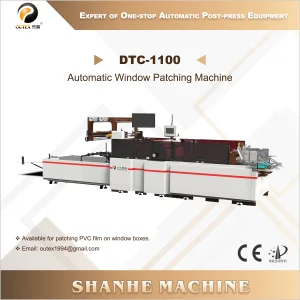
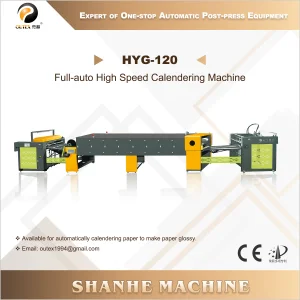
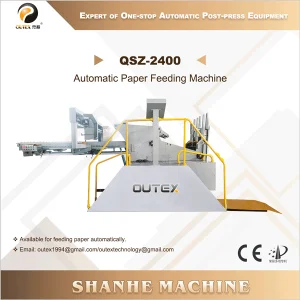
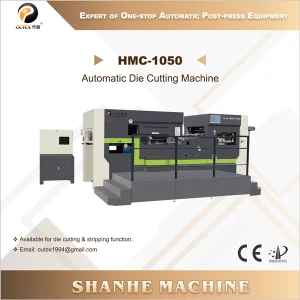
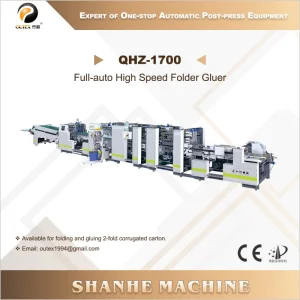
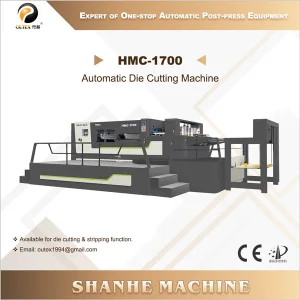
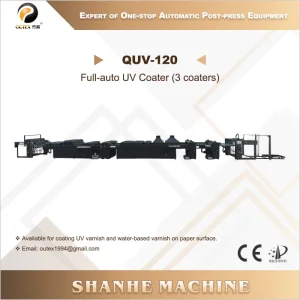
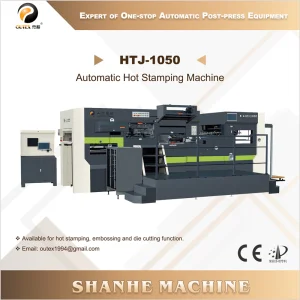
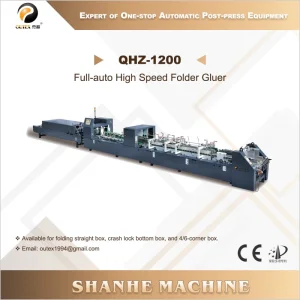
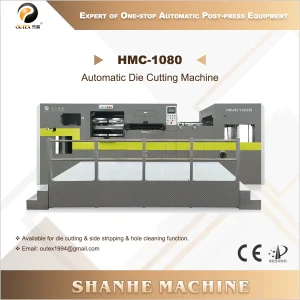
Explore our CE-certified post-press portfolio designed for high-precision corrugated mounting, folding-gluing, calendering, and die-cutting.
The global converting and post-press packaging landscape is undergoing a structural paradigm shift driven by e-commerce expansion, rigid environmental mandates against single-use plastics, and heightened consumer demand for unboxing aesthetics. Modern packaging converters face unprecedented operational pressure: run lengths are growing shorter, client design requests are increasingly complex, and margins demand zero-tolerance for material waste or downtime.
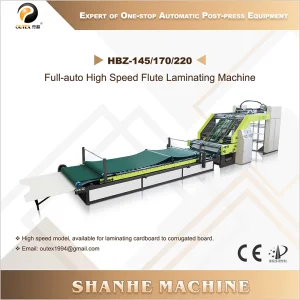
At the center of this transformation sits the high-speed Cardboard and Flute Laminator. Laminating printed top sheets (ranging from 180 GSM offset paper to heavy cardboard) with underlying corrugated board substrates (A, B, C, E, F, N flutes and double-wall board) is no longer merely a mechanical step—it is a critical determinant of structural integrity, graphic presentation, and overall box compression test (BCT) values.
Converters now handle everything from micro-flute (F/N flute) cosmetic cartons to heavy-duty triple-wall industrial shipping boxes. Laminators must adjust dynamic nip pressures without crushing flutes.
Importers and tier-1 packaging groups mandate verified CE Certification compliant with Directive 2006/42/EC and EN ISO 12100 standards to ensure operational safety and low liability.
Legacy mechanical push-rod systems are being replaced by multi-axis motion controllers and optical sensors that guarantee high-speed alignment across variable humidity conditions.
Delivering high information gain through structural analysis: How modern CE-certified flute laminators achieve speed without sacrificing accuracy.
Traditional laminators rely on mechanical stops which cause edge curling and surface scuffing at speeds above 100 m/min. Modern machines utilize dual-servo feeding heads synchronized via optical encoders. The top sheet feeder and bottom flute feeder operate under closed-loop motion control, calculating alignment offsets in microseconds to maintain overlap consistency within ±0.7mm.
Adhesive waste is a major cost driver in packaging plants. Advanced flute laminators integrate an automatic glue level tracking mechanism paired with an ultra-fine stainless steel metering roller. By maintaining a uniform 0.015–0.03mm glue film thickness, operators prevent washboard defects on E/F flutes while cutting adhesive consumption by up to 22% per thousand square meters.
| Substrate Parameter | Top Sheet Specifications | Bottom Substrate Range | Alignment Technology | Max Operating Speed |
|---|---|---|---|---|
| Micro-Flute Packaging | 180 – 450 gsm Cardboard | E, F, N Flute Single Face | Photoelectric Servo Tracking | 160 – 200 m/min |
| Standard Corrugated | 250 – 600 gsm Cardboard | A, B, C, D Flute Corrugated | Differential Lay Servo Sync | 180 – 200 m/min |
| Heavy Duty Double Wall | 300 – 800 gsm Greyboard | AB, BC, BE Double-Wall Corrugated | Mechanical & Optical Hybrid | 120 – 160 m/min |
| Board-to-Board Lamination | 250 – 800 gsm Cardboard | 1.0 – 3.5 mm Heavy Cardboard | Non-Stop Feeder Optical Sync | 9,000 – 10,000 sheets/hr |
Global packaging machinery procurement has transitioned from pure purchase price evaluation to comprehensive total cost of ownership (TCO) and lead-time security. The Shantou/Guangdong industrial packaging equipment cluster in China represents the global apex of vertical supply chain integration.
By leveraging an ultra-dense localized cluster of precision machining centers, hardened steel heat-treatment foundries, PLC automation integrators, and standardized component providers, tier-1 Chinese manufacturers deliver unparalleled economic value without compromising engineering robustness.
Complete control over raw metal processing, CNC side-frame milling, and robotic welding ensures tight structural tolerances, eliminating frame vibration under high-speed operation.
While mechanical frames are manufactured in-house, electrical control architectures incorporate Siemens PLCs, Schneider electronics, Yaskawa servo drives, and NSK bearings for global spare parts interchangeability.
Direct proximity to international deep-water ports (Shantou, Shenzhen, Guangzhou, Shanghai) reduces transit lead-time by 30%, enabling fast factory-to-site deployment worldwide.
From FMCG shelf-ready packaging to heavy industrial containers, discover how specialized lamination configurations solve sector-specific challenges.
Substrate: 350g Kraft Cover + BC Flute Corrugated.
Challenge: Maintaining burst strength and stackability during rough transit handling.
Solution: Heavy-duty flute laminating lines configured with dynamic double-nip pressing sections to enhance glue bonding without reducing flute wall thickness.
Substrate: 250g Gold/Silver Foil Paper + E/F Micro-Flute.
Challenge: Preventing surface scratching, foil peeling, and registration mismatch on visible window cutouts.
Solution: Servo-driven top sheet suction feeder combined with anti-static air bars and gentle belt transportation.
Substrate: 300g Coated Duplex Board + B-Flute Single Wall.
Challenge: High-volume continuous production requiring non-stop pile changes and rapid job turnaround.
Solution: Automatic high-speed laminator linked directly to an automated flip-flop stacker and palletizing unit.
The next decade of packaging converting technology belongs to autonomous machine intelligence, low-carbon manufacturing, and real-time operational feedback. Manufacturers are moving beyond simple mechanical speed upgrades toward fully connected smart plants.
Replacing traditional optical sensors with high-resolution matrix cameras. AI algorithms analyze printed registration marks on the fly, auto-correcting skew angle and sheet stretching caused by ambient humidity variations in real time.
Integrated cloud telemetry monitors roller bearing vibration, thermal profiles, and servo motor torque. Operators receive automated alerts before mechanical failure occurs, minimizing unscheduled downtime.
Next-gen fluid mechanics automatically adjust glue viscosity based on ambient temperature sensors, recycling excess adhesive through ultrasonic filters to eliminate operator manual cleaning cycles.
Seamless standardized communication protocols (OPC UA / Industry 4.0 standard) allowing laminators, die-cutters, and folder-gluers to auto-load job parameters directly from central plant management software.
Navigating global compliance rules is critical for overseas machinery buyers. A genuine CE-certified Cardboard and Flute Laminator must adhere strictly to the European Machinery Directive 2006/42/EC, Low Voltage Directive 2014/35/EU, and Electromagnetic Compatibility (EMC) Directive 2014/30/EU.
Every mechanical pinch point, rotating shaft, and sheet transfer zone is engineered with safety interlocks, light curtains, and emergency stop circuits rated to Performance Level d (PL-d).
Wiring harnesses, control cabinets, and grounding circuits comply with rigorous European industrial electrical safety rules, preventing EMI interference with surrounding plant hardware.
Factory-trained service technicians deliver site-planning consultation, turnkey installation, operator safety certification, and lifetime remote software upgrades worldwide.
Discover complementary post-press machinery to complete your intelligent packaging production facility.
Clear, authoritative engineering answers for buyers, plant managers, and equipment operators.