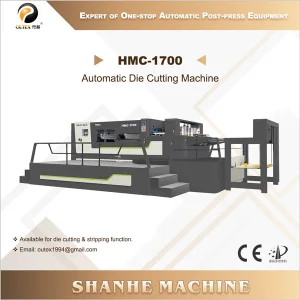
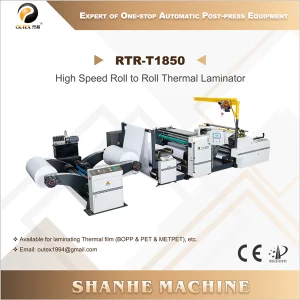
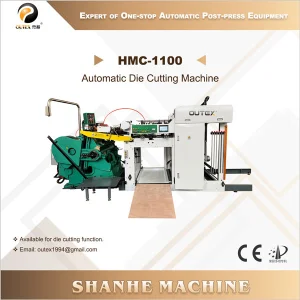
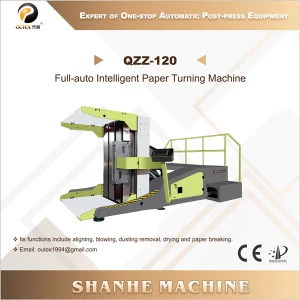
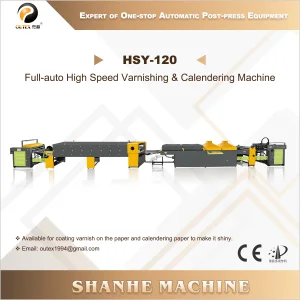
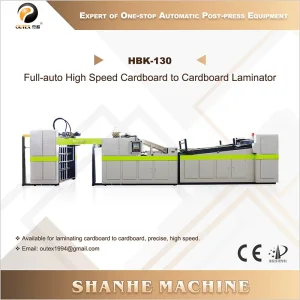
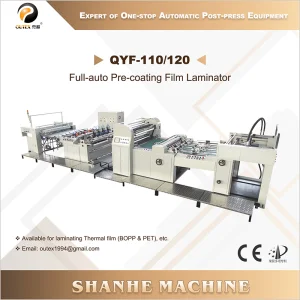
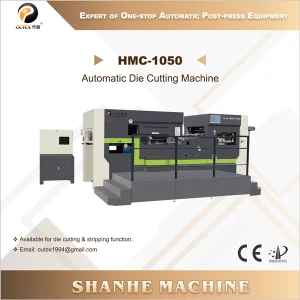
Explore our CE-compliant equipment catalog engineered for maximum industrial throughput, precision foil application, and seamless packaging workflow integration.
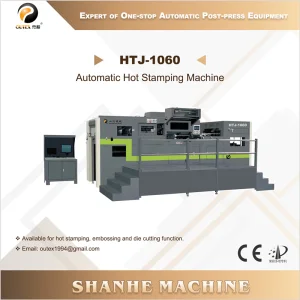
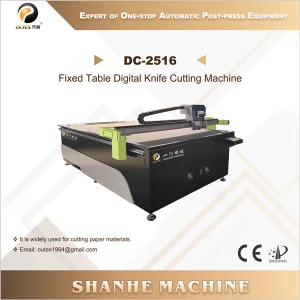
In the high-stakes sector of premium packaging, brand protection, and post-press print embellishment, the demand for CE Certification Pneumatic Hot Foil Stamping Machines has experienced exponential growth worldwide. As consumer packaging transitions from basic functional protection to tactile visual storytelling, high-speed pneumatic stamping machinery serves as the cornerstone technology for applying metallic foils, intricate holographic anti-counterfeiting seals, and deep multi-level embossing onto folding cartons, rigid boxes, leather, and synthetic substrates.
Unlike purely mechanical platen presses or heavy hydraulic units, modern pneumatic hot foil stamping machines bridge the gap between agility, rapid thermal cycling, and high-frequency force displacement. By utilizing clean, compressed atmospheric air managed via proportional servo-pneumatic valves and micro-processor logic units, pneumatic hot stamping systems achieve exceptionally consistent dwell times and uniform pressure dispersion without the thermal contamination or oil-leakage risks associated with hydraulic circuits.
Pneumatic hot foil stamping machinery engineered under strict European CE Directives (such as the Machinery Directive 2006/42/EC and Low Voltage Directive 2014/35/EU) guarantees structural safety, zero-differential thermal platen drift, and modular integration into automated post-press converting lines. Factory-direct procurement from certified original equipment manufacturers (OEMs) ensures strict quality control, lower total cost of ownership (TCO), and customized foil-saving algorithms.
The global hot foil stamping equipment market is undergoing a structural shift driven by automation, short-run versatility, and strict environmental and electrical safety compliance. As global consumer goods packaging (FMCG), luxury cosmetics, pharmaceutical packaging, and high-end spirit labels demand visual differentiation, converting plants across Europe, North America, Southeast Asia, and the Middle East are modernizing their post-press infrastructure.
Cosmetics and fragrance brands require flawless metallic finishes, micro-embossing, and reflective holographic detailing. Pneumatic stamping presses allow fine-tuned pressure control that prevents die indentation on delicate 200–350 gsm paperboards.
To comply with global serialization laws, pharmaceutical manufacturers apply registered optical variable devices (OVDs) and track-and-trace security holograms via pneumatic hot stamping machines designed with high-repeatability optical sensors.
From hardcover book bindings and certificates to greeting cards and security documents, pneumatic hot stamping units offer fast job setup, rapidly interchangeable heated die plates, and reduced mechanical downtime.
Industrial converting facilities are increasingly sourcing equipment directly from leading specialized machinery companies and certified Chinese OEM factories that hold verified CE credentials. By combining European safety engineering with advanced Asian manufacturing scalability, print shops obtain high-precision pneumatic stamping capabilities at competitive capital expenditure levels.
Understanding the physics behind pneumatic hot foil stamping is paramount for plant operations managers and manufacturing engineers. Hot foil stamping requires a synchronized matrix of three critical variables: Temperature, Pressure, and Dwell Time (TPD Matrix).
In a pneumatic hot stamping system, mechanical force is derived from compressed air acting on a double-acting heavy-duty cylinder or a pneumatic toggle-joint mechanism. The pneumatic drive architecture provides key operational advantages over alternative technologies:
| Performance Criteria | Pneumatic Hot Stamping | Hydraulic Hot Stamping | Mechanical Platen Press |
|---|---|---|---|
| Operating Pressure Range | 0.4 – 0.8 MPa (Compressed Air) | 5.0 – 20.0 MPa (Fluid Pressure) | Fixed Mechanical Toggle Tonnage |
| Setup Time & Die Change | Rapid (Under 10 mins) | Moderate (15–30 mins) | Lengthy (Complex lockups) |
| Cleanliness & Leak Risks | 100% Oil-Free Clean Operation | High Fluid Leak Risk | Grease/Lubricant Maintenance Needed |
| Dwell Time Adjustment | Digital Microsecond Precision | Flow-Control Valve Dependent | Speed/Cam Radius Dependent |
| CE Safety Integration | Instant Pneumatic Exhaust Dump | Hydraulic Lock & Relief Valves | Mechanical Flywheel Brake System |
For international buyers and enterprise print networks importing hot foil stamping machinery into the European Economic Area (EEA), North America, or regions adhering to global ISO/IEC standards, CE certification is far more than a simple compliance mark—it is a rigorous validation of structural, electrical, and pneumatic safety architecture.
Mandates comprehensive risk assessment (EN ISO 12100), structural calculations of stress-bearing pneumatic cylinders, emergency stop response times, and dual-channel safety relays to prevent accidental cycle engagement.
Governs electrical insulation, grounding continuity, and thermal safety of high-wattage resistance heating cartridges embedded within the stamping plate, preventing electrical short-circuiting during continuous 200°C+ operation.
Requires automated pneumatic pressure relief valves, residual pressure dump circuits upon safety curtain trip, anti-tie-down dual hand control buttons, and burst-resistant air hose assemblies.
When selecting a supplier or factory for CE-certified pneumatic hot foil stamping machines, enterprise purchasers should demand: (1) Official Declaration of Conformity issued by a accredited European Notified Body, (2) Full technical construction file (TCF), (3) Operation manual featuring safety circuit diagrams, and (4) Legitimate CE marking plates attached directly to the machine chassis displaying serial numbers and voltage requirements.
Pneumatic hot foil stamping machinery adapts seamlessly across diverse manufacturing setups. From standalone semi-automatic benchtop units for custom prototyping to fully automatic continuous web or sheet-fed lines, high-precision factories customize pneumatic presses to accommodate specialized substrate physics.
Used extensively for hot stamping titles, gilded edges, and metallic foil accents on leatherette, PVC, and cloth book covers. The pneumatic cylinder maintains long dwell time under steady pressure to force foil deep into textured grain surfaces.
Enables accurate foil deposition onto thick cardboard components prior to box wrapping, ensuring zero distortion of die-cut edges while delivering crisp metallic contrast for luxury consumer electronics and spirit packaging.
Deployed in automotive interior embellishments and appliance control panels. Pneumatic presses equipped with silicone rubber dies conform smoothly to slightly curved or recessed injection-molded plastic contours.
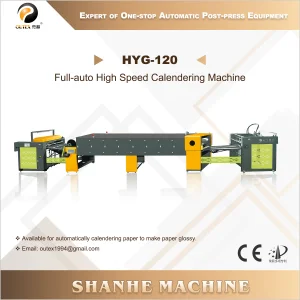
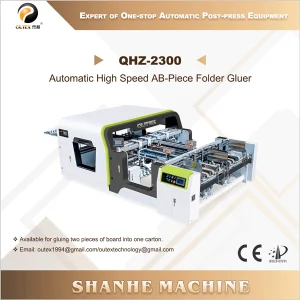
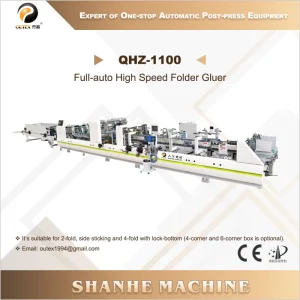
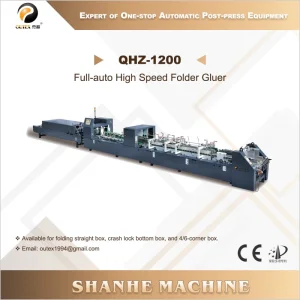
In modern industrial converting operations, hot foil stamping machines do not work in isolation. Leading packaging producers integrate pneumatic hot foil stamping alongside pre-coating film laminators, full-auto die cutters, UV spot coaters, and high-speed folder gluers to form continuous high-throughput manufacturing cells.
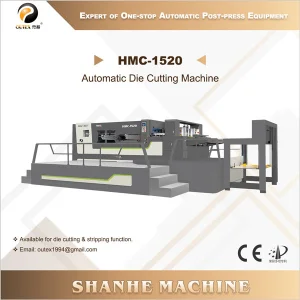
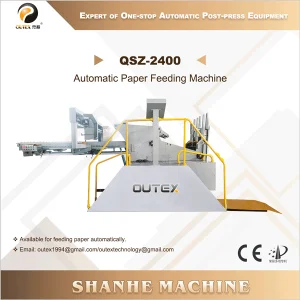
By pairing CE-certified automatic pneumatic stamping presses with inline automatic paper feeding units (such as the QSZ-2400) and downstream high-precision die cutters (such as the HMC-1520 series), packaging plants achieve total automation from raw printed paperboard to folded, glued, and stamped retail-ready cartons.
Selecting the right machinery partner requires evaluating factory manufacturing infrastructure, engineering competence, quality control protocols, and long-term after-sales support capabilities. Global enterprise buyers auditing a potential factory or machinery company should evaluate the following four core pillars:
Ensure the manufacturer utilizes in-house CNC machining centers, precision surface grinders, and laser alignment tools to fabricate machine frames and heating platens. Frame rigidity directly impacts pressure uniformity across large format sheets.
Verify that critical pneumatic and electrical components are sourced from globally recognized brands (such as Festo or SMC for pneumatic valves/cylinders, Omron or Schneider for electrical controls, and PID digital temperature controllers).
Leading suppliers run continuous 48-hour burn-in operational tests using customer-supplied substrates prior to export packaging, ensuring zero thermal gradient drift and stable pneumatic holding pressure under load.
Audit the supplier's capability to deliver remote diagnostics, supply critical consumable spare parts kits, and dispatch factory-trained field engineers for site installation and operator training.
Clear, authoritative technical answers addressing common inquiries from print plant engineers, factory procurement directors, and operations managers.
Explore additional CE-certified equipment solutions including full-auto laminators, heavy-duty die cutters, digital cutting plotters, and intelligent folder gluers.