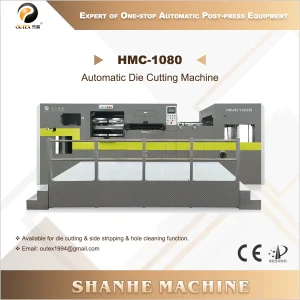
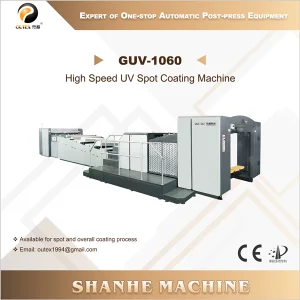
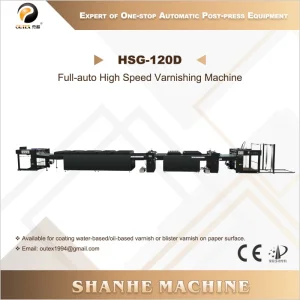
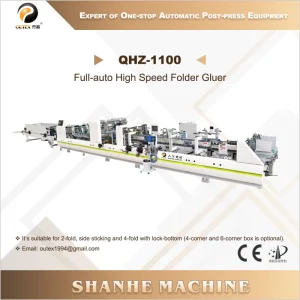
Explore our industrial-grade automation units optimized for zero-defect rigid box, display board, and corrugated packaging production lines.
Analyzing structural shifts in rigid packaging manufacturing, structural caliper demands, and high-speed automatic board laminating equipment market growth.
The global luxury gift box, consumer electronics packaging, and hardbound book binding sectors have experienced unprecedented expansion. Traditional flute laminators are unsuited for solid greyboard-to-greyboard bonding, driving demand for specialized cardboard to cardboard laminating machines engineered specifically for multi-layer rigid substrates ranging from 300 gsm to 3.0mm caliper.
Unlike flute-to-paper lamination where corrugated air pockets absorb moisture variances, board-to-board mounting requires dynamic adhesive film tension control. Excessive water-based glue application triggers paper warping. Leading Chinese original equipment manufacturers (OEMs) have engineered micro-metering glue rollers that apply uniform adhesive coatings down to 12 grams per square meter.
Modern packaging plants demand linear speeds reaching 9,000 to 10,000 sheets per hour without compromising registration accuracy. Multi-axis Motion Control systems utilizing absolute encoder feedback now replace mechanical chain feeds, ensuring front-lay and side-lay alignment tolerances within ±0.5mm across all standard board formats.
A common operational bottleneck for packaging converters is selecting the wrong lamination machine architecture. Standard flute laminators rely on top-sheet feeder systems optimized for lightweight printed liners (180–350 gsm) over open flutes (E, F, G, B flute). In contrast, true industrial China cardboard to cardboard laminators feature dual heavy-duty bottom and top feeders capable of precisely picking up dense, rigid greyboard, chipboard, duplex board, and puzzle board without marking or feeding double sheets.
Understanding the mechanical modules that enable continuous high-speed production, accurate adhesive application, and warp-free pressing.
| Functional Machine Module | Key Engineering Components | Operational Parameters | Quality & Efficiency Impact |
|---|---|---|---|
| Dual-Feeder Unit | High-vacuum suction heads, non-stop pre-stacker, double-sheet detection sensors | Sheet weight: 250 gsm to 800 gsm (top), 300 gsm to 3.0mm (bottom) | Eliminates manual downtime; prevents double feeds and scratch marks on high-gloss printed surfaces. |
| Optical Registration Subsystem | High-speed industrial CCD cameras, servo-driven dynamic alignment rollers | Registration accuracy: ≤ ±0.5mm across all standard sheets | Guarantees exact edge alignment required for post-press die-cutting and grooving processes. |
| Micro-Metering Glue Unit | Anilox roller coating mechanism, automatic glue supply, liquid level sensor | Glue layer thickness: 10–18 μm; PVA/water-based starch adhesive compatible | Saves up to 35% in raw glue consumption while preventing post-lamination board warping. |
| Pressing & Conveying Zone | Extended press belts, adjustable pneumatic pressure rollers, heated drying section | Pressure range: 0.2 to 0.8 MPa; line speed up to 160 m/min | Ensures deep chemical bonding between fibers without crushing underlying board structures. |
| Flip-Flop Stacker & Delivery | Servo-driven turning mechanism, side pneumatic batch alignment, auto palletizer | Stack height up to 1600mm; batch flipping cycle under 3.5 seconds | Reverses alternating board groups automatically to neutralize residual stress and eliminate curl. |
Analyzing the structural manufacturing advantages, localized supply chain ecosystems, and quality control protocols of top Shantou and Guangdong machine builders.
China's Guangdong province (including Shantou, Shenzhen, and Dongguan) houses the world's most concentrated precision machining ecosystem. Critical components—from CNC-machined heavy cast-iron wallboards to custom heat-treated alloy gearboxes—are sourced within a 50km radius, dramatically shortening lead times and reducing capital expenditure.
Driven by intensive domestic and international competition, leading China cardboard to cardboard laminating machine manufacturers implement design updates every 12–18 months. Innovations such as intelligent memory positioning for sheet sizes, remote IoT fault diagnosis, and automatic roller washing systems are delivered at highly competitive price points.
Export-oriented machinery plants operate under rigorous ISO 9001 quality management standards and build equipment carrying full European CE compliance. Prior to sea freight packaging, machines undergo continuous 48-hour dry-run testing and dynamic load calibration using customer-specified paper samples.
Discover how multi-layer cardboard mounting powers diverse commercial sectors ranging from luxury retail to educational toy manufacturing.
Luxury perfumes, high-end spirits, and premium cosmetics demand ultra-stiff, perfectly flat rigid boxes. By mounting a decorative 150–250 gsm printed artwork sheet onto a heavy 2.0mm–3.0mm greyboard core, converters produce flawless rigid box blanks ready for V-cut grooving and corner pasting.
Children’s board books, educational jigsaw puzzles, and gaming boards require seamless double-sided lamination. Cardboard to cardboard laminators effortlessly bond duplex paper to high-density chipboard without air bubbles, creating durable surfaces that withstand severe die-cutting stresses.
Retail floor stands and counter display units require structural integrity capable of holding heavy merchandise. Laminating multiple plies of solid cardboard together produces eco-friendly, 100% recyclable structural boards that rival traditional wood or acrylic fixtures in load capacity.
A comprehensive financial guide to evaluating initial machine capital expenditure versus long-term operational efficiency, energy savings, and yield ratios.
| Evaluation Parameter | Semi-Automatic / Conventional Units | Fully Automatic High-Speed China Solution | Commercial Savings Impact |
|---|---|---|---|
| Operator Labor Requirement | 3–4 manual operators per shift | 1 operator for total line supervision | Saves $45,000–$80,000 annually in direct labor costs per line |
| Adhesive Consumption Rate | 22–30 g/m² (Manual / Rough Roller) | 10–14 g/m² (Anilox Micro-Metering) | Reduces adhesive raw material expenditures by 30% to 40% |
| Substrate Waste Rate | 3.5%–5.0% during setup & registration | ≤ 0.5% due to optical sensor dynamic tracking | Saves tons of premium printed card stock over annual production runs |
| Energy Consumption Ratio | High peak power draw; unoptimized motors | Servo-driven energy recovery system (IE3 motors) | Cuts monthly electrical overhead by up to 22% |
How Smart Factories are leveraging AI Vision, Cloud Diagnostics, and Green Chemistry to redefine post-press packaging productivity.
Traditional mechanical pushes and side pulls are rapidly giving way to camera-assisted AI registration. High-speed optical sensors capture image edges on the fly, signaling servo motors to adjust paper placement in real time at speeds over 180 meters per minute.
Leading Chinese exporters integrate cloud connectivity modules into PLC controls. Engineers can securely monitor machine performance metrics, predict component wear, perform remote software upgrades, and troubleshoot electrical faults overseas in minutes.
Global environmental mandates are pushing packaging converters away from plastic film lamination toward recyclable, water-borne bio-adhesives. Modern laminators are engineered to process high-solid content bio-glues without nozzle clogging or roller residue buildup.
Clear, engineering-backed answers to essential queries regarding procurement, installation, substrate compatibility, and after-sales service.
A flute laminator mounts printed paper onto single-face or double-face corrugated board (E, B, C, F flutes) using a corrugated-specific lower feeding mechanism. A cardboard to cardboard laminator (board-to-board laminator) is specifically designed to feed, glue, and register two dense, rigid solid boards (such as greyboard, chipboard, or duplex paperboard) together with high precision without crushing or warping the substrate.
Board warping is primarily caused by excessive moisture absorption from water-based adhesives. Top Chinese suppliers prevent this by integrating anilox micro-metering coating rollers that apply an ultra-thin, uniform glue film (down to 10–12 μm). Additionally, integrated online flip-flop stackers turn laminated stacks automatically in alternating batches, equalizing surface tension as the adhesive cures.
Standard configurations support top sheets ranging from 250 gsm to 800 gsm coated board, and bottom sheets ranging from 300 gsm up to 3.0mm thick greyboard or high-density board. Custom configurations are available for multi-layer lamination up to 5.0mm total combined caliper.
With advanced servo-driven front lays and optical sensor side lays, registration accuracy remains within ±0.5mm at operational speeds reaching up to 9,000–10,000 sheets per hour, ensuring clean borders for downstream die-cutting and folding.
Leading manufacturers like SHANHE MACHINE offer complete global service packages. This includes pre-shipment factory acceptance testing (FAT), factory floor layout design, on-site installation by senior technicians, free operator operational and maintenance training, and lifetime remote diagnostic support via IoT interface.
Integrate your cardboard laminator with our full lineup of UV coaters, hot stamping presses, die-cutters, and folder gluers.