China Double Hot Stamping Machine Factories & Companies

Global B2B Sourcing Guide & Technical Engineering Analysis on Dual-Station Hot Foil Stamping and High-Precision Embossing Systems
Featured Equipment Portfolio

High-Performance Post-Press Machinery Solutions

Explore our flagship automated double hot stamping, die-cutting, laminating, and post-press finishing lines manufactured for global packaging converters.

High-Quality QTC-650/1000 Automatic Window Patching Machine Suppliers, Companies
View Product Details
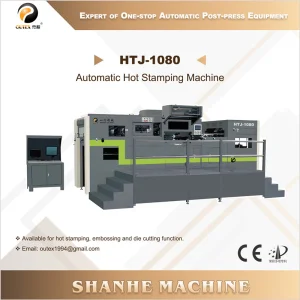
High-Quality HTJ-1080 Automatic Hot Stamping Machine Manufacturer, Factories
View Product Details
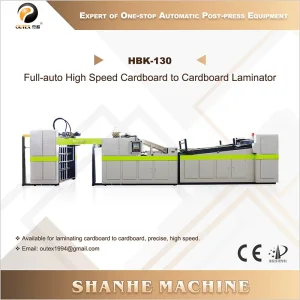
High-Quality HBK-130 Automatic Cardboard Lamination Machine Manufacturers, Product
View Product Details
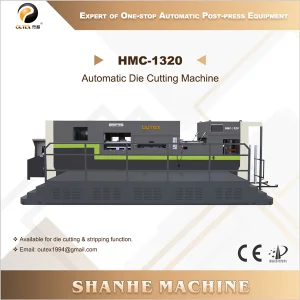
CE Certification HMC-1320 Automatic Die Cutting Machine Manufacturer, Factory
View Product Details
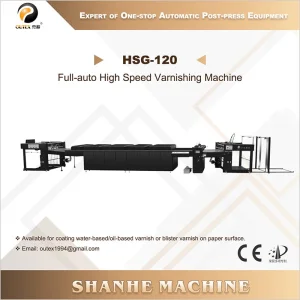
High-Quality HSG-120 Full-auto High Speed Varnishing Machine Manufacturers, Companies
View Product Details
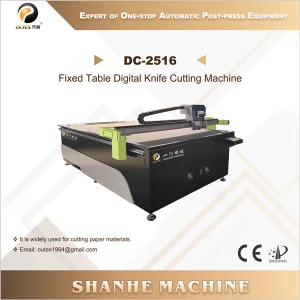
High-Quality DC-2516 Fixed Table Digital Knife Cutting Machine Factories, Product
View Product Details
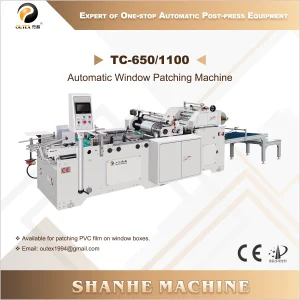
CE Certification TC-650/1100 Automatic Window Patching Machine Factories, Companies
View Product Details
High-Quality LX-920/1426 Full Adsorption Intelligent High-speed Four Color Printing Die Cutting Machine Company, Companies
High-Quality LX-920/1426 Full Adsorption Intelligent Four Color Printing Die Cutter
View Product Details
Industry Whitepaper Analysis

Global Commercial & Industrial Status of Double Hot Stamping Technology

Evaluating the operational transition from single-platen stamping to high-efficiency dual-station hot foil stamping systems in modern packaging manufacturing.

In the highly competitive landscape of global post-press finishing, the demand for high-end visual tactile embellishments—such as holographic foil transfer, multi-color foil stamping, combination foil-embossing, and deep 3D micro-embossing—has escalated exponentially. Premium brand owners in luxury cosmetics, spirits, tobacco, high-tech electronics, and pharmaceutical packaging are no longer satisfied with single-pass metallic accents. This shift has driven modern print converters to adopt Double Hot Stamping Machines (Dual-Station Hot Foil Stamping & Die-Cutting Systems).

Traditionally, completing a complex packaging design requiring two distinct metallic foils (e.g., gold and silver) alongside precise tactile embossing demanded either two passes through a single-station platen machine or routing sheets through multiple independent finishing lines. This legacy process introduced catastrophic registration variances, increased paper distortion, expanded labor footprints, and inflated foil wastage by up to 35%. The introduction of modern dual-station architecture solves these bottlenecks by executing two consecutive stamping operations—or simultaneous hot foil stamping and heavy-duty embossing/die-cutting—in a single continuous sheet-fed pass.

Key Market Drivers Shaping Global Sourcing Decisions

  • Demand for Anti-Counterfeiting Security Foils: Global pharmaceutical and luxury goods brands require registered holographic foil stamping combined with structural micro-embossing to mitigate counterfeit threats. Dual-station machinery allows inline placement of security holograms at station one, followed by high-speed variable code stamping or embossing at station two.
  • Foil Utilization & Waste Reduction Economics: Cold foil and traditional hot stamping face scrutiny over raw material waste. Advanced Chinese dual-station machines incorporate servo-driven longitudinal and transverse multi-shaft foil rewind systems, reducing metallic foil consumption by up to 45% through dynamic foil stepping algorithm controllers.
  • Throughput Maximization in Large-Format Folding Cartons: Speed without precision is yield destruction. Operating at speeds up to 7,500 to 8,000 sheets per hour with platen pressures exceeding 300 to 600 metric tons, dual-station systems double line output while maintaining register accuracy within ±0.075 mm.
+115%
Production Efficiency vs Single Pass
±0.075mm
Dual-Station Register Precision
600 TONS
Max Platen Structural Pressure
-45%
Foil Wastage via Servo Stepping
Engineering Deep-Dive

Technical Architecture: Dual-Station Platen Press vs. Single Press

An engineering breakdown of mechanical load distribution, thermal regulation, and register control systems in China-manufactured double hot stamping machines.

Dual Independent Pressure Platens

Features two separate, heavy-duty nodular cast-iron platen structures. Station 1 and Station 2 operate with independent pressure adjustments, enabling light-touch micro-foil transfer on station 1 and high-tonnage deep embossing on station 2 without cross-interference.

Multi-Zone PID Thermal Control

Integrates 12 to 24 individual heating zones per platen managed via PID controllers. Ensures zero thermal gradient variations across large format sheets (e.g., 1080×780mm), preventing localized foil flaking or substrate burning during continuous operations.

Multi-Axis Servo Foil Feeding

Equipped with up to 6 longitudinal and transverse servo-driven foil advancing shafts per station. Supports multi-diameter foil roll feeding, dynamic foil saving stepping, and automatic hologram position registration using advanced optical sensors.

Technical Comparison Matrix: Single Pass vs. Double Hot Stamping Systems

Performance Metric Legacy Single-Station Machine Rotary Hot Stamping Line China Advanced Double Hot Stamping Machine
Process Flexibility Single foil color or die-cut per pass High speed, limited to thin substrates & flexo inline Dual foil colors + 3D embossing + inline stripping in 1 pass
Registration Accuracy ±0.15 mm (accumulates error on 2nd pass) ±0.12 mm ±0.05 mm to ±0.075 mm (Continuous single gripper bar control)
Maximum Platen Tonnage 150 to 300 Tons Line pressure (low deep-embossing capacity) Dual 300T to 600T Heavy-Duty Cast Iron Frame
Foil Utilization Efficiency Standard linear feed (High Waste) Moderate stepping capability Multi-axis Dynamic Servo Stepping (Saves 35% - 50% Foil)
Substrate Range 90-600 g/m² Paperboard Narrow Web / Roll Stock only 90-2000 g/m² Board & Up to 4mm Corrugated Flute (E/B/F)
Capital Investment (CapEx) Low initial cost, high labor cost per unit Extremely high equipment cost Optimal ROI (50% cost of European machines with equal output)
Manufacturing Benchmarks

Why Global Packaging Converters Source Double Hot Stamping Machines from China

Analyzing the industrial clusters, engineering precision, and Total Cost of Ownership (TCO) advantages provided by tier-one Chinese machinery builders.

Over the past two decades, China’s printing and packaging machinery ecosystem—centered around advanced manufacturing hubs in Shantou, Guangdong, Jiangsu, and Zhejiang—has evolved from basic mechanical assembly to world-class precision engineering. Modern China Double Hot Stamping Machine Factories now produce machinery that competes directly with top-tier European brands in structural rigidity, electrical integration, automation, and safety compliance (CE/ISO standardizations), at significantly more competitive capital investment metrics.

1. Complete Vertical Industrial Supply Chains

Industrial clusters in cities like Shantou enable machine builders to source high-grade raw materials, CNC-machined structural frames, hardened alloy gearboxes, and pneumatic systems within a tight geographical radius. Heat treatment of main drive shafts, precision grinding of platen surfaces, and electronic assembly occur under rigorous ISO9001 quality frameworks, reducing lead times from industry averages of 9 months down to 60-90 days.

2. World-Class Component Standardization

Leading Chinese dual-station hot stamping machine companies do not compromise on core components. Standard electrical and pneumatic configurations feature international B2B supplier partnerships:

  • Programmable Logic Controllers (PLC) & Drives: Siemens S7-1500 / Yaskawa Servo Systems for high-speed multi-axis motion synchronization.
  • Electrical Controls: Schneider Electric low-voltage components, Eaton switches, and Pilz safety relays.
  • Pneumatics & Hydraulics: SMC pneumatic cylinders and Parker / Rexroth hydraulic pressure valves.
  • Feeder Systems: Mabeg-style high-speed precision non-stop continuous paper feeders.

3. Total Cost of Ownership (TCO) & Operational ROI

For packaging plants expanding capacity in North America, Europe, Southeast Asia, or Latin America, equipment procurement decisions are driven by Payback Period calculations. A Chinese high-speed double hot stamping platen press offers an average Return on Investment (ROI) period of 14 to 18 months, compared to 36 to 48 months for equivalent European machinery. This cost advantage allows converters to reallocate capital toward digital workflow automation, client acquisition, and post-press diversification.

Application Engineering

Localized Industrial Application Scenarios & Case Studies

How double hot stamping technology optimizes production workflows across key commercial packaging sectors.

Luxury Cosmetic & Beauty Cartons

Challenge: Applying bright gold foil borders alongside subtle matte silver branding text, followed by deep tactile embossing on 350g SBS board.
Solution: Station 1 applies dual gold/silver foil registration in one pass; Station 2 executes high-pressure 3D blind embossing without destroying foil brilliance.

Spirits & Premium Wine Packaging

Challenge: Registering registered optical security holographic foils over intricate textured background paper with micro-pattern embossing.
Solution: Servo-eye optical sensors position holograms at station 1 (accuracy ±0.05mm), while station 2 stamps micro-embossing dies with 400-ton platen force.

Tobacco Packaging & FMCG Cartons

Challenge: Ultra-high-speed production runs requiring 24/7 continuous operation with zero foil breaks and minimal operator downtime.
Solution: Non-stop feeder and delivery system combined with dual longitudinal/transverse foil rewinding, maintaining stable production at 7,500 sheets/hour.

2025-2030 Roadmap

Development Trends & Next-Gen Innovations in Hot Stamping

Smart automation, AI-driven foil reduction, and eco-friendly substrate processing shaping the future of post-press machinery.

As sustainability regulations tighten globally and print runs transition toward shorter, highly customized batches, Chinese double hot stamping machine manufacturers are spearheading three major technological shifts:

1. AI-Driven Dynamic Foil Waste Calculators & Servo Optimization

Modern machine controllers now feature intelligent software that analyzes press prepress PDF graphics. The system automatically computes the optimal combination of longitudinal and transverse foil feed steps, recommending roll layouts that eliminate unprinted foil gaps. This AI optimization reduces setup times by 50% and dramatically cuts raw material expenditure.

2. Smart IoT Diagnostics & Predictive Maintenance

Incorporating Industry 4.0 telemetry, dual-station machines are equipped with vibration sensors on main toggle drives, thermal imaging monitors on platen heaters, and cloud connected diagnostic modules. Machine operators receive automated alerts prior to component wear, and factory engineers in Shantou can perform remote firmware updates or troubleshooting overseas via secure VPN connections.

3. Zero-Plastic Eco-Foil & Recyclable Substrate Handling

With consumer package goods (CPG) brands pushing for plastic-free packaging, hot foil stamping is replacing non-recyclable plastic laminates. Chinese manufacturers are refining heating curve algorithms and pressure dwell times to allow ultra-thin transfer foils (down to 10 microns) to bond seamlessly onto uncoated, recycled, and water-based barrier coated paperboards without flaking or pinholing.

Sourcing Protocol

Technical Evaluation Checklist for B2B Machinery Buyers

5-step audit framework for engineering directors and procurement managers inspecting Chinese hot stamping machine suppliers.

1. Structural Cast Frame Inspection

Verify that the machine frame uses high-tensile nodular cast iron (e.g., QT500-7) aged naturally for at least 6 months to relieve internal stresses. This prevents frame deformation under sustained high-tonnage stamping operations.

2. Platen Thermal Uniformity Test

Request infrared thermographic imaging of heating plates during Factory Acceptance Testing (FAT). Ensure temperature deviation across all heating zones does not exceed ±1.5°C at operating setpoints (120°C–160°C).

3. Gripper Bar & Chain Alignment

Audit the drive chain system. Premium factories utilize pre-stretched, matched pair imported chains (e.g., IWIS) with lightweight titanium-aluminum alloy gripper bars to guarantee long-term register accuracy at maximum speed.

4. Safety & Ergonomic Compliance

Ensure the equipment holds full CE certification, including dual-circuit safety interlocks, optical light curtains at feeder/delivery zones, and soundproofed drive enclosures meeting international OSHA decibel limits.

5. Remote Technical Support SLA

Evaluate the factory’s after-sales infrastructure. Confirm availability of localized spare parts kits, English-fluent field service engineers, and guaranteed 24-hour remote diagnostic response Service Level Agreements (SLA).

6. Factory Acceptance Testing (FAT)

Conduct live FAT using your most demanding production stock (e.g., 500g heavy board or light 90g paper) running dual foil registration at maximum operational speed prior to container loading and export clearance.

Full Product Catalog

Complete Post-Press & Converting Equipment Portfolio

Explore related post-press machinery including heavy-duty die cutters, roll laminators, UV coaters, and folder gluers.

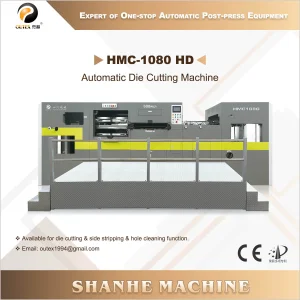
High-Quality HMC-1080HD Automatic Die Cutting Machine (600T heavy-duty type) Factories, Product
High-Quality HMC-1080HD Automatic Die Cutting Machine (600T heavy-duty type)
View Product Details
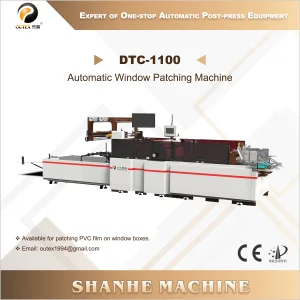
China DTC-1100 Automatic Window Patching Machine (Dual Channel) Factory, Factories
China DTC-1100 Automatic Window Patching Machine (Dual Channel) Factory
View Product Details
China RTR-M1450/1650/1850/2050 Full-auto High Speed Multi-function Roll to Roll Laminator Manufacturers, Factory
China RTR-M1450/1650/1850/2050 Full-auto Roll to Roll Laminator
View Product Details
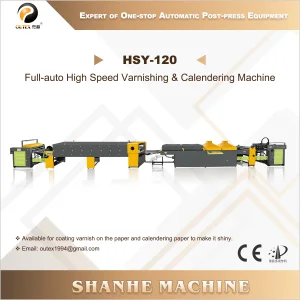
CE Certification HSY-120 Full-auto High Speed Varnishing & Calendering Machine Product, Products
CE Certification HSY-120 Full-auto Varnishing & Calendering Machine
View Product Details
CE Certification HBF-3/1450/1700/2200 Smart High Speed Flute Laminator with Flip Flop Stacker Manufacturers, Company
CE Certification HBF-3 Smart High Speed Flute Laminator with Stacker
View Product Details
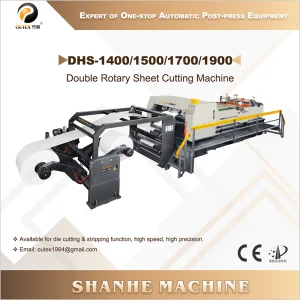
High-Quality DHS-1400/1500/1700/1900 Double Rotary Sheet Cutting Machine Company, Companies
High-Quality DHS-1400/1500/1700/1900 Double Rotary Sheet Cutting Machine
View Product Details
China HBZ-145/170/220 Full-auto High Speed Flute Laminating Machine Manufacturer, Factories
China HBZ-145/170/220 Full-auto High Speed Flute Laminating Machine
View Product Details
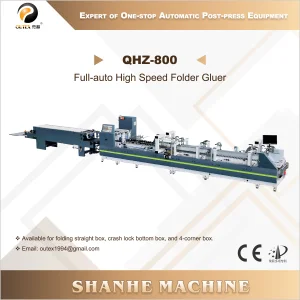
China QHZ-800 Full-auto High Speed Folder Gluer Factory, Company
View Product Details
Technical Knowledge Base

Frequently Asked Questions (FAQ) for Global Buyers

Direct technical answers from senior post-press engineers regarding machine selection, maintenance, and factory integration.

What is the primary operational advantage of a double hot stamping machine over a standard single-station machine?
A double hot stamping machine features two consecutive press platens in a single inline pass. This allows packaging converters to apply two distinct metallic foil colors (e.g., gold and silver) or perform foil stamping at Station 1 followed by high-pressure deep embossing or die-cutting at Station 2. The primary advantages are doubling production output, eliminating second-pass sheet registration errors (±0.05mm register accuracy), reducing labor cost, and cutting total job changeover time by up to 50%.
How do Chinese manufacturers guarantee registration accuracy during high-speed dual stamping?
Tier-one Chinese manufacturers utilize continuous single-gripper bar transfer systems made of lightweight, high-rigidity titanium-aluminum alloys driven by precision pre-stretched chains (such as IWIS). Coupled with front-and-side lay optical push/pull sensors and Yaskawa/Siemens high-speed servo motion controllers, sheet registration is locked before entering the first platen and maintained continuously through the second platen at speeds up to 7,500 sheets/hour.
Can a double hot stamping machine handle holographic security foil stamping?
Yes. Modern Chinese dual-station presses can be optioned with multi-channel optical hologram sensor registration modules. These photo-electric sensors read registration marks on the holographic foil roll in real-time, signaling the servo foil feed shafts to adjust pull lengths dynamically, achieving precise hologram placement (such as anti-counterfeiting seals for pharmaceuticals or premium liquor) within a ±0.1mm tolerance window.
What thermal management systems prevent substrate warping under high tonnage?
Advanced double hot stamping machines incorporate multi-zone (up to 24 independent zones) PID thermal heating plates paired with ceramic insulation layers. This prevents heat transfer into the main cast-iron machine bed, ensuring that thermal expansion is contained strictly within the honeycomb die plate. Individual zone temperature control allows fine-tuning heat allocation depending on graphic density, preventing paperboard moisture loss and curling.
What are the typical lead times, shipping requirements, and installation protocols for overseas buyers?
Standard manufacturing lead times from leading Shantou/China factories range between 60 to 90 calendar days depending on custom servo configuration. Machinery is packed in heavy-duty moisture-proof sea-worthy wooden cases and shipped via Open Top (OT) or Flat Rack containers from Shantou, Shenzhen, or Shanghai ports. On-site installation, commissioning, and operator training are performed by field service engineers or authorized regional distributors.
How does multi-axis foil stepping reduce total foil expenditure?
Foil stepping allows the foil feeding shafts to advance the foil roll by exact graphic design lengths rather than a full sheet size step. With multi-axis longitudinal and transverse foil feeding capabilities, the machine can skip unprinted blank spaces between rows of cartons (multi-up layouts). Advanced servo algorithms enable foil overlap stepping and reverse pulling, reducing foil waste by 35% to 50% compared to mechanical clutch systems.