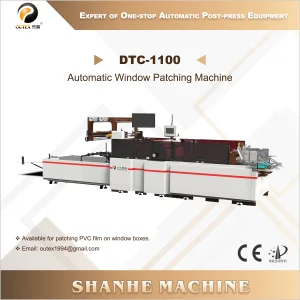
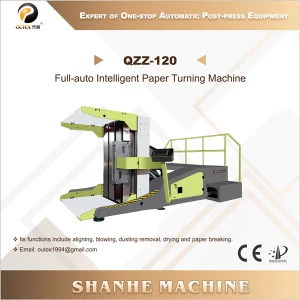
Explore our precision-engineered flute laminating, folder gluing, die-cutting, and surface finishing equipment for modern packaging plants.
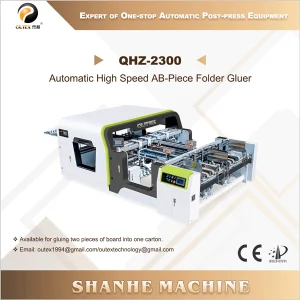
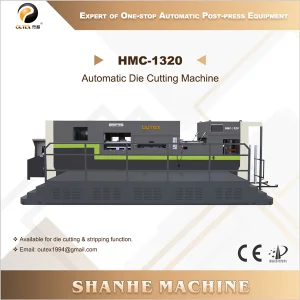

An in-depth technical analysis of micro-flute litho-lamination, registration dynamics, adhesive viscosity management, and high-speed motion control.
Traditional mechanical claw positioners introduce registration errors at speeds exceeding 120 m/min. Modern high-quality flute laminators employ dual-servo tracking arrays. Optical sensors detect the leading edge of offset-printed top sheets and adjust the bottom corrugated sheet feed in microsecond intervals, maintaining consistent pin-point register across E, F, N micro-flutes and heavy double-wall B/C flutes.
Adhesive management dictates structural rigidity and cost per unit. Advanced gravure-anodized application rollers coupled with automatic fluid level sensors guarantee uniform PVA or starch adhesive distribution down to 8 g/m². Intelligent dynamic wash-up systems prevent board washboarding, paper warping, and glue splattering during high-speed runs.
A professional packaging operation requires seamless handling of wide material spectrums. Next-gen laminators accommodate top sheet paper weights ranging from 150 GSM to 800 GSM cardboard, bonding them seamlessly to corrugated substrates from 0.6mm micro-flute up to 10mm triple-wall corrugated board, as well as solid board-to-board lamination.
Analyzing global demand shifts toward sustainable litho-laminated corrugated packaging, shelf-ready retail display, and e-commerce structural integrity.
The continuous global growth of e-commerce requires packaging that combines vibrant exterior branding with robust structural crush resistance. Servo-driven flute laminators allow manufacturers to combine high-definition offset printed top sheets with high-burst corrugated flutes (B, C, and EB flutes), guaranteeing brand presentation during transit without compromising stacking strength.
Fast-Moving Consumer Goods (FMCG) packaging relies heavily on micro-flute boards (E, F, and N flutes) to replace plastic structures. High-speed lamination machinery enables sharp folding edges, flat surface smoothness for foil stamping and spot UV coating, and flawless registration required by high-end cosmetics, consumer electronics, and liquor gift boxes.
Beyond corrugated mounting, industrial packaging plants require cardboard-to-cardboard lamination systems (such as the HBK series) for dense packaging applications. This includes hardcover book covers, children's board games, luxury rigid setup boxes, and high-density industrial gaskets where total board thickness demands ultra-high compression nip pressures.
| Lamination Category | Top Sheet Substrate Range | Bottom Substrate Range | Max Mechanical Speed | Registration Accuracy | Primary Industrial Application |
|---|---|---|---|---|---|
| Smart High-Speed Flute Laminator | 180 – 800 g/m² Paperboard | A, B, C, E, F Flute & 3-Layer Corrugated | 160 – 200 m/min | ±0.5 mm | FMCG Packaging, E-Commerce Master Cartons |
| Online Intelligent Flute Laminator Line | 200 – 600 g/m² Linerboard | Micro-Flute (E/F/N) & Heavy B/C Corrugated | 150 – 180 m/min | ±0.75 mm | High-Volume Continuous Automated Box Production |
| Board-to-Board Heavy Laminator | 250 – 800 g/m² Solid Cardboard | 1.0mm – 6.0mm Rigid Greyboard / Cardboard | 9,000 – 10,000 pcs/hr | ±0.5 mm | Hardcover Bookbinding, Luxury Rigid Boxes, Gameboards |
| Full-Auto Pre-Coating Film Laminator | 100 – 500 g/m² Printed Sheets | BOPP / PET Thermal & Water-Based Film | 80 – 120 m/min | ±1.0 mm | Waterproof Packaging, Cosmetic Box Protection |
How Industry 4.0 integration, AI machine vision, smart flip-flop stacking, and energy-efficient drive systems are transforming post-press manufacturing floor productivity.
Next-generation lamination lines incorporate inline high-speed linear cameras. These systems inspect printed top sheets in real-time, instantly detecting color variances, glue voids, registration drift, or surface scratches, automatically rejecting defective sheets before entering downstream die-cutting units.
Manual stacking of laminated boards leads to edge warping and labour bottlenecks. Modern automated flip-flop stacking systems automatically count, invert, and stack sheets in alternating bundles, ensuring perfectly flat curing stacks ready for high-speed automatic die-cutters without manual labor intervention.
Energy efficiency is central to modern machine design. Regenerative servo drive systems capture kinetic braking energy during rapid deceleration cycles and feed electricity back into the main power bus, reducing factory-wide power consumption by up to 22% during continuous shifts.
Key criteria evaluated by senior plant engineers, procurement directors, and operations leads when investing in high-volume post-press conversion machinery.
Machine vibration is the primary cause of registration drift at operating speeds over 150 m/min. Industrial-grade laminators must feature heavy-duty solid cast-iron wall frames (minimum 30mm to 40mm thickness) annealed to relieve internal stress, maintaining structural alignment over decades of intensive operation.
The feeder head must handle diverse paper grades without misfeeds or double-sheet pickups. High-efficiency vacuum suction heads equipped with adjustable double-nozzle arrays and independent blower control ensure smooth sheet separation even when processing thin 150 GSM paperboard or curved substrates.
Operational safety directly impacts workplace productivity and insurance compliance. Equipment must feature comprehensive CE safety certifications, emergency interlocked safety guards, low-voltage control circuits, and ergonomically designed operator control interfaces with real-time fault diagnostics.
Direct, expert responses regarding machine specifications, installation requirements, maintenance cycles, and operational integration.
Discover our broad range of high-efficiency varnishing, laminating, paper handling, and precision die-cutting equipment.