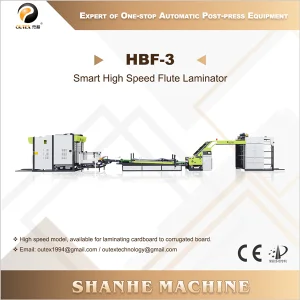
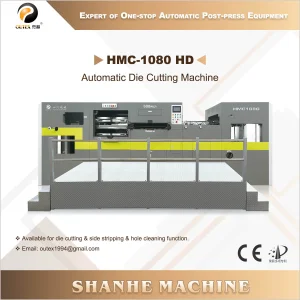
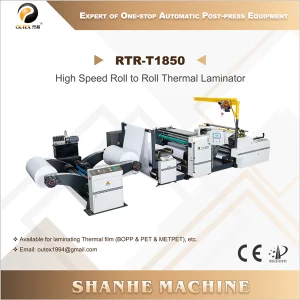
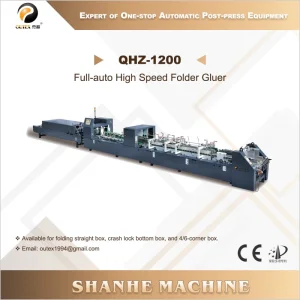
Engineered for maximum reliability, operating speed, and pinpoint accuracy across demanding post-press environments.
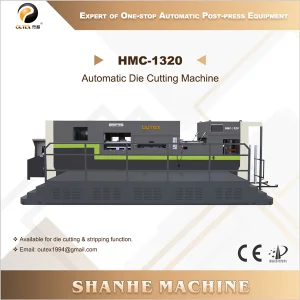
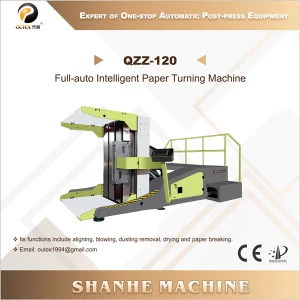
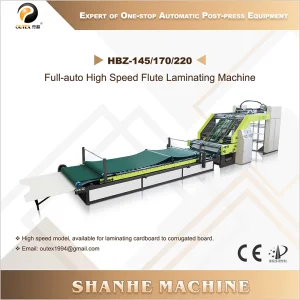
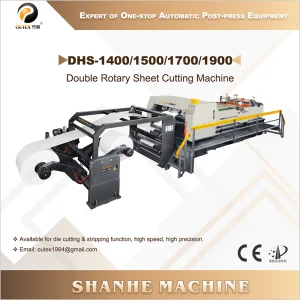
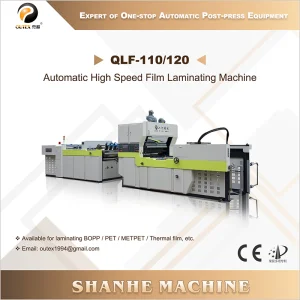
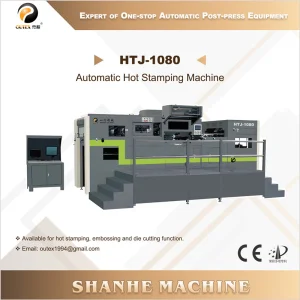
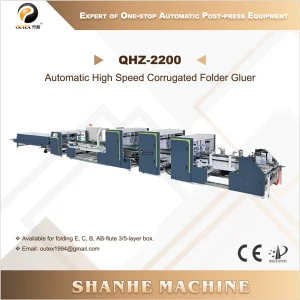
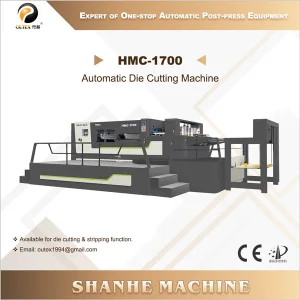
The global packaging and commercial printing landscape is undergoing a systemic transition toward high-barrier protection, eco-conscious chemistry, and sensory-driven brand differentiation. In this rigorous environment, selecting a high-quality UV varnish coating machine supplier and OEM factory represents a vital strategic imperative for mid-to-large-scale converters. Premium ultraviolet (UV) varnishing serves a dual purpose: it acts as a mechanical shield against moisture, chemical corrosion, and abrasion during transit, while elevating visual shelf-appeal through high-gloss, ultra-matte, or tactile 3D spot finishes.
Modern automated post-press lines require seamless integration between mechanical feeding mechanisms, accurate fluid rheology control, high-precision metering systems, and instant-cure ultraviolet radiation. As offset and digital printing press speeds expand beyond 10,000 sheets per hour, traditional thermal or aqueous varnishing units fail to meet throughput and drying bottlenecks. Modern industrial UV coating systems overcome these limitations through advanced ceramic anilox roller metering, automated chamber doctor blade assemblies, and energy-efficient LED-UV curing modules.
Substrate-safe curing assemblies maintain structural board integrity, preventing paper shrinkage, curling, or heat-induced registration errors on delicate paperboards.
Integrates narrow-spectrum 385nm/395nm LED lamps, lowering total power consumption by up to 60% compared to traditional high-pressure mercury vapour lamps.
Laser-engraved ceramic anilox rollers deliver precise film layer thickness control (1.5 to 6.0 g/m²), optimizing varnish consumption while guaranteeing uniform gloss.
Integrated PLC control with touchscreen HMI monitors roller pressure, lamp intensity, substrate positioning, and varnish viscosity in real-time.
Analytical comparison of coating technologies designed to assist technical directors and procurement specialists in specifying optimal plant machinery.
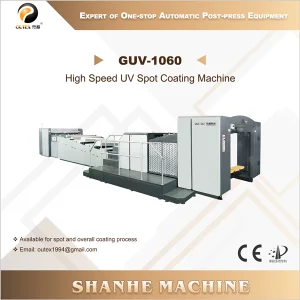
| Parameter / Feature | Conventional Roller Coater | High-Speed Spot UV Coater (e.g. GUV-1060) | Inline Flexo-UV Varnishing System |
|---|---|---|---|
| Coating Type | Full-surface flood coating only | Precision Spot Varnish & Full-Surface Flood | Spot / Full Inline Flexo Coating |
| Max Operating Speed | 4,000 - 6,000 sheets/hour | 8,000 - 10,000 sheets/hour | 6,000 - 9,000 sheets/hour |
| Substrate Compatibility | 120 - 450 g/m² Cardboard | 80 - 600 g/m² Paper, SBS, Micro-Corrugated | 150 - 500 g/m² Folding Boxboard |
| Metering Technology | Dual-roller rubber squeeze unit | Ceramic Anilox + Chamber Doctor Blade | Flexographic Plate Cylinder System |
| Registration Accuracy | ± 1.5 mm | ± 0.05 mm (High-Precision Gripper Feeder) | ± 0.15 mm |
| Curing System Options | IR + Standard Mercury UV | Dual-Wave LED-UV + High-Intensity UV | Standard UV / Warm Air Hybrid |
| Target Industry Applications | Standard Commercial Print, Publishing | Luxury Cosmetics, Pharmaceuticals, Tobacco | High-Volume Folding Cartons, FMCG |
To guarantee optimal varnish adhesion without surface crawling or pinholing, substrates must maintain surface tension above 38 dynes/cm. Integrated Corona Treatment units are available for non-porous plastics or laminated surfaces.
Fully compliant with EU Regulation 1935/2004 and Nestlé Guidance Notes for food-contact materials. Dual-curing chambers prevent photoinitiator migration on primary food packaging.
Vacuum suction belt delivery combined with dynamic aerodynamic sheet stabilizers prevents scratching on delicate, freshly coated matte or gloss varnish layers.
How pioneering machinery manufacturing techniques are shaping the future of industrial packaging finishing.
Integration of high-resolution 8K line-scan CCD cameras directly post-curing. The automated vision inspection module detects micro-pinholes, gloss variance, register misalignments, and varnish splashes in real-time at full production speeds, automatically signaling the downstream sheet-reject mechanism.
Transitioning from traditional mercury-vapor arc lamps to targeted-wavelength LED curing modules (365nm, 385nm, 395nm). This yields instantaneous power switching, zero ozone generation, minimal heat transfer to heat-sensitive film-laminated board, and up to a 60% reduction in electricity demand.
Minimizing job setup times from 30 minutes to under 5 minutes. Robotic sleeve-changing mechanisms for ceramic anilox rollers paired with automated CIP (Clean-In-Place) solvent flushing cycles maximize equipment uptime in high-mix, low-volume operational environments.
Embedding multi-axis vibration, temperature, and current consumption sensors across all main drive shafts, suction pumps, and UV power modules. Cloud-connected telemetry algorithms predict bearing wear and lamp degradation before failure occurs, eliminating unplanned downtime.
Comprehensive operational safety, regulatory alignment, and international field engineering services for global converters.
All UV varnish coating units undergo rigorous safety testing, featuring fully enclosed UV light-shielding barriers, dual-circuit safety interlocks, emergency stop loops, and CE compliance certification across all electrical subsystems.
From pre-installation site planning and electrical load verification to on-site assembly, mechanical calibration, and custom operator training programs, our certified field engineers ensure seamless commissioning worldwide.
We maintain strategic inventories of consumable spare parts—including quartz glass tubes, UV lamps, doctor blades, ceramic anilox sleeves, and suction grippers—ready for fast dispatch to minimize factory downtime.
Expert insights addressing key operational, technical, and maintenance considerations for UV coating equipment.
Explore our complete ecosystem of die cutters, flute laminators, folder gluers, and thermal film laminating machinery.