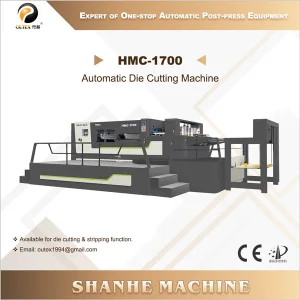
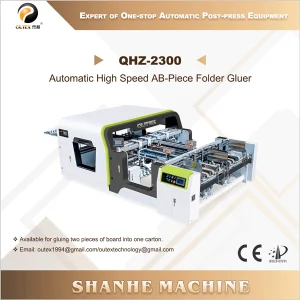
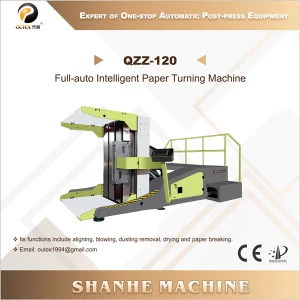
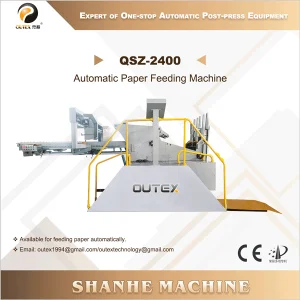
Explore our premium lineup of automated die cutters, high-speed folder gluers, paper stackers, and specialized surface finishing equipment engineered for rigorous production standards.
Understanding the fluid dynamics, chemical polymer physics, and thermal evaporation mechanisms powering high-efficiency water-based coating systems.
Water-based (aqueous) coating machinery utilizes specialized fluid distribution mechanisms to apply water-dispersed acrylic polymers, resins, and wax emulsions onto printed paperboard substrates. Unlike traditional solvent-based varnishes or UV-curable synthetic lacquers, water-based formulations rely on water evaporation and heat-assisted coalescence to form a clear, protective polymer film.
Modern industrial water-based coaters employ high-precision three-roller or doctor blade anilox metering units. The dynamic metering system regulates wet coating weight down to precise tolerances (typically between 2.0 to 6.0 g/m²). Control over coat thickness ensures optimal gloss ratings, barrier resistance, and surface slip properties without causing sheet curl or fiber saturation.
Effective water-based coating relies on dual-action drying technology. Short-wave infrared (IR) lamps heat the wet varnish film to accelerate water molecule kinetic movement, while high-velocity hot air knives strip away the boundary vapor layer. This prevents re-moisturization of paperboard fibers and guarantees instantaneous drying at production speeds up to 10,000 sheets/hour.
Strict global environmental standards (such as the EU Packaging and Packaging Waste Directive, U.S. FDA 21 CFR food contact regulations, and stringent VOC emissions caps) have made aqueous coating mandatory for high-tier packaging converters. Solvent-based varnishes emit significant Volatile Organic Compounds (VOCs) requiring expensive catalytic thermal oxidizers (RTOs).
Why Tier-1 international packaging enterprises partner directly with Guangdong-based industrial machinery hubs like Shanhe Industrial.
Situated in the Jinping Industrial Zone of Shantou, Guangdong, Shanhe Machine leverages a 34,175 m² modern production complex. The regional industrial ecosystem offers unparalleled supply-chain density, from precision CNC machining components to heavy-duty casting foundries and electronic automation integrators.
China's top coating machine builders utilize high-rigidity structural steel frames, stress-relieved platen castings, and hard-chrome plated metering rollers. Advanced dynamic balancing technologies guarantee micro-level rotation accuracy even at high speeds, minimizing vibrations and mechanical wear.
Leading Chinese exporters combine domestic structural engineering with internationally certified electrical systems, including Siemens PLCs, Omron photoelectric sensors, Schneider electronics, and NSK bearings. This dual engineering model guarantees global spare-part availability and reliable operation.
Key technological shifts reshaping post-press surface treatment over the next decade.
The single-use plastics ban has pushed the paper packaging industry to transition from extruded polyethylene (PE) or polypropylene (PP) film lamination toward aqueous barrier coatings. Next-generation water-based coaters are designed to apply specialized hydrophobic, grease-resistant, and water-vapor transmission barrier (WVTR) coatings directly onto paper substrates. This maintains full repulpability while achieving oil resistance up to KIT rating 12.
Viscosity shifts caused by water evaporation alter coat weight consistency. Modern intelligent aqueous coaters feature closed-loop temperature-compensated viscosity controllers. Sensor arrays continuously measure coating fluid dynamics, automatically injecting deionized water or resin concentrate to maintain viscosity within ±0.5 seconds (Zahn Cup #3), preventing streak lines and uneven gloss levels.
To maximize production flexibility, hybrid coating platforms integrate convertible drying cassettes. Converters can instantly switch between short-wave IR hot-air drying (for water-based varnishing) and high-intensity LED-UV curing (for high-gloss spot UV lacquers), maximizing equipment utilization without expanding footprint.
Standalone coating operations are increasingly replaced by fully integrated inline post-press lines. Coating modules are linked directly with automated sheet feeders, calendering units (like the HSY-120), high-speed flute laminators (HBF series), and automatic die cutters, eliminating intermediate manual pallet transport.
Tailored coating configurations designed to meet specific technical requirements across core commercial sectors.
| Application Industry | Primary Technical Requirement | Recommended Coating Formulation | Machine System Configuration |
|---|---|---|---|
| Food & Beverage Packaging (Fast food boxes, takeaway trays) |
Moisture-proof, grease resistance (KIT 8-12), direct food contact safe. | Water-based acrylic wax emulsion, fluorine-free barrier resin. | Flexo Anilox Coater + Extended IR Air-Knife Dryer. |
| Pharmaceutical & Cosmetics (Medicine cartons, skincare boxes) |
High gloss (>75 GU), high rub/abrasion resistance, anti-counterfeit feature. | High-solid content water-based glossy varnish. | Double-Coater (Aqueous Primer + Spot UV / Calendering inline HSY-120). |
| Corrugated E-Commerce Boxes (Heavy-duty shipping, cold chain) |
Water-repellent (Cobb value < 20g/m²), scuff prevention during transit. | Hydrophobic water-dispersed polymer emulsion. | Heavy-Duty Inline Flute Coating Unit + High-Capacity Stacker. |
| Luxury Goods & Gift Boxes (Electronics, spirits, watches) |
Velvet soft-touch tactile feel, deep matte non-reflective surface finish. | Water-based polyurethane (PU) soft-touch emulsion. | Precision Micro-Anilox Coater + Low-Temperature Gentle Dryer. |
A structured technical evaluation framework for procurement directors and plant engineers when sourcing water-based coating equipment.
When selecting a water-based coating machine supplier, procurement teams must evaluate key performance metrics to ensure long-term operational compatibility:
Calculating the true operational financial footprint requires looking beyond initial machinery CapEx:
Aqueous coating systems eliminate expensive solvent-recovery capital requirements, cut energy usage by up to 30% compared to conventional thermal ovens, and reduce waste disposal fees because coated board scrap remains 100% recyclable paper mill feedstock.
Compliance & Safety Mandates: Ensure machinery carries genuine CE Certification in accordance with the Machinery Directive 2006/42/EC and EN 1010-1/2 safety standards for printing and paper converting machinery.
Direct answers from senior application engineers regarding machine selection, operational maintenance, and process optimization.
Water-based coating machines apply an aqueous emulsion (acrylic resins suspended in water) that cures through thermal water evaporation using Infrared (IR) heat and hot air airflow. The resulting surface finish is flexible, odor-free, non-yellowing, and fully recyclable. UV coating machines apply photo-polymer resins cured instantaneously under high-intensity Ultra-Violet radiation. While UV offers higher gloss ratings (90+ GU), water-based coatings excel in food packaging safety, lower operational energy costs, environmental compliance, and complete paper repulpability.
Paper curl occurs when water in the coating liquid penetrates deep into paper fibers, causing asymmetric moisture expansion. High-quality water-based coaters prevent curl through three key mechanisms: 1) Precision anilox doctor blade metering that delivers ultra-thin, uniform wet coat layers (down to 2.5 g/m²); 2) High-velocity hot-air drying knives that instantly evaporate surface water before fiber penetration; and 3) Optional anti-curl moisture conditioning units or chill rollers installed prior to stacker delivery.
Yes. Advanced water-based functional barrier coatings (FBC) utilize specialized hydrophobic polymer dispersions that create a water-resistant film over paperboard. When applied via precision coaters, these aqueous barriers achieve low Cobb moisture absorption values (<15 g/2 min) and high KIT oil resistance ratings (up to KIT 12), effectively replacing traditional polyethylene (PE) plastic lamination while preserving 100% repulpability in standard recycling mills.
Daily maintenance includes thoroughly flushing the fluid circulation pump, doctor blade chamber, and ceramic anilox rollers with clean warm water immediately after production stops, preventing acrylic resin drying inside anilox cells. Weekly maintenance requires inspecting doctor blade edges for wear, checking pump diaphragm seals, and applying specialized cleaning solutions to remove dried latex micro-deposits.
Leading manufacturers like Guangdong Shanhe Industrial provide comprehensive international support services: factory layout site planning consultation, on-site commissioning by field engineers, complimentary operator software and mechanical training, 24/7 remote IoT diagnostics via PLC network gateways, and fast spare-part dispatch from global regional distribution partners.
Inline varnishing and calendering combines aqueous coating application and high-pressure mirror-roll thermal polishing into a single continuous process. This eliminates intermediate pallet transport, cuts drying energy consumption by approximately 30-40%, reduces labor overhead by half, and minimizes sheet handling damage between finishing steps.
Overseas enterprise buyers should confirm compliance with CE marking (Machinery Directive 2006/42/EC and Low Voltage Directive 2014/35/EU), ISO 9001:2015 Quality Management System standards, ISO 14001 Environmental Management Systems, and specific safety interlock compliance under EN 1010-1/2 standard for post-press machinery.
Discover our high-speed flute laminators, calendering units, heavy-duty die cutters, and automatic folder gluers engineered for complete packaging automation.
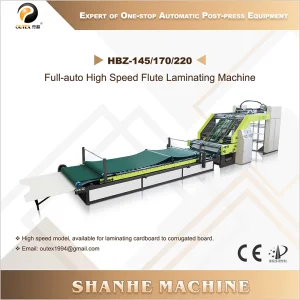
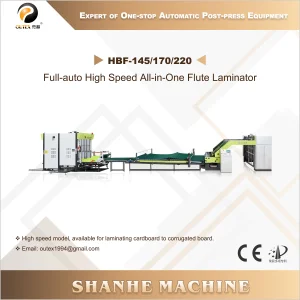
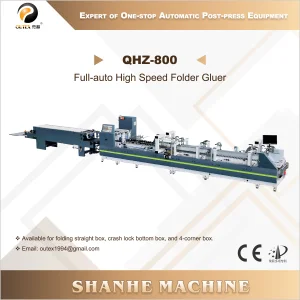
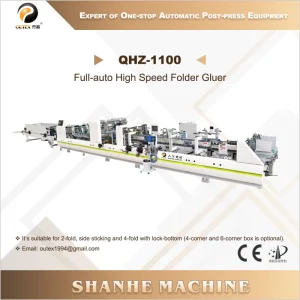
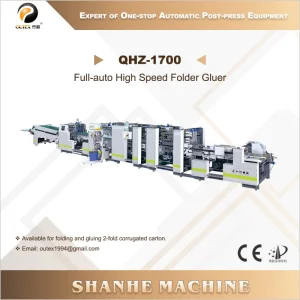
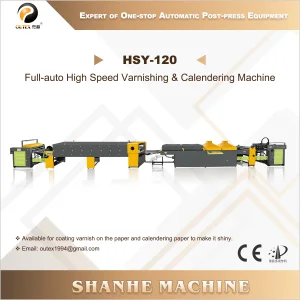
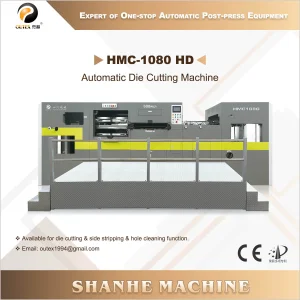
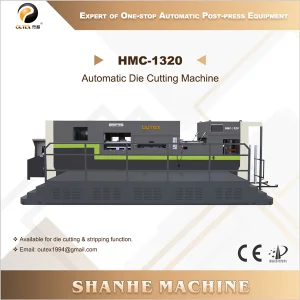
Established in 1994 in Shantou, China, Shanhe Machine represents three decades of relentless research, design engineering, and international export leadership in high-speed intelligent post-press equipment. Elevate your packaging enterprise's operational capacity, eco-compliance, and finished product quality.