Explore our high-speed automatic laminating, calendering, coating, and converting systems designed to European safety standards.
Analysis of Next-Gen Board Mounting, Mechanical Registration, CE Directives, and Global Industrial Packaging Efficiency.
Engineering Abstract: In modern high-speed post-press finishing, the automatic flute laminator serves as the core bridging mechanism between printed top sheets (offset/digital) and underlying corrugated structures (A, B, C, E, F, Micro-flute, and solid board). Achieving precise registration at production velocities exceeding 160–200 meters per minute requires synchronized multi-axis servo systems, advanced glue application dynamics, and stringent adherence to European Machinery Directive standards (2006/42/EC).
Global packaging equipment sourcing demands strict compliance with international mechanical safety and electromagnetic standards. CE certification is not merely a export label; it represents an exhaustive engineering process governed by European Directives. For an automatic flute laminating machine, compliance entails:
Structural risk assessment, mechanical guarding of rotating nip rollers, chain drives, and paper feed bridges. Implementation of dual-circuit safety interlocks on all access covers.
Comprehensive hazard identification and risk reduction models integrated directly into the machine design phase, reducing operator exposure to mechanical crush zones.
Shielded variable frequency drives (VFD) and servo controls preventing harmonic distortion and electromagnetic interference with factory industrial networks.
Safety system designs must feature category-rated Emergency Stop circuits (Category 3/4 under EN ISO 13849-1), optical light curtains across automatic stacker exit zones, and low-voltage control circuits (24V DC). CE certified automatic flute laminators guarantee reduced workplace operational risk, reduced factory insurance premiums, and seamless operational approval across European, North American, and Asia-Pacific industrial zones.
The global automated packaging machinery market is experiencing structural expansion, driven by three macro factors: rapid growth in e-commerce fulfillment, consumer transition toward sustainable paperboard packaging, and demanding shelf-ready packaging (SRP) requirements from multinational retailers.
Modern retail channels demand high-graphics packaging that combines structural integrity with offset-quality color reproduction. Traditional heavy-gauge corrugated boxes are increasingly replaced by micro-flute laminations (E, F, N-flute), which offer crisp foldability and superior compression strength while reducing total fiber usage. Consequently, packaging converters require high-speed automatic flute laminators capable of running thin linerboards (down to 120 gsm) over fine fluting without structural warp or glue bleed-through.
| Substrate Combination | Typical Applications | Technical Challenge | Laminating Solution Features |
|---|---|---|---|
| Printed Paper + E/F Micro-Flute | Cosmetics, Electronics, Fast Food | Sheet warp, ribbing effect, precise register | Servo overlap control, thin adhesive film application |
| Offset Cardboard + B/C Corrugated | E-commerce Master Cartons, Appliances | Heavy board transport, high production speed | High-torque feeding belts, heavy-duty pressing belts |
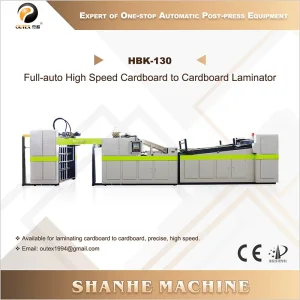
| Cardboard + Cardboard (Greyboard) | Gameboards, Rigid Gift Boxes, Book Covers | Thick board alignment, non-bending requirements | Dual-feeder suction, specialized glue viscosity control |
| Pre-printed Paper + Double-Wall (BC/EB) | Industrial Equipment, Heavy Bulk Displays | Substrate thickness variation, heavy stack weight | Automatic stacker height adjustment, high pressure nip rollers |
China, specifically industrial clusters in Shantou, Guangdong, has evolved into the world's premier manufacturing center for post-press finishing equipment. Facilities like Guangdong Shanhe Industrial Co., Ltd. (spanning 34,175 m²) demonstrate how concentrated engineering talent, integrated supply chains, and advanced CNC tooling yield significant total cost of ownership (TCO) advantages for international buyers.
In-house manufacturing of frame side-plates, precision ground cylinders, and dynamic balancing of glue rollers ensures ultra-low mechanical vibration at high operating speeds.
Integration of world-class electrical components (Siemens PLCs, Schneider electronics, Omron sensors, NSK bearings) guarantees global spare part availability and ease of service.
Chinese machinery builders offer comparable output speeds and registration tolerances to European counterparts at 40% to 60% lower capital expenditure.
The operational key to an automatic flute laminator lies in matching top sheet speeds to bottom sheet speeds in real-time. Traditional mechanical cam-lever laminators relied on physical timing belts, which suffered from mechanical wear, registration drift, and lengthy setup times. Modern units utilize full servo-driven motion control.
High-resolution optical sensors register the leading edge of both top printed sheets and bottom corrugated substrates. Servo motors continuously calculate positional deviation and make dynamic micro-adjustments to the top feeder timing belt. This maintains front-to-back sheet alignment within ±0.5mm, even during speed changes.
Excessive adhesive application introduces paper moisture, causing post-lamination board warping (wavy edges) and increasing drying line requirements. Modern machines use dynamic glue metering systems:
Challenge: Converter needed 120,000 litho-laminated 24-can cartons per 8-hour shift using 150gsm paper over B-flute board.
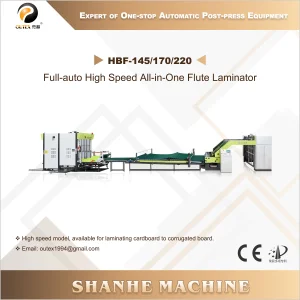
Solution: HBF Series Smart High-Speed Flute Laminator with online Flip-Flop Stacker running at 180 m/min.
Result: Reduced manual stack labor by 3 operators; achieved zero warp and consistent stacking for automated downstream die-cutting feeders.
Challenge: Production of thin E-flute luxury gift boxes with high registration demands to avoid white trim lines during folder-gluer conversion.
Solution: Servo-registered automatic flute laminator with precision optical side-lays.
Result: Maintained registration within ±0.4mm, reducing substrate waste from 4.5% to under 0.8% across long production runs.
When assessing automatic flute laminating equipment, international procurement directors should evaluate the complete lifecycle financial model rather than initial purchase price alone:
$$\text{TCO} = C_{\text{CapEx}} + C_{\text{Energy}} + C_{\text{Adhesive}} + C_{\text{Downtime}} - V_{\text{Scrap Reduction}}$$
Key procurement checklist criteria include:
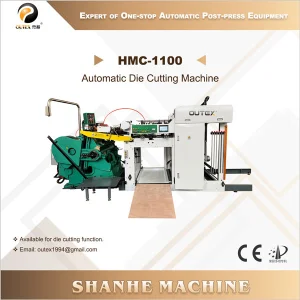
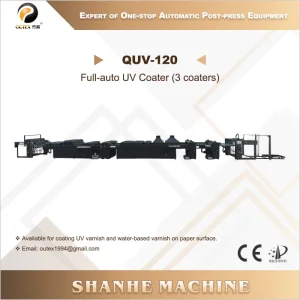
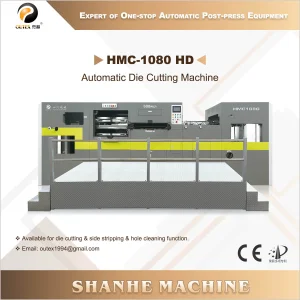
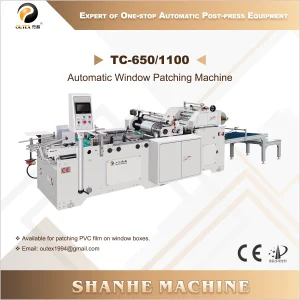
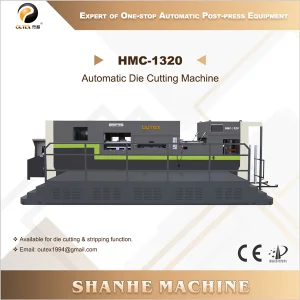
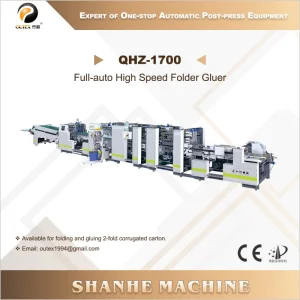
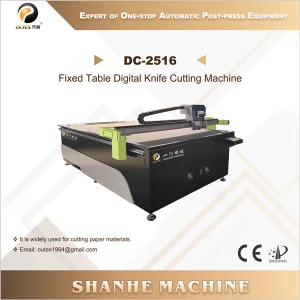
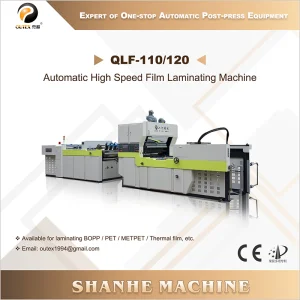
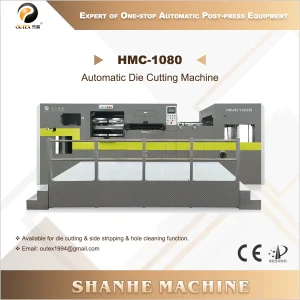
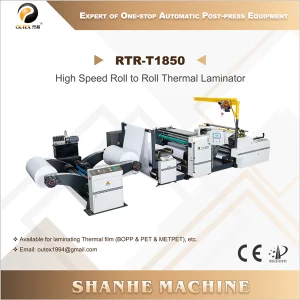
Complete your production facility with heavy-duty die cutters, thermal laminators, all-in-one flute laminators, and digital cutting platforms.
Comprehensive answers for machinery buyers, plant managers, and packaging engineers.