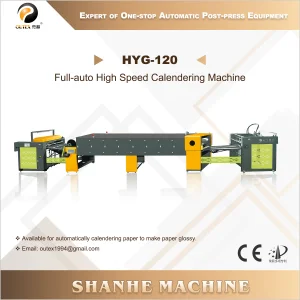
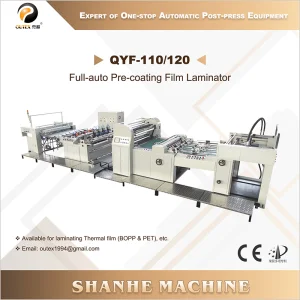
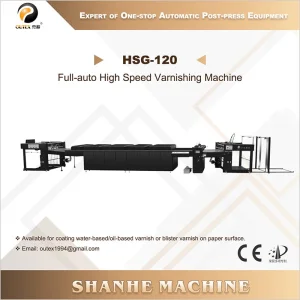
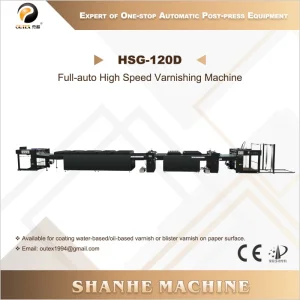
Explore our CE-certified line of industrial lamination equipment, die-cutters, folder gluers, and finishing machines designed for automated high-volume packaging manufacturing.
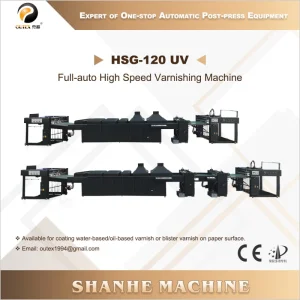
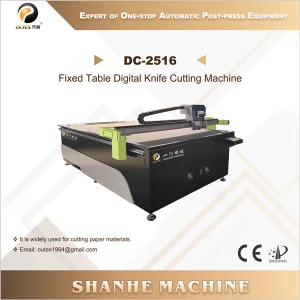
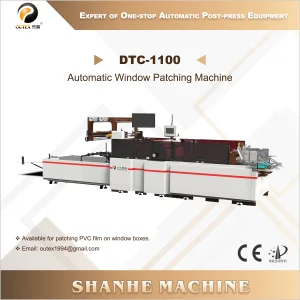
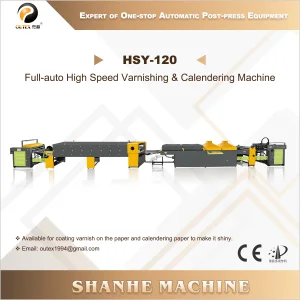
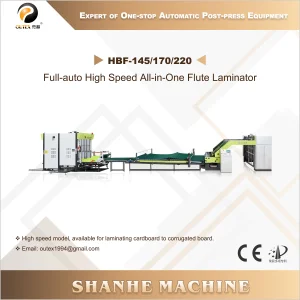
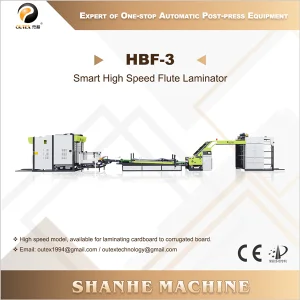
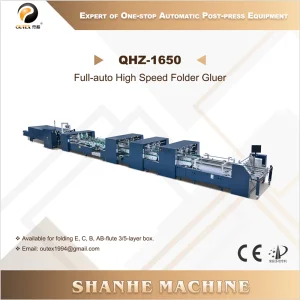
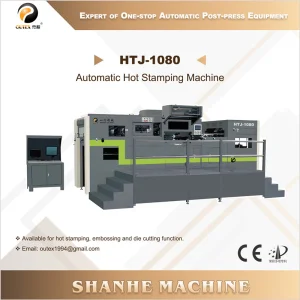
The global market for Polyvinyl Chloride (PVC) film lamination machines is undergoing a technological renaissance driven by high performance requirements across architectural acoustics, luxury packaging, automotive trims, and eco-friendly furniture manufacturing. Historically viewed as a traditional thermal bonding mechanism, modern PVC film lamination has evolved into an automated, high-precision surface engineering process. Today’s industrial plants demand multi-layer substrate versatility, zero-VOC emission profiles, optical alignment precision, and continuous operational reliability under intensive production cycles.
PVC film surface laminating serves as a vital bridge between aesthetic surface finishing and structural durability. As international standards tightening around volatile organic compounds (VOCs) and worker safety—specifically in the European Union and North America—machinery OEMs are mandated to engineer machinery that integrates PUR (Polyurethane Reactive) hot-melt technology, infrared radiation pre-heating tunnels, and servo-synchronized web tension dynamics. Manufacturers without CE compliance and compliance with safety directives (such as Machinery Directive 2006/42/EC and Low Voltage Directive 2014/35/EU) are rapidly phased out of tier-1 global supply chains.
Information Gain Insight: Modern PVC film lamination is no longer restricted to flat panel pressing. Next-generation smart laminators utilize dynamic micro-metering rollers and closed-loop photoelectric sensor tracking to compensate for real-time substrate thickness variances, mitigating thermal shrinkage in flexible PVC films during high-speed runs.
Navigating international regulatory compliance requires more than affixing a label. A genuine CE Certification for PVC Film Lamination Machines guarantees rigorous compliance with European safety, electromagnetic compatibility (EMC), and environmental protocols. For global procurement directors, verified CE documentation represents a mitigation strategy against operational downtime, legal liabilities, and occupational safety hazards.
Incorporates holistic risk assessment protocols. Includes automated emergency brake stop controls, dual-circuit safety interlocks on access doors, and physical pinch-point guarding across all heated nip rollers and film unwinding spindles.
Ensures all electrical control cabinets withstand electromagnetic interference (EMI), incorporate IP54-rated dust and liquid ingress protection, and utilize color-coded, surge-protected wiring under strict European low-voltage safety directives.
Integrated infrared heating zones feature isolated thermal barriers and forced exhaust extraction ports, maintaining uniform film softening temperatures without exposing operators to hazardous off-gas fumes or excessive radiant heat.
High-speed PVC lamination demands an intricate synergy of mechanical engineering, pneumatic balance, and digital motion control. Understanding the anatomical breakdown of a modern industrial laminator assists engineering teams in evaluating machine capabilities.
| System Module | Engineering Specification | Operational Function & User Benefit |
|---|---|---|
| Adhesive Coating Unit | PUR Hot-Melt / Solventless Metering Rollers | Applies precise adhesive film weight (15–40 g/m²) with zero solvent emissions and superior moisture/heat resistance. |
| Unwind & Tension Control | Dual-Shaft Magnetic Powder Brake + Dancer Rollers | Maintains continuous web tension (±0.5 N/m), preventing PVC stretch deformation during thermal processing. |
| Pre-Heating Tunnel | Infrared (IR) Quartz Tubes with Pid Control | Ensures surface temperature of rigid PVC film reaches optimal glass transition temperature (Tg) prior to pressure bonding. |
| Nip Pressure System | Heavy-Duty Hydraulic / Servo Pneumatic Cylinder | Delivers uniform linear pressure up to 8 N/mm² across the entire substrate width, eliminating air micro-bubbles. |
| Drive Mechanism | Multi-Axis Synchronous Servo Motor Drive | Provides zero-backlash line synchronization between feeder, glue applicator, lamination nip, and automated stacker. |
Polyurethane Reactive (PUR) adhesives form permanent chemical cross-links upon curing. Unlike traditional water-based glues, PUR laminated PVC surfaces demonstrate exceptional resistance to temperature fluctuations (-40°C to +120°C), water immersion, and chemical exposure, making them ideal for exterior architectural profiles and kitchen cabinetry.
PVC films possess naturally low surface energy. Integrated high-frequency corona discharge units elevate the film’s surface tension above 44 Dynes/cm prior to adhesive application. This guarantees molecular-level bonding and prevents film delamination during post-processing operations such as V-grooving or CNC trimming.
High-speed CCD cameras continuously monitor film positioning relative to the substrate edge. Micro-actuators automatically correct web alignment within milliseconds, ensuring zero overlap or exposed substrate margins at line speeds exceeding 150 meters per minute.
In the global machinery procurement ecosystem, Chinese manufacturing bases—specifically specialized industrial clusters like Guangdong Shanhe Industrial Co., Ltd. in Shantou—have shifted the market paradigm. The combination of comprehensive local component supply chains, extensive OEM/ODM manufacturing capability, and continuous R&D investment enables Chinese suppliers to offer enterprise-grade PVC film laminators at an unmatchable Total Cost of Ownership (TCO).
By housing CNC machining centers, precision roller grinding workshops, electrical assembly bays, and live-run testing halls within one single facility, SHANHE maintains total quality control over every structural frame and drive roller.
Founded in 1994, our engineering team brings three decades of practical expertise in film lamination, board mounting, die-cutting, and surface finishing. This deep domain knowledge ensures equipment is optimized for real-world plant conditions.
Whether your line requires custom working widths (from 1100mm to 2300mm), multi-foil feed towers, or specialized inline primer application stations, Chinese manufacturing agility facilitates rapid engineering modifications with minimal lead-time penalties.
Supply Chain Resilience: Direct factory export eliminates middleman markups while granting overseas clients direct access to original spare parts, custom engineering modifications, and direct technician-to-technician remote support.
PVC film lamination machines serve diverse end-user sectors. Our CE-marked lamination platforms are engineered to process varying rigid and flexible film gauges across multiple industrial substrates:
Laminating decorative woodgrain or stone-textured PVC films onto Wood-Plastic Composites (WPC), Stone-Plastic Composites (SPC), and Medium-Density Fiberboard (MDF). Widely utilized in European interior construction for waterproof wall paneling and acoustic flooring.
Precision lamination of soft-touch PVC/PU leather films onto injection-molded automotive door panels, dashboards, and pillar trims. Requires ultra-uniform adhesive distribution and high initial tack strength to withstand extreme vehicle cabin heat cycles.
Continuous roll-to-roll PVC film lamination onto galvanized steel or aluminum sheets for refrigerator side walls, washing machine housings, and cleanroom partitions. Provides scuff resistance and anti-fingerprint aesthetic coatings.
Laminating metallic, matte, or tactile anti-scratch PVC film overlays onto heavy cardboard, greyboard, and micro-flute corrugated boxes. Essential for premium cosmetics, electronics, and luxury beverage gift packaging.
As the manufacturing landscape transitions towards intelligent automation and strict circular economy principles, the next generation of PVC film lamination machinery is defined by three technological vectors:
Integrating inline high-resolution line-scan cameras that detect micro-bubbles, dust inclusions, film pinholes, or adhesive streaks at full operational speeds. Defect location data is logged into OPC-UA Industrial IoT databases, allowing automated rejection downstream.
Replacing legacy continuous heating zones with dynamic, zone-controlled infrared emitters that automatically scale power output based on real-time line speed, sheet width, and optical pyrometer feedback. Reduces plant power consumption by up to 35%.
Adapting feed tension mechanisms and nip temperature controls to handle ultra-thin bio-PVC, PETG, and recycled polyolefin films. Lower thermal thresholds require precise temperature management to prevent film deformation.
Selecting an industrial PVC film lamination machine vendor requires structured capital expenditure (CapEx) evaluation. Technical directors and procurement officers are advised to utilize the following engineering checklist prior to issuing RFQs:
Verify minimum and maximum sheet thickness parameters (e.g., paperboard from 100 g/m² up to 8mm corrugated board or rigid composite paneling). Ensure the unwinding shaft accommodates your film roll outer diameter (OD) and core dimensions.
Evaluate PUR melt tank capacities against your shift output. Tank-less, demand-melt systems reduce adhesive thermal degradation, minimize daily purge waste, and cut clean-up labor time by up to 60 minutes per shift.
Request certified third-party CE audit documentation issued by accredited Notified Bodies. Confirm electrical schematics adhere to IEC standards and that critical components (PLC, safety relays, main drives) source from recognized global vendors (Siemens, Schneider, Omron).
Explore our complete portfolio of high-speed calendering, pre-coating film lamination, folder-gluing, and intelligent paper handling machinery built for global packaging plants.