Explore our precision-engineered post-press machinery manufactured in our 34,175 m² Shantou facility. Each system undergoes strict dynamic balancing, thermal uniformity testing, and operational stress runs prior to export.
In the modern post-press converting industry, film lamination serves as a vital bridge between raw printed substrates and high-value, shelf-ready packaging. Semi-automatic film laminating machines represent the ultimate operational balance for small-to-medium enterprise (SME) packaging converters and specialized commercial printers worldwide.
While fully automatic lamination lines offer unmatchable throughput for million-unit runs, semi-automatic film laminators excel in versatility, setup speed, low capital expenditure, and agility when handling complex, low-to-medium batch runs. Chinese OEM manufacturers and specialized factories have perfected the semi-automatic architecture—combining robust mechanical chassis design, advanced PLC digital control systems, electromagnetic heating rollers, and precision automatic sheet separation units.
A semi-automatic film laminating machine operates by feeding single sheets manually or via assisted suction tables, aligning them precisely via automated overlap registers, coating or heating pre-glued BOPP/PET film, bonding the film under heavy hydraulic/pneumatic nip roller pressure, and automatically snapping or cutting the laminated web into stacked sheets.
Operators manually place sheets onto the conveyor bed, where a high-precision PLC sensor tracks the leading edge. Pneumatic registration gates automatically govern the sheet-to-sheet overlap within ±1.0 mm accuracy, ensuring seamless web continuity without film waste.
Featuring ultra-mirror ground chromium heating cylinders (diameters ranging from 250mm to 400mm). Advanced electromagnetic induction heating systems maintain surface temperature fluctuation within ±1°C across spans up to 1300mm, eliminating thermal cold spots.
Equipped with anti-curl bar assemblies and high-speed pneumatic perforating/snapping wheels. For BOPP thermal films, the integrated rotary disc blade perforates the film edge at the sheet overlap point, allowing instant pneumatic burst separation without tearing margins.
Understanding the fundamental chemical and mechanical distinctions between Thermal Pre-Coated Lamination and Water-Based Wet Adhesive Lamination is critical when evaluating Chinese machine suppliers:
| Engineering Parameter | Thermal (Dry) Pre-Coating System | Water-Based (Wet) Adhesive System | Dual-Purpose Hybrid Semi-Auto |
|---|---|---|---|
| Film Media Compatibility | Pre-glued EVA film (BOPP, PET, Velvet, Holographic) | Standard plain BOPP, PET, PVC film + Liquid Glue | Universal (Switchable between dry & wet modes) |
| Heating System Requirements | High Temp (100°C – 130°C) Oil / Electromagnetic | Drying Tunnel / IR Lamps (50°C – 80°C) | Dual-zone Independent Thermal Controls |
| Operational Cost per Sq. Meter | Slightly higher raw film material cost | Lowest (Bulk raw film + emulsion glue) | Optimized based on order volume mix |
| Environmental & Safety Rating | 100% Solvent-Free, Odorless, Food-Safe | Water-borne eco-friendly, zero VOC emission | Complies with global RoHS & REACH standards |
| Best suited application | Luxury rigid boxes, book covers, cosmetics | Mass production paperboard, food cartons | Commercial trade printers with mixed job runs |
China has established itself as the world’s powerhouse for packaging and post-press machinery manufacturing. Sourcing semi-automatic film laminators directly from established Chinese factories provides significant operational and financial leverage to global buyers.
Factories situated in Shantou, Guangdong benefit from a fully mature industrial cluster. From heavy casting foundries and CNC precision machining centers to high-end electric control suppliers, complete localization minimizes manufacturing lead times and reduces component costs.
Modern Chinese suppliers utilize five-axis CNC machining centers to mill solid machine frames and heavy-duty platen castings. Heavy wall frame thickness (up to 30mm steel plate) eliminates frame flex under high hydraulic pressures (up to 20 MPa), guaranteeing uniform lamination without bubbles.
Unlike rigid Western production lines, Chinese packaging machinery suppliers excel in custom modifications. Whether integrating non-standard sheet widths (e.g., 1450mm, 1650mm), adding corona treatment devices, or adding inline window patching modules, Chinese factories adapt quickly.
The post-press film lamination sector is undergoing a rapid green and smart transformation. Buyers searching for next-generation equipment must evaluate manufacturers based on their adoption of three critical technological shifts:
Traditional internal electric oil heaters suffer from 30-minute warm-up cycles and 15% energy loss. Next-gen Chinese semi-automatic laminators employ external electromagnetic induction heating. They reach 120°C in under 5 minutes while reducing total electricity consumption by up to 35%.
With global plastic bans tightening, packaging buyers are transitioning from traditional BOPP to PLA (Polylactic Acid), Cellulose, and Water-Soluble films. Chinese manufacturers are redesigning tension-control rollers and temperature sensors to accommodate ultra-thin, heat-sensitive biodegradable films.
Modern semi-automatic units feature Siemens or Schneider PLC architectures coupled with color HMI touchscreens. Integrated IoT modules allow remote factory software updates, error diagnostics, and predictive maintenance alerts across international borders.
Semi-automatic film laminators are deployed across diverse sectors within the global printing and paper packaging supply chain. Selecting the correct configuration depends heavily on the target substrate density, film finish, and post-lamination downstream processes.
A semi-automatic film laminator rarely operates in isolation. To maximize factory floor productivity, smart printing plants integrate lamination into matched downstream equipment workflows:
When evaluating capital equipment investments, enterprise procurement managers must look beyond initial purchase price (CAPEX) and analyze lifetime operational expenditure (OPEX), scrap rates, labor utilization, and break-even job run sizes.
| Evaluation Criterion | Manual Film Laminator | Semi-Automatic Film Laminator | Fully Automatic High-Speed Line |
|---|---|---|---|
| Initial Machinery CAPEX | Very Low ($2,000 – $5,000) | Optimal Balance ($8,000 – $25,000) | High ($50,000 – $180,000) |
| Required Operator Skill Level | High manual dexterity needed | Basic Operator (Quick 1-day training) | Specialized Master Technician |
| Job Setup & Changeover Time | 15 – 25 Minutes | 5 – 10 Minutes (Instant touch presets) | 20 – 45 Minutes |
| Economic Break-Even Run Length | 1 – 300 Sheets | 300 – 10,000 Sheets | 10,000+ Sheets |
| Scrap & Film Waste Ratio | High (3% – 5% startup loss) | Ultra-Low (< 0.5% with auto overlap) | Ultra-Low (< 0.3%) |
| Estimated Capital Payback Period | 6 – 12 Months | 3 – 6 Months | 14 – 24 Months |
For international procurement directors sourcing post-press machinery from Chinese suppliers, verifying factory manufacturing capability and quality management systems is crucial. Follow this standardized engineering verification protocol prior to placing purchase orders:
Verify that key electronic components carry international CE, UL, or CSA certifications. Ensure main drives utilize top-tier brand vector inverters (e.g., Schneider, Yaskawa, Siemens) and pneumatic systems feature trusted brand valves (Festo, SMC).
Request a thermal camera inspection report of the heating roller during pre-shipment testing. The temperature differential across the entire operational roller surface width (e.g., 1100mm) must not exceed ±1.5°C at a steady 120°C setpoint.
Insist on heavy-duty vacuum foil sealing paired with anti-rust desiccant packs inside heat-treated, ISPM-15 compliant wooden cases. Frame assemblies must be bolted securely to wooden skid bases to prevent movement during transoceanic shipping.
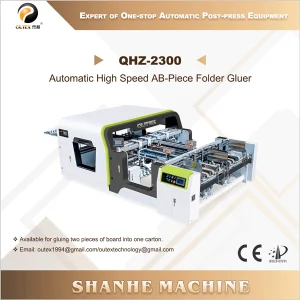
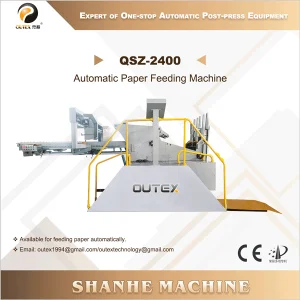
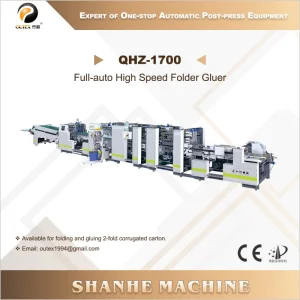
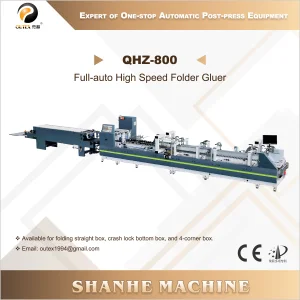
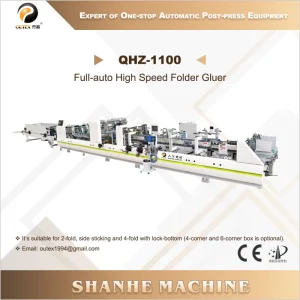
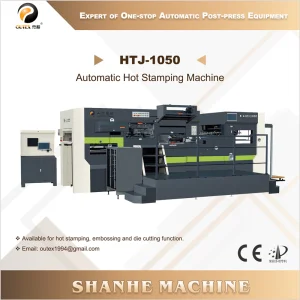
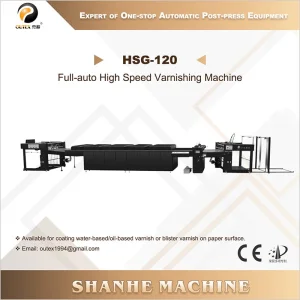
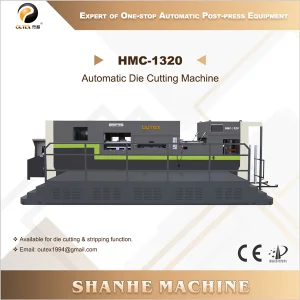
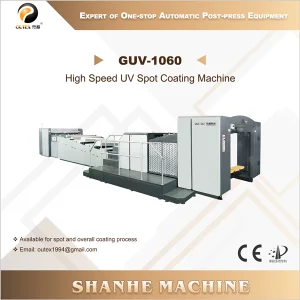
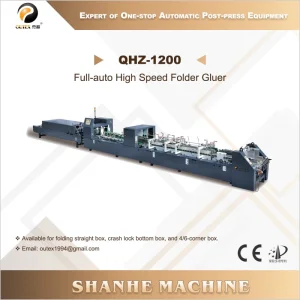
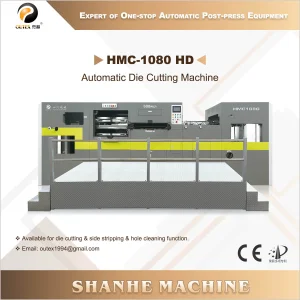
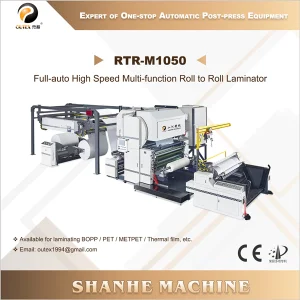
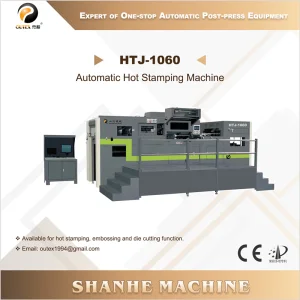
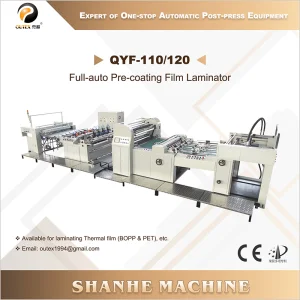
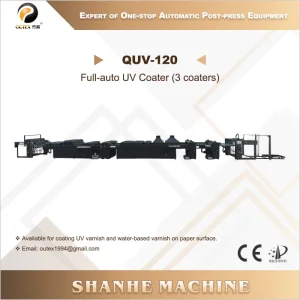
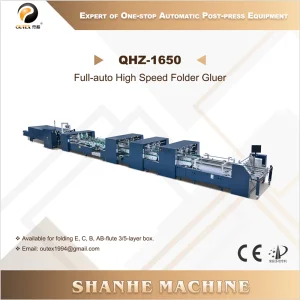
Expand your plant capability with our high-speed UV spot coaters, roll-to-roll laminators, heavy-duty die cutters, and automated folder gluers designed for seamless post-press automation.
Get definitive answers to technical, commercial, and maintenance queries regarding Chinese semi-automatic film laminating machines, export logistics, and after-sales support guarantees.