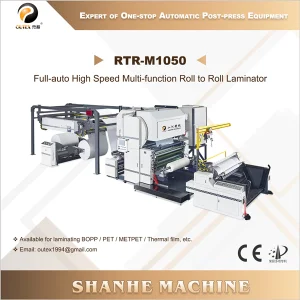
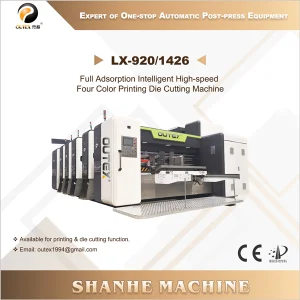
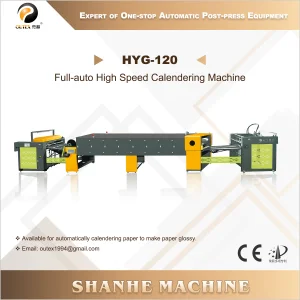
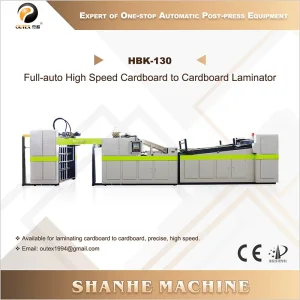
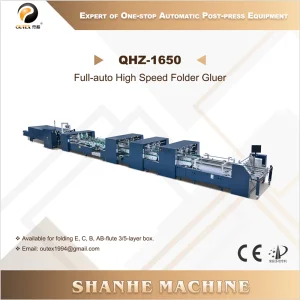
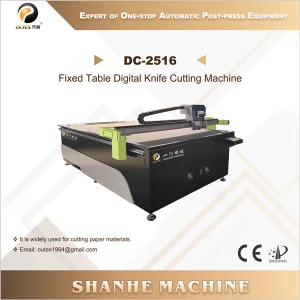
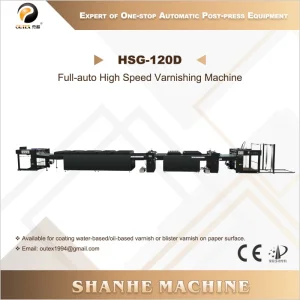
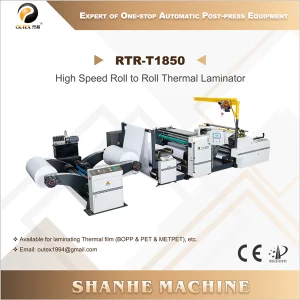
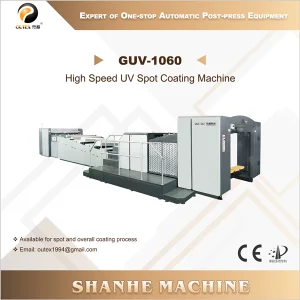
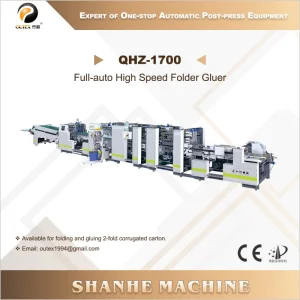
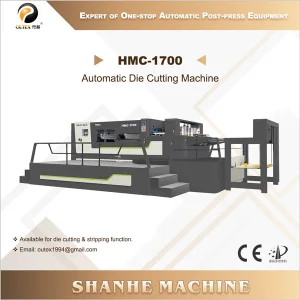
Explore our core engineering lineup designed for high precision, maximum durability, and exceptional operational throughput.
A Technical Evaluation of Thermal Transfer Kinematics, Micro-Pressure Calibration, and Mechanical Stability in Modern Post-Press Manufacturing.
In the evolving landscape of post-press packaging and print finishing, the Manual Hot Foil Stamping Machine remains a cornerstone technology for short-to-medium run production, prototype validation, specialized luxury packaging, and bespoke leathercrafting. While fully automated inline matrix die-cutters handle ultra-high-volume commodity packaging, high-precision manual and semi-manual foil stamping machinery provides unmatched tactical flexibility, zero-latency setup transitions, and granular pressure-thermal customization options.
Core Industry Paradigm: Manual hot foil stamping equipment engineered by premier Chinese manufacturers bridges the critical gap between artisanal micro-adjustability and industrial-grade operational longevity. By integrating digital PID temperature loops with solid-state heat plates, modern manual press architectures guarantee registered foil transfer with zero edge bleed down to 0.1mm line thickness.
The core physical process relies on three synchronized variables: Pressure ($P$), Temperature ($T$), and Dwell Time ($t$). When a copper, brass, or magnesium die contacts the substrate, the heat-activatable adhesive layer of the multi-spec hot stamping foil melts instantly while the metallic or pigment layer bonds under force to the fibrous matrix of paperboard, corrugated flutes, or synthetic substrates. Premium machinery factories must design frames capable of withstanding torsional stresses exceeding 5 to 15 tons of localized force without frame flex or registration drift.
Transforming Traditional Post-Press Equipment into Smart, Eco-Efficient, and Ergonomic Manufacturing Assets.
Transitioning from pure mechanical hand-lever force estimation to digital load-cell feedback systems. Operators can dial in exact tonnage to prevent substrate crushing while maintaining crisp metallic release.
Modern heating plates utilize multi-zone aluminum-alloy heat sinks with localized heating grids. Energy is concentrated solely on active die zones, reducing overall plant kWh consumption by up to 35%.
Equipped with dual photo-electric safety curtains, emergency pneumatic retractors, and anti-fatigue lever mechanics to meet stringent European Union CE and international OSHA safety regulations.
The global packaging sector is witnessing a massive structural shift away from uniform mass production toward hyper-personalized, regionalized, and seasonal stock keeping units (SKUs). E-commerce growth, boutique cosmetics, premium spirits, and pharmaceutical anti-counterfeiting require localized finishing setups. Automatic inline stamping machines require 1 to 3 hours of complex mechanical make-ready time. Conversely, a high-quality manual hot foil stamping machine can be re-tooled with new copper dies and foil rolls in under 8 minutes, rendering low-volume high-margin jobs exceptionally profitable.
Deconstructing Total Cost of Ownership (TCO), Operational Flexibility, and Strategic Machinery Selection Criteria for International B2B Buyers.
When procurement managers, plant directors, and print house owners evaluate manual hot foil stamping machines, their search intent extends far beyond initial machine price. B2B buyers conduct multi-layered risk and return evaluations structured around key operational pillars:
| Procurement Pillar | B2B Buyer Intent & Key Metrics | Engineering & Factory Solution |
|---|---|---|
| Thermal Consistency | Zero temperature drop across multi-die layout during continuous pressing cycles. | Solid-state relay (SSR) control with multi-zone heating plates and cast aluminum core. |
| Tensional Frame Rigidness | Elimination of platen micro-flexing under max tonnage, preventing uneven foil transfer. | Heavy-duty ductile iron frame casting (HT300 standard) stress-relieved via annealing. |
| Make-Ready Latency | Rapid die mounting, quick foil tensioning, and intuitive gauge setting for short runs. | Universal honeycomb chasing plates and rapid magnetic/pneumatic die locks. |
| Foil Feed Economy | Minimizing foil web waste between press cycles to lower expensive metallic foil consumable costs. | Programmable stepper-motor foil advance systems replacing inaccurate mechanical gear feeds. |
| Safety Compliance | Strict adherence to ISO 12100 and CE machinery directives to guarantee operator safety. | Dual hand anti-tiedown control buttons, optical light barriers, and auto-reverse safety valves. |
For international buyers across North America, Europe, the Middle East, and Southeast Asia, investing in a robust manual hot foil press manufactured in China offers superior TCO advantages. The capital expenditure (CAPEX) of a heavy-duty Chinese manual stamper is typically 60% to 70% lower than European legacy equivalents, while utilizing standardized replacement components (such as Omron thermostats, Schneider electrics, and AirTAC pneumatics) that drastically minimize operational expenditure (OPEX) and repair lead times.
How Modern Chinese Post-Press Manufacturing Ecosystems Deliver Unrivaled Quality Control, Precision CNC Machining, and Global Logistics Speed.
The manufacturing ecosystem in Shantou, Guangdong, represents the pinnacle of China's advanced machinery clusters. Enterprise manufacturing has evolved far beyond basic assembly line operation into fully integrated, digitized Industry 4.0 production environments.
All platen beds, linkage arms, and structural housings are machined using multi-axis CNC milling centers. Tolerances are held strictly within 0.01mm, eliminating uneven pressure distribution across the stamping area.
Every manual foil stamping press undergoes 72 hours of continuous dry-run thermal stress testing, vibration analysis, and load-cell deflection verification before receiving export clearing clearance.
Direct proximity to major shipping ports (Shantou, Shenzhen, Shanghai, Ningbo) enables seamless global logistics. Spare parts and custom chased plates are dispatched with express international lead times.
Factory Expertise Note: Guangdong Shanhe Industrial Co., Ltd. (SHANHE MACHINE), operating a 34,175 m² modern manufacturing base since 1994, integrates three decades of mechanical engineering experience into every post-press system. This deep manufacturing heritage ensures structural components resist thermal warping over decades of continuous operation.
From High-End Luxury Packaging to Industrial Component Marking: Versatility Across Substrates.
The operational elasticity of manual hot foil stamping machines allows packaging converters, print finishing houses, and specialty goods manufacturers to execute intricate embellishments on a vast array of materials:
Imprinting metallic gold, silver, and holographic security foils onto coated paperboard, textured book cloth, and rigid box covers. Provides high-end visual tactile depth unattainable through standard offset ink printing.
Achieving deep blind embossing and foil debossing on natural leather, PU synthetics, and hardbound book spines. Precise heat regulation prevents scorching or substrate structural weakening.
Applying specialized optical variable devices (OVDs), micro-text security foils, and serialized verification stamps onto pharmaceutical cartons, certificate documents, and luxury tags.
Achieving perfect foil transfer requires matching the total contact die area ($A_{die}$) to the net mechanical force ($F_{net}$) exerted by the press toggle or pneumatic cylinder:
If $P_{stamping}$ drops below the threshold dictated by the foil release layer, partial transfer occurs (causing flaking). If $P_{stamping}$ is excessive, die impression distortion and substrate collapse take place. Manual machines equipped with micro-adjustable mechanical stop blocks allow operators to lock in the exact depth stop to within $\pm 0.01\text{mm}$.
Expert Guidance on Machine Selection, Technical Operations, Maintenance, and Global Shipping Logistics.
Explore additional high-performance machinery lines engineered to complete your automated packaging finishing floor.