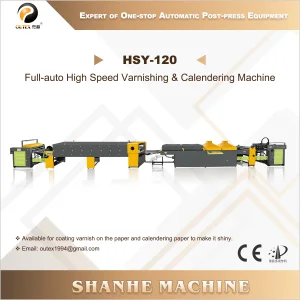
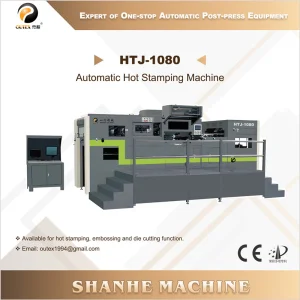
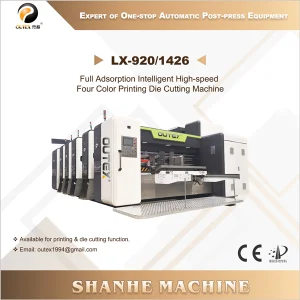
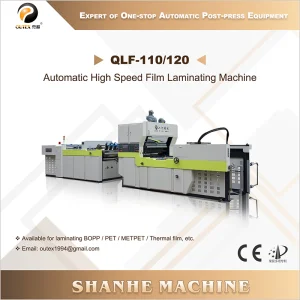
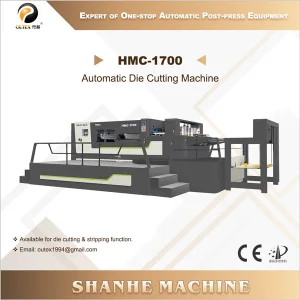
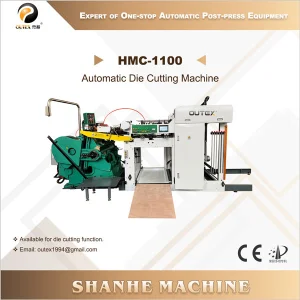
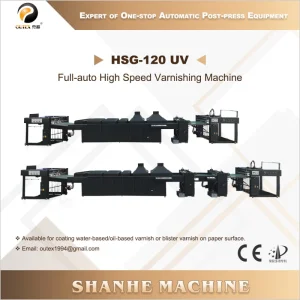
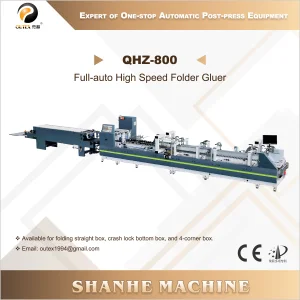
Explore our CE-certified post-press automation equipment engineered for high-precision coating, calendering, laminating, and die-cutting.
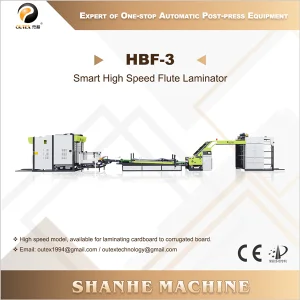
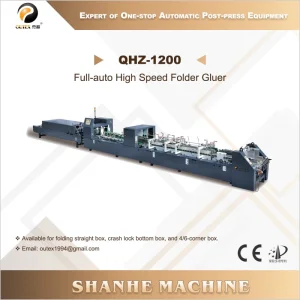
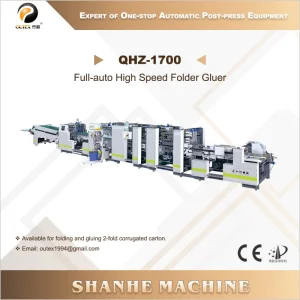
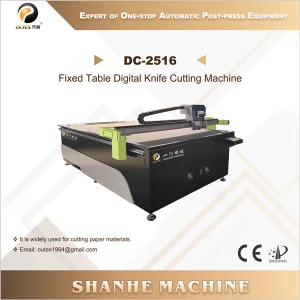
Understanding the physics of high-temperature mirror compression, thermoplastic polymer flow, and structural stability in post-press packaging enhancement.
In modern high-end post-press converting, the visual impact and tactile experience of packaging surfaces are paramount. A CE Certification Calendering Machine serves as the technological core for achieving mirror-like gloss and smooth surface characteristics on coated paperboards, folding cartons, and luxury packaging substrates. Manufactured by specialized industrial producers such as Guangdong Shanhe Industrial Co., Ltd. (SHANHE MACHINE), these machines combine mechanical precision, thermal engineering, and automated line control to transform standard varnished sheets into high-value packaging assets.
Paper calendering is a complex thermomechanical process. When liquid varnish (water-based or solvent-based calendering oil) is applied to paperboard, it penetrates the cellulose surface fiber matrix. The calendering machine subjects this pre-coated sheet to intense nip pressure between a super-finished, heated alloy mirror cylinder and a resilient pressure roller (such as hard rubber or cotton-paper composite roll).
Under heat ($100^\circ\text{C}$ to $140^\circ\text{C}$) and mechanical pressure ($15\text{ to }30\text{ MPa}$), the varnish resin crosses its Glass Transition Temperature ($T_g$). In this viscoelastic state, the varnish flows dynamically into microscopic paper surface voids, conforming perfectly to the mirror cylinder's ultra-smooth chromium-plated surface ($R_a \le 0.01\,\mu\text{m}$). As the sheet exits the nip zone and cools, the varnish solidifies instantly, locking in a high specular gloss exceeding 90–98 Gloss Units (GU).
The core structural engineering of a CE-certified industrial calendering machine hinges on cylinder thermal uniformity and structural rigidity under heavy dynamic loads. Leading manufacturers utilize heavy-wall seamless alloy steel forgings, micro-polished and electroplated with dense hard chrome (thickness $0.08\text{--}0.12\text{ mm}$, hardness $HRC \ge 65$).
Internal heating relies on sophisticated thermal oil circulating systems or electromagnetic induction heating. Dual-circuit thermal fluid channels inside the cylinder guarantee a temperature differential across the entire operational web width of less than $\pm 1.0^\circ\text{C}$. This uniform heat gradient prevents thermal bowing, eliminates gloss banding, and protects delicate printed inks from thermal degradation or color shifting.
Evaluating market shifts toward sustainable post-press embellishment, plastic-free packaging mandates, and production cost efficiency.
Global environmental regulations (such as EU Single-Use Plastics Directives) are driving converters away from plastic film lamination toward recyclable, high-gloss calendering varnishes.
Inline varnishing and calendering cuts film consumable costs by 40–60% compared to traditional BOPP thermal film lamination, while achieving identical optical impact.
Modern fully automatic calendering units seamlessly integrate with feeder and delivery stackers, reaching operational speeds of up to 120 m/min (9,000+ sheets/hour).
| Technology Vector | Thermal Oil Calendering (HSY Series) | UV Spot / Flood Coating | BOPP Thermal Film Lamination |
|---|---|---|---|
| Optical Specular Gloss (60°) | Extreme High Gloss (92 – 98 GU) | High Gloss (80 – 90 GU) | Ultra High Gloss (95 – 100 GU) |
| Recyclability & Repulpability | 100% Repulpable & Biodegradable | Partial Repulpability (UV coating removal required) | Non-repulpable (Requires plastic film separation) |
| Consumable Cost per 1,000 m² | Lowest ($15 – $25 for water-based oil) | Medium ($35 – $55 for UV resin) | Highest ($70 – $110 for film & glue) |
| Scratch & Abrasion Resistance | Very High (Cross-linked barrier layer) | High (UV cured polymer) | Superior (Plastic surface film) |
| EU / FDA Food Contact Safety | Compliant (Migration-tested water coatings) | Requires Photoinitiator Low-Migration Tech | Compliant (Plastic film barrier) |
| CE Safety Compliance Standard | EN ISO 12100 & EN 60204-1 Certified | EN ISO 12100 / Light Leakage Safety | EN ISO 12100 / High Heat Safeguards |
Discover how custom engineered calendering machinery delivers competitive ROI across distinct manufacturing sectors worldwide.
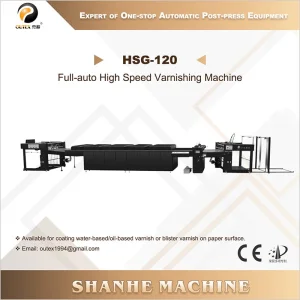
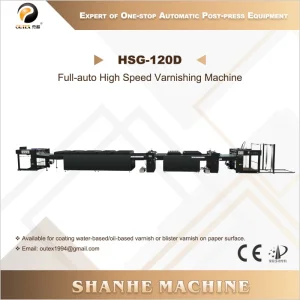
Cosmetic folding cartons require pristine surface smoothness, high rub resistance, and mirror-level optical clarity to command premium retail positioning. Calendering eliminates micro-pinholes and "orange peel" textures often left by standard roller coaters. When processed through machines like the HSY-120 Full-auto High Speed Varnishing & Calendering Machine, perfume boxes achieve deep surface depth, vibrant ink contrast, and superior scuff resistance during automated high-speed cartoning lines.
Premium liquor presentation cases and tobacco cartons demand high metallic contrast and scratch-proof surfaces. Calendering processes amplify the reflective index of metallic inks, cold-foil underlayers, and specialty pigments. By combining precision temperature control with heavy nip pressure, converters prevent ink micro-cracking during downstream creasing, hot foil stamping, and die-cutting operations.
For pharmaceutical packaging and food-contact folding cartons, plastic film laminates present recycling and chemical migration concerns. Calendering using eco-friendly, low-odor, water-based calendering oil creates a smooth seal barrier. This seal protects against ambient moisture ingress while ensuring complete compliance with European Regulation (EC) No 1935/2004 for food contact materials.
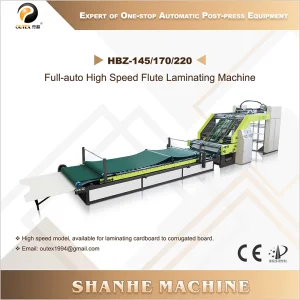
In high-speed corrugated converting, printed top sheets (duplex or white-top linerboard) undergo continuous post-press laminating and die-cutting. Calendering strengthens surface wax resistance, preventing friction scuffing during long-haul shipping logistics. Machine integrations with flip-flop stackers and automatic feeders maximize throughput for 24/7 industrial plants.
How artificial intelligence, smart sensor integration, and advanced thermodynamic engineering are redefining the next generation of post-press machinery.
Integration of inline optical glossmeters and laser surface profilers at the delivery pile. Real-time feedback loops automatically adjust hydraulic cylinder pressure (Nip gap microns) and thermal oil flow rates, maintaining gloss consistency within $\pm 0.5\text{ GU}$ across 50,000-sheet continuous runs.
Transitioning from conventional liquid thermal oil circulation to multi-zone electromagnetic induction heating rollers. Reduces power consumption by up to 35%, enables rapid thermal ramping ($0\text{ to }120^\circ\text{C}$ in under 10 minutes), and eliminates oil leak maintenance risks.
Collaborative mechanical optimization with chemical suppliers for bio-based, starch-derived, and water-soluble varnish formulas. New high-shear Doctor Blade system geometries ensure zero micro-foam formation during high-speed coating applications.
Inside Guangdong Shanhe Industrial Co., Ltd.: 30 years of engineering mastery, vertical integration, and global delivery capacity.
Located in the Jinping Industrial Zone, Shantou, Guangdong, SHANHE operates a world-class production campus equipped with heavy CNC gantry machining centers, precision cylindrical grinding tools, and standardized assembly bays.
From frame stress-relieving heat treatments to dynamic roller balancing and mirror chrome plating polishing, 90%+ of mechanical components are machined internally to ensure rigid quality control.
Established in 1994, SHANHE MACHINE has evolved into a premier OEM/ODM manufacturer, exporting high-speed flute laminators, calendering machines, die cutters, and folder gluers to over 60 countries.
Leveraging Guangdong's advanced machinery supply chain cluster, SHANHE maintains strategic partnerships for premium electrical components (Siemens PLC, Schneider electrics, Omron sensors, Yaskawa servos). With direct self-export rights and proximity to major shipping hubs (Shantou, Shenzhen, Guangzhou, Shanghai), lead times are optimized, spare parts are dispatched within 24 hours, and custom machine orders are fulfilled with speed.
Ensuring maximum workplace safety, electrical compatibility, and lifecycle engineering support across international jurisdictions.
All CE-marked SHANHE calendering and post-press machinery undergo strict third-party conformity assessments. Structural safety incorporates total-enclose pinch-point guards, dual-channel safety relay interlocks (EN ISO 13849-1 Performance Level d), zero-access photoelectric safety light curtains, and strategically located emergency stop buttons across all operational stations.
Main control cabinets feature IP54 industrial ingress protection, climate-controlled cabinet cooling, shielded signal wiring, and CE-marked circuit breakers. Dynamic EMC filtering guarantees immunity to industrial voltage spikes while preventing electromagnetic interference with ambient factory network systems.
Detailed 3D CAD factory footprint layout planning, foundation weight-load calculations, and power/pneumatic supply specification guidance.
Factory-trained mechanical and software engineers dispatched to customer premises for rapid setup, calibration, and line integration.
Comprehensive hands-on training covering varnish viscosity management, heat profiling, roller maintenance, and fast job changeovers.
Integrated IoT router modules allow factory engineers to perform remote PLC fault diagnosis, software updates, and operational analytics.
Expert technical answers regarding selection, operation, maintenance, and investment returns for printing plant directors.
Explore our full ecosystem of die-cutters, hot stamping presses, folder gluers, and laminators designed for end-to-end packaging production.