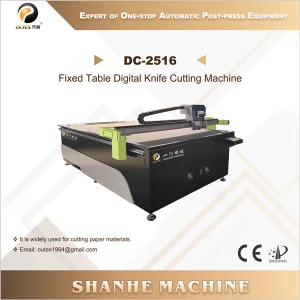
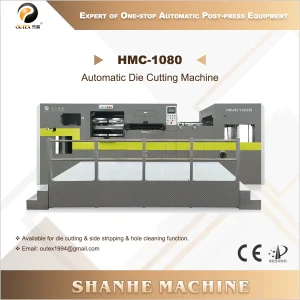
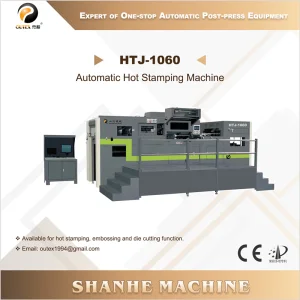
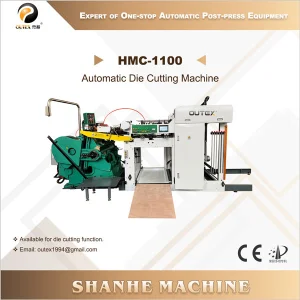
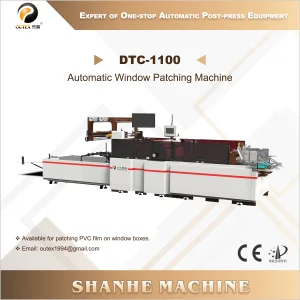
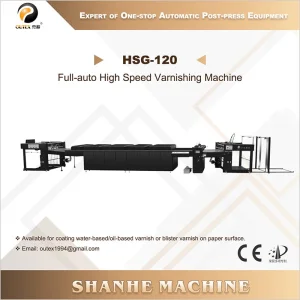
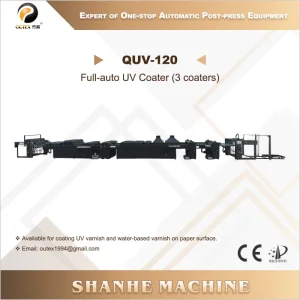
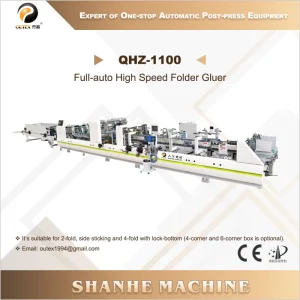
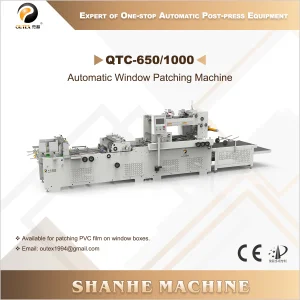
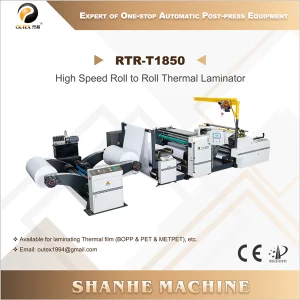
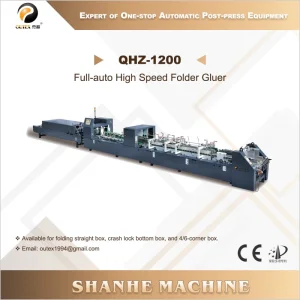
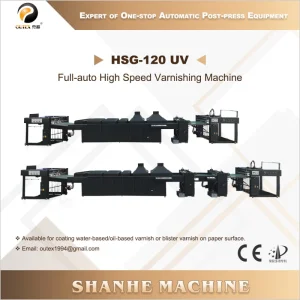
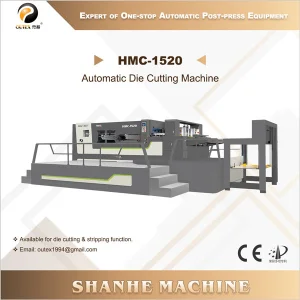
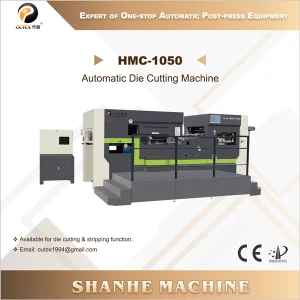
Explore our high-performance certified industrial machinery portfolio, engineered for seamless post-press inline embellishment, high-speed flute laminating, precise die-cutting, and automated folding-gluing operations.
Analyzing the paradigm shift in post-press embellishment: How inline cold foil printing technology overcomes traditional thermal stamping limitations for high-volume packaging converters.
Inline offset cold foil technology represents a monumental evolution in premium surface decoration. Installed on sheetfed offset printing presses, the cold foil unit applies a specialized UV adhesive via a conventional printing plate at full press speed (up to 15,000 sheets/hour). The metallic foil layer is instantly laminated and nipped onto the adhesive image area before passing under a UV/LED curing lamp. Because the foil is transferred cold, substrate deformation is eliminated, making it optimal for lightweight paperboard, synthetic films, and micro-flute corrugated materials.
Unlike traditional hot foil stamping, which restricts embellishments to pre-dyed foil rolls, cold foil technology enables unlimited overprinting capabilities. Once the cold foil silver or gold base layer is applied in the first tower, subsequent printing units apply cyan, magenta, yellow, and black (CMYK) inks directly over the foil. This creates thousands of metallic luster variations, metallic gradients, fine halftones, and photographic metallic elements in a single pass—dramatically reducing the total cost per sheet compared to multi-pass hot stamping.
For narrow-web and wide-web flexographic applications—such as pressure-sensitive labels, flexible packaging, and folding cartons—flexographic cold foil modules offer exceptional versatility. Utilizing low-viscosity UV adhesives metered through high-screen anilox rollers, flexo cold foil units achieve pinpoint registration on filmic substrates (BOPP, PET, PE). Integrated web-tension control software ensures wrinkle-free foil unwinding and rewind tension synchronization, mitigating material waste during high-speed production cycles.
| Performance Metrics | Inline Offset Cold Foil Printing | Traditional Hot Stamping | Digital Cold Foil Embellishment |
|---|---|---|---|
| Operating Speed | Up to 15,000 sheets/hour | 3,500 – 7,000 sheets/hour | 2,000 – 4,000 sheets/hour |
| Tooling & Die Costs | Zero metallic dies (standard photopolymer plate) | High (requires brass/magnesium dies) | Zero dies (digital inkjet adhesive) |
| Overprinting Metallic Colors | Unlimited (CMYK over silver foil in-line) | Requires separate color foil passes | Limited by digital ink adhesion |
| Registration Accuracy | Sub-micron press registration (±0.01mm) | Thermal expansion displacement risks | Electronic registration vision sensor |
| Setup / Make-Ready Time | 10 – 15 Minutes | 60 – 120 Minutes (heat equalization) | 5 – 10 Minutes |
| Foil Saving Capability | Multi-shaft index saving (up to 85% saved) | Limited mechanical stepping | Software-controlled spot application |
Understanding regional market drivers, sustainability mandates, and economic return on investment across key international printing ecosystems.
In Europe, strict environmental frameworks (such as the EU Packaging and Packaging Waste Regulation - PPWR) drive demand for fully recyclable metallized packaging. Modern cold foil processes deposit an ultra-thin layer of aluminum foil (measured in nanometers) onto paperboard. Independent paper de-inking tests (Aticelca 501 and PTS methods) confirm that cold foil decorated folding cartons are 100% repulpable and recyclable, contrasting sharply with plastic laminated metallized PET boards (Met-PET). European packaging converters favor CE-certified cold foil machinery equipped with low-energy LED-UV curing systems to achieve carbon footprint goals.
The North American packaging market—driven by consumer packaged goods (CPG), luxury cosmetics, pharmaceuticals, and craft beverage industries—demands maximum operational efficiency and minimal downtime. Top-tier converters in North America deploy full-format sheetfed offset presses integrated with multi-reel cold foil units. Key operational metrics focus on overall equipment effectiveness (OEE), automatic foil break detection, dynamic tension control, and real-time telemetry integration with ERP systems.
As the world’s largest packaging manufacturing hub, the APAC region is experiencing exponential adoption of cold foil printing equipment. Driven by rapid growth in luxury packaging, electronics cartons, and FMCG embellishments, manufacturers in China, India, and Southeast Asia are transitioning from energy-intensive hot stamping machines to high-efficiency inline cold foil lines. Local supply chain partnerships and rapid technical service deployment are crucial factors driving purchasing decisions in this market.
In high-volume packaging manufacturing, cold foil technology alters the unit cost curve. For print runs exceeding 5,000 sheets, cold foil eliminates die fabrication delays and costs, reduces power consumption by avoiding heated platen cylinders, and cuts scrap rate by up to 60% during make-ready. Furthermore, advanced foil saving technology—such as multi-axis servo rewind indexing—allows packaging converters to achieve ROI on equipment capital expenditure (CAPEX) within 12 to 18 months of continuous operational deployment.
Navigating global regulatory frameworks, electrical safety mandates, mechanical risk assessments, and localized technical field engineering.
Our cold foil printing machinery and post-press equipment are built in strict compliance with the European Machinery Directive 2006/42/EC. Mechanical architecture incorporates dual-channel safety interlocks, optical safety light curtains along feed and delivery zones, zero-speed safety door locking systems, and fail-safe electromagnetic brakes on high-inertia foil unwinding shafts to prevent operator intervention during high-speed rotation.
Compliant with EN 60204-1 (Safety of Machinery - Electrical Equipment of Machines), Low Voltage Directive 2014/35/EU, and Electromagnetic Compatibility Directive 2014/30/EU. Control cabinets feature IP54 protection, fully isolated high-voltage UV curing power modules, Siemens/Schneider PLC control components, shielded industrial communications cables, and localized grid transformers (supporting 380V/400V/480V 50Hz/60Hz configurations).
Providing end-to-end technical localization for international buyers. Factory-trained service engineers assist with on-site installation, foundational laser alignment, mechanical press integration, and operator training. Remote telemetry modules enable 24/7 real-time cloud diagnostic monitoring, enabling engineers to perform firmware updates, troubleshoot PLC logic, and optimize foil-saving parameters remotely across continents.
From luxury packaging to high-security anti-counterfeiting labels, explore how cold foil printing technology delivers superior aesthetic appeal and functional protection.
Enables micro-line metallic embellishment, metallic gradients, and complex typography on 250–400 gsm SBS board. Overprinting soft pastel hues over silver cold foil creates pearlescent and iridescent visual effects demanded by international beauty brands.
Delivers high-impact metallic branding on heavy coated boards, textured substrates, and wet-strength papers. Enables combination foil and embossing visual effects while maintaining high line speeds and resistance to humidity and ice-bucket moisture.
Combines tamper-evident security foil patterns, micro-text foil embellishments, and optical anti-counterfeiting features directly inline. Compatible with post-process Braille embossing and automatic high-speed folder-gluer inspection camera units.
Replaces expensive metallized film-laminated board (Met-PET) with eco-friendly inline cold foil application on standard folding boxboard (FBB). Offers significant raw material cost savings while maintaining premium shelf presence.
Pioneering Next-Generation Innovations: Artificial Intelligence, IoT Telemetry, Green Adhesives, and Closed-Loop Process Automation.
Future cold foil modules integrate real-time 4K CCD camera vision systems mounted directly after the foil delamination nip. Powered by machine learning algorithms, the vision system automatically detects microscopic foil transfer flaws, pinholes, or misregistration, instantly communicating adjustments to the servo tension control loops and adhesive metering rollers without operator intervention.
Next-generation multi-axis servo indexing technology enables intelligent foil advance algorithms. By analyzing job layout files (CIP4/JDF data), the system automatically jumps non-foiled sheet gaps and shifts multiple foil reels laterally and longitudinally. This dynamic foil indexing maximizes foil yield, pushing material utilization rates beyond 90% even on complex irregular layout patterns.
R&D initiatives focus on formulating eco-friendly, bio-renewable UV and LED-curable adhesives derived from non-food vegetable oils. Combined with ultra-thin biodegradable metallic carrier films, these innovations will further reduce carbon footprints and streamline repulpability compliance in municipal recycling streams worldwide.
Expert insights regarding cold foil machinery selection, CE certification compliance, operational maintenance, and substrate compatibility.
Hot foil stamping uses heat (typically 100°C to 160°C) and mechanical pressure via a engraved metal die (brass or magnesium) to transfer hot-melt foil onto a substrate. Cold foil printing, by contrast, uses no heat or metal dies. Instead, a specialized UV adhesive is printed onto the substrate using a standard offset or flexo printing plate. Metallic foil is pressed against the adhesive roll, cured instantly under UV/LED light, and delaminated. Cold foil operates at full press speeds (up to 15,000 sheets/hour) and allows full-color CMYK overprinting directly over the silver foil layer, which is not feasible in single-pass hot stamping.
CE certification confirms that the machinery satisfies mandatory European safety, health, and environmental protection requirements under Directives such as Machinery Directive 2006/42/EC, Low Voltage Directive 2014/35/EU, and EMC Directive 2014/30/EU. For buyers, CE compliance ensures robust operator protection—including light curtains, E-stop safety circuits, interlocked guards, and compliant electrical grounding—reducing workplace liability, ensuring smooth customs clearance, and guaranteeing high equipment build standards.
Cold foil machinery is highly adaptable across smooth, low-porosity substrates. Optimal substrates include smooth coated SBS paperboard, folding boxboard (FBB), coated art paper, synthetic film substrates (BOPP, PET, PVC), and lightweight laminated micro-flute corrugated materials (E, F, N flute). Highly porous or uncoated papers may require a primer coat to prevent excessive adhesive absorption prior to foil lamination.
The foil-saving system utilizes high-precision independent servo drives on the unwinding and rewinding shafts. When printing jobs with non-continuous foil coverage or non-foiled sheet gaps, the control system rapidly indexes, stops, or decelerates the foil web during non-embellished zones. By synchronizing foil advance only with active image areas, material consumption can be reduced by up to 85%, significantly lowering consumable costs.
Yes. The aluminum metallized layer applied in cold foil printing is extremely thin (typically 0.02 to 0.05 microns). Standard paper mill recycling and de-inking processes (tested according to PTS-RH 021/97 and Aticelca 501 standards) easily separate the micro-foil flakes from wood fibers. Unlike plastic-laminated Met-PET boards, cold foil paperboard can be repulped without clogging recycling screens or contaminating recovered pulp streams.
All machinery includes a comprehensive 12-month factory warranty covering electrical components, servo drives, and structural mechanical parts damaged by non-human quality defects. Overseas support covers factory site-planning layout consultation, on-site installation by senior technicians, operator training, free initial consumable spare parts, 24/7 remote diagnostics via IoT modules, and global air-freight spare parts delivery.
Browse additional high-efficiency equipment options including UV coating, folder-gluers, window patching, roll-to-roll laminators, and specialized automatic die-cutting machines.