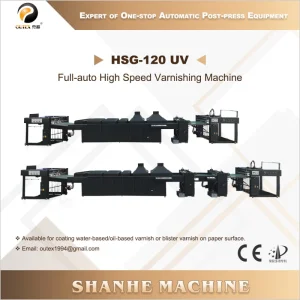
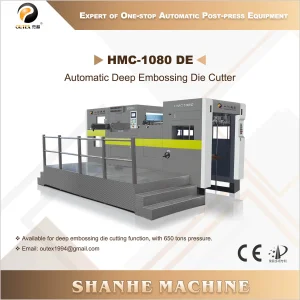
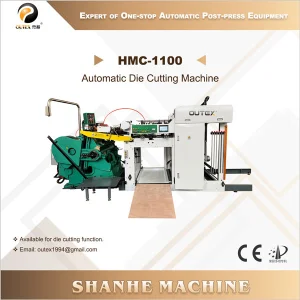
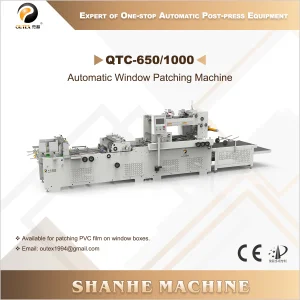
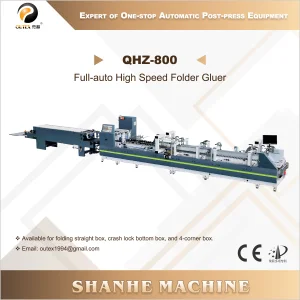
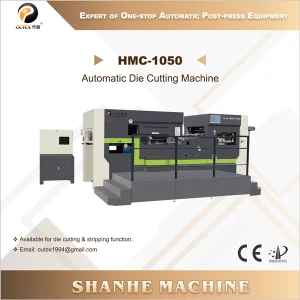
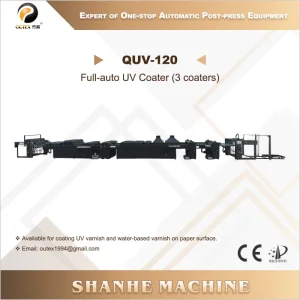
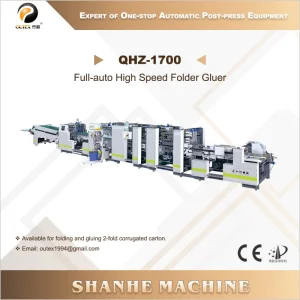
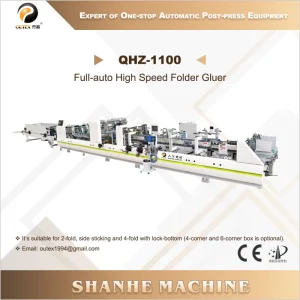
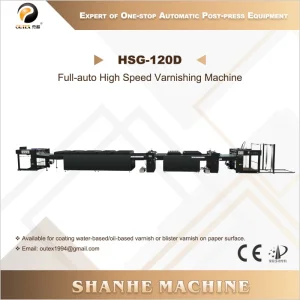
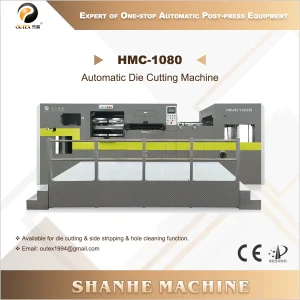
Explore our flagship CE-certified automated converting solutions engineered for high-throughput paperboard and corrugated board processing.
Analysis of shifting demand metrics, high-graphic packaging requirements, and structural technical changes in paperboard converting systems worldwide.
The global packaging sector is undergoing a rapid transition toward high-definition, shelf-ready corrugated packaging (SRP) and direct-to-consumer e-commerce boxes. Brands are demanding higher print fidelity combined with structural rigidity. Consequently, modern corrugated converters can no longer rely on manual or semi-automated mounting techniques that suffer from high scrap rates, slow line speeds, and registration drift.
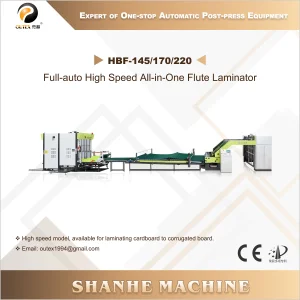
As a premier CE Certification Corrugation Board Laminating Machine Manufacturer, our engineering philosophy focuses on delivering turnkey litho-lamination systems that bridge offset printing precision with heavy-duty corrugated board stability. Modern automated flute laminators operate at speeds exceeding 12,000 sheets per hour while maintaining a registration accuracy of under ±0.5mm across diverse flute profiles, ranging from fine micro-flutes (E, F, N flutes) to heavy structural double-wall boards (BC, EB flutes).
Capable of laminating printed top sheets (180g/m² to 800g/m²) seamlessly onto single-face or double-face corrugated board (A, B, C, E, F, N flute) and solid cardboard (300g/m² to 2000g/m²) without surface crushing.
Multi-axis independent motion control technology dynamically adjusts top and bottom sheet feeding, automatically eliminating sheet skew andcompensating for substrate dimensional variances on the fly.
Engineered under European EN 1010-1/2 standards with integrated light curtains, safety relays, SIL-3 emergency stopping logic, and fully enclosed protective housings.
Detailed examination of the engineering sub-systems that drive accuracy, glue efficiency, and mechanical durability in high-speed corrugation laminators.
The core challenge in corrugation board lamination lies in synchronizing lightweight printed cover paper with uneven, highly porous corrugated substrates. Our technical architecture solves this through a multi-stage registration stack:
Excessive adhesive usage causes board warping, lengthy drying times, and increased operational expenditure. Our glue metering unit employs a high-precision stainless steel anilox or metering roller paired with an automated glue circulation system:
| Sub-System Component | Technical Specification | Operational Benefit |
|---|---|---|
| Anilox / Metering Roller | Chromium-plated / Laser-etched cell pattern (80–120 LPI) | Ensures micro-thin, uniform film layer (15–25 g/m²) across flute peaks. |
| Automatic Glue Level Sensing | Ultrasonic proximity sensor with automatic pump control | Prevents overflow, dry-running, and adhesive skinning in the trough. |
| Glue Auto-Clean Unit | High-pressure water jet spray bar with dynamic scraper blade | Reduces job changeover cleaning times from 25 minutes down to 5 minutes. |
| Adhesive Compatibility | PVA, Water-based Starch, Synthetic Resin Emulsions | Provides multi-adhesive flexibility depending on cost and drying constraints. |
Elimination of physical drive chains in favor of direct-drive servo motors connected via EtherCAT industrial real-time bus.
In-line high-resolution vision systems to detect registration errors, glue streaks, or paper fluting damage instantly.
MQTT/OPC-UA server integration for remote machine diagnostics, predictive maintenance alerts, and OEE tracking.
Adaptive thermal and ultrasonic activation systems for bio-based, plastic-free eco adhesives.
A guide for Chief Technology Officers, Procurement Directors, and Plant Managers evaluating capital expenditure on corrugation board laminators.
Procuring industrial-grade post-press equipment involves analyzing long-term operational costs rather than initial machinery purchase price alone. A comprehensive Total Cost of Ownership (TCO) calculation must incorporate power consumption, glue application volume per square meter, scrap rates, operator labor overheads, and scheduled downtime for maintenance.
| Evaluation Parameter | Traditional Mechanical Laminators | Modern Servo-Driven CE Laminators |
|---|---|---|
| Maximum Running Speed | 3,000 – 5,000 sheets/hour | 10,000 – 12,000+ sheets/hour |
| Registration Accuracy | ±1.5mm to ±2.0mm (High variance) | ≤ ±0.5mm (Optical servo corrected) |
| Average Scrap Rate | 3.5% – 5.0% during setup & runs | < 0.5% (Instant dynamic alignment) |
| Setup & Changeover Time | 35 – 50 minutes per order change | 5 – 10 minutes (PLC memory recipe system) |
| Safety Standard Compliance | Basic mechanical guarding | Full CE (EN 1010-1/2, EN ISO 12100) SIL-3 rated |
| Adhesive Consumption | 30 – 40 g/m² (Thick glue film) | 15 – 22 g/m² (Precision anilox metering) |
Integrated auto-feeders and inline automatic flip-flop stackers allow a single skilled operator to manage the entire lamination line, reducing labor overhead by up to 60%.
Regenerative servo drives store and reuse kinetic energy during deceleration cycles, cutting total electrical energy consumption by up to 22% compared to constant-speed AC motor setups.
Heavy-duty cast-iron side frames (40mm thickness) eliminate vibration at high speeds, extending component life and maintaining an average OEE exceeding 88% in multi-shift plants.
A detailed walkthrough of the directives, safety engineering protocols, and compliance criteria mandatory for European and global market deployment.
For machinery manufacturers, achieving true CE conformity is not merely a label; it requires rigorous engineering compliance from initial design through mechanical assembly and electrical wiring. As an established CE Certification Corrugation Board Laminating Machine Manufacturer, our machinery strictly conforms to European Union Harmonized Directives and Norms.
Mandates comprehensive risk assessment (EN ISO 12100) to identify potential mechanical pinch points, crush zones, and automatic safety interlocking logic prior to factory shipping.
Ensures robust insulation, dual-channel grounding, IP54 dust-proof electrical cabinets, low-voltage control circuits (24VDC), and protection against voltage surges or phase imbalances.
Specifically governs printing and paper converting machinery safety, mandating physical nip guards, active safety light curtains, and zero-motion interlocks on cleaning access doors.
How we support enterprise converters across Europe, North America, Latin America, Southeast Asia, and the Middle East with site planning, installation, and spare parts availability.
Every machine undergoes a continuous 48-hour endurance test in our assembly plant using the customer's actual paperboard substrates and adhesives prior to container loading.
Field service engineers deploy directly to your facility for installation, electrical connection, fine-tuning, and Site Acceptance Testing (SAT) according to operational KPIs.
We maintain global strategic component inventories (Siemens PLC, Schneider electrics, NSK bearings, AirTAC pneumatics) to guarantee 24 to 48-hour express replacement dispatch.
Direct technical, operational, and commercial answers for packaging machinery engineers and procurement specialists.
Our machines fully comply with the European Machinery Directive 2006/42/EC, Low Voltage Directive (LVD) 2014/35/EU, and Electromagnetic Compatibility Directive (EMC) 2014/30/EU. Design and safety engineering strictly adhere to EN ISO 12100 (Risk Assessment), EN 60204-1 (Electrical Safety), and EN 1010-1/2 (Printing & Paper Converting Machine Safety). Every machine carries an official CE Declaration of Conformity and full technical file documentation.
Our automatic laminators accommodate top printed paperboard ranging from 180 g/m² to 800 g/m². For the bottom corrugated substrate, the machinery processes single-face and double-face corrugated boards including A, B, C, E, F, and N flutes, double-wall corrugated profiles (such as BC, EB, EE), as well as solid greyboard up to 2000 g/m² (approx. 3mm thickness).
The machine utilizes an array of high-speed photo-electric sensors paired with independent servo drive motors on the top and bottom sheet feed paths. As the printed cover paper passes the registration bridge, sensors calculate any lateral or linear deviation. The servo drive instantly compensates by dynamically adjusting the lower board's entry timing before the sheets enter the adhesive pressing nip, locking in registration accuracy to within ±0.5mm at speeds up to 12,000 sheets/hour.
Our laminating lines are compatible with standard cold PVA (Polyvinyl Acetate) emulsions and water-based corn starch adhesives. The machine features a precision-machined anilox/metering roller system with automated liquid level sensing. By applying a micro-thin, uniform layer precisely onto the flute peaks rather than flooding the valleys, glue consumption is reduced by 20% to 35% compared to conventional rubber roller systems, preventing board warping and shortening drying times.
Order setups are automated via a central touch-screen PLC interface equipped with a job memory storage system (up to 500 recipes). When changing sheet formats, the side guides, feeder head position, optical sensors, and pressure rollers automatically shift to pre-programed coordinates via motorized actuators. Manual adjustments are virtually eliminated, cutting typical changeover times down to 5 to 10 minutes.
All machines come standard with a 12-month comprehensive warranty covering electrical and mechanical components. We provide full on-site installation, machine calibration, and hands-on operational and preventative maintenance training for your plant technicians. Remote telemetry modules also allow our software engineers to diagnose PLC logic and assist your technical team in real time via secure internet connections.
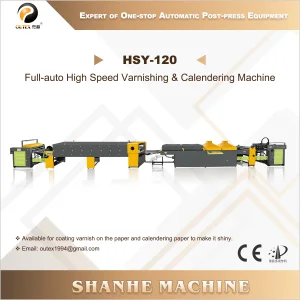
Complementary post-press automation equipment designed to complete your packaging manufacturing ecosystem.