In the modern post-press printing and flexible/rigid packaging ecosystem, film lamination serves as a mission-critical process. As global trade, consumer retail, and luxury e-commerce continue to expand, packaging converters face unprecedented demands for tactile appeal, barrier protection, structural durability, and environmental compliance. Film laminators—engineered to bond polymer films (such as BOPP, PET, Thermal films, and eco-friendly PLA) onto printed paperboard, cardboard, or corrugated sheets—stand at the crossroads of surface aesthetics and mechanical protection.
The global commercial market for industrial film laminating machinery has evolved beyond basic surface finishing. Today’s high-volume manufacturing environments demand integrated automation, zero-defect registration, minimal thermal degradation of print substrates, and strict European CE conformity. Modern film laminators must process ultra-thin paperboard as low as 100 gsm up to heavy-duty corrugated boards exceeding 2000 gsm without inducing curling, blistering, or delamination.
As consumer product companies (CPGs) transition from single-use plastics toward recyclable, film-reinforced paperboard containers, the technical focus has shifted toward solventless water-based adhesives and low-temperature thermal lamination. The ability of a enterprise-grade film laminating machine to handle high-speed continuous feeding while maintaining consistent nip roller pressure and electromagnetic heating profile dictates the ROI of commercial print shops across North America, Europe, Southeast Asia, and Latin America.
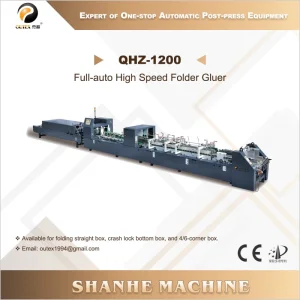
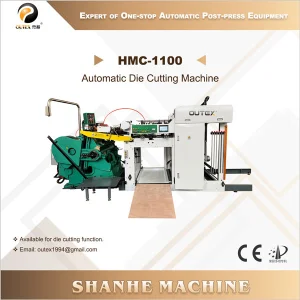
Compliance with European Conformity (CE) directives is not merely a legal gateway for entering the EU market; it represents the international benchmark for operational safety, mechanical integrity, and electrical reliability. Guangdong Shanhe Industrial Co., Ltd. builds its post-press equipment line—including automatic film laminators, flute laminators, die cutters, and folder gluers—to align with strict CE standardizations:
Integrated safety light curtains, emergency stop circuits, dual-channel safety relays, and ergonomic protective guards protecting operator access points during high-speed feeding.
Shielded electrical cabinets, IP54 rated enclosures, modular Siemens or Schneider PLC control architectures, and surge-protected servo driver arrays ensuring steady operation.
Electromagnetic compatibility filters preventing high-frequency noise interference between electromagnetic heating cylinders, variable frequency drives (VFD), and digital register sensors.
Selecting the appropriate film lamination system depends heavily on product application, output velocity, and cost considerations. Below is a comparative technical analysis of the two primary lamination methodologies utilized in modern post-press operations:
| Technical Parameter | Thermal Lamination System (RTR / QLF Series) | Water-Based / Solventless Adhesive System |
|---|---|---|
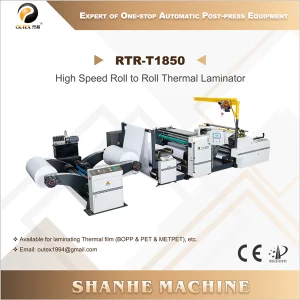
| Primary Substrate Compatibility | BOPP Pre-coated film, PET Thermal Film, Metallic Films | Water-based Polyurethane/Acrylic Glues + Standard BOPP/PET |
| Heating Mechanism | Electromagnetic Oil Heating Cylinder (±1°C Control) | Hot Air Drying Tunnel + Infrared Curing Lamps |
| Operating Velocity | Up to 100 - 120 meters/minute | Up to 80 - 100 meters/minute |
| Environmental Impact | Zero VOC emissions, instant adhesion, no drying wait time | Low VOC, requires water evaporation, eco-friendly adhesive options |
| Finished Surface Clarity | Ultra-high gloss index, zero film bubble risk | High gloss, requires exact glue coat thickness control |
| Consumable Unit Cost | Slightly higher film cost, lower machine footprint | Lower raw film cost, additional glue management overhead |
The critical failure point in standard film laminators is thermal non-uniformity across the roller surface, causing microscopic gauge variations and edge lifting during die cutting. Shanhe Machine solves this via large-diameter mirror-finished chrome rollers featuring embedded electromagnetic induction oil channels. This achieves thermal consistency across widths up to 2050mm, ensuring uniform peel strength across the sheet width.
Over the past three decades, China’s printing machinery sector has transformed from an equipment assembly hub into a center for precision engineering, original technology development, and vertical integration. Operating out of Shantou, Guangdong Province—a world-renowned industrial base for printing and packaging equipment—Guangdong Shanhe Industrial Co., Ltd. (SHANHE MACHINE) exemplifies the structural advantages of Chinese manufacturing:
Spanning a modern production base of 34,175 square meters backed by an $18 million USD capital investment, Shanhe Machine controls every step of production. From heavy structural frame casting and stress-relief heat treatment to precision CNC five-face machining, gear grinding, and final electronic system debugging, internal quality control ensures long-term operational stability.
Located in the Jinping Industrial District, Shanhe leverages an immediate ecosystem of high-grade metallurgy, specialized electronic component suppliers, and precision tooling facilities. This geographical density reduces lead times for custom-configured post-press lines (such as integrating flip-flop automatic stackers directly with flute laminators or UV coaters) to a fraction of European lead times.
A machine’s paper-travel accuracy relies heavily on assembly craftsmanship. Shanhe employs senior technicians with over 15 years of individual field experience to align feeder head suction mechanisms, pneumatic tension rollers, and platen pressure toggles. Every machine undergoes 72 hours of uninterrupted dynamic load testing prior to factory dispatch.
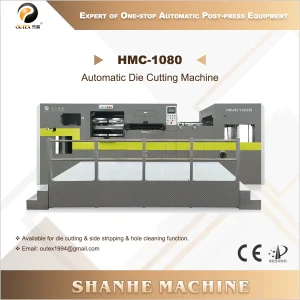
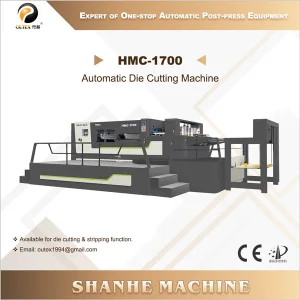
Film laminators do not operate in isolation; they function as a vital bridge between printing presses (Offset, Flexo, Digital) and post-print finishing machinery (Die Cutters, Hot Stampers, Folder Gluers). Shanhe’s CE-certified product lineup is tailored for distinct industrial packaging verticals:
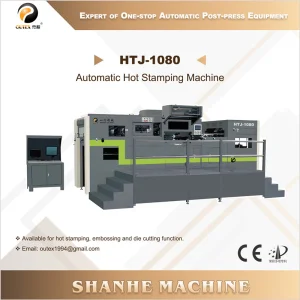
Application of tactile Soft-Touch thermal BOPP film onto 350gsm SBS board, followed by precision registration on the HTJ-1080 Automatic Hot Stamping Machine for metallic foil accenting.
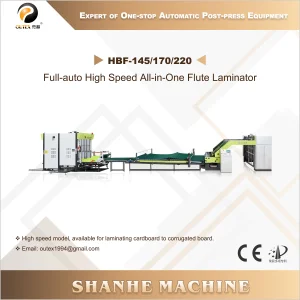
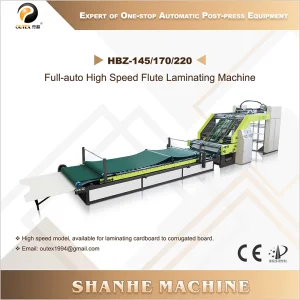
Utilizing moisture-proof, scratch-resistant film lamination on printed top sheets before inline mounting onto E/F/G flute corrugated board via the HBF Smart High-Speed Flute Laminator.
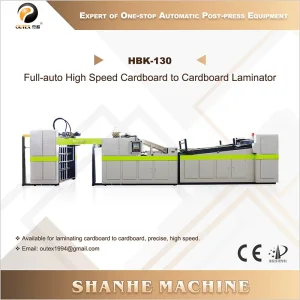
Laminating heavy cardboard substrates (cardboard-to-cardboard via HBK series) to reinforce structural crush resistance and deliver high burst strength under rough freight conditions.
The post-press automation market is undergoing a major structural evolution driven by rising labor costs, tighter print turnarounds, and stringent eco-regulations. Packaging converters upgrading their machinery suites must account for the following emerging technological vectors:
Traditional mechanical front-lays and side-lays are giving way to non-contact optical sensor arrays. High-speed camera sensors capture sheet edges and printed mark indicators in real time, adjusting servo-driven pushers to maintain alignment tolerances under ±0.5mm at linear speeds of 200 m/min.
Manual handling at the delivery end of a laminating line creates operational bottlenecks and risks scuffing freshly laminated sheets. Modern installations pair high-speed film/flute laminators with intelligent inline Flip-Flop stackers that automatically turn and stack batches, cutting manual labor by over 60%.
With global regulations targeting single-use plastics, equipment suppliers are adapting machines to run ultra-thin PLA bio-films, cellulose-derived barriers, and water-repellent dispersion coatings. Concurrently, old resistance-wire roller heaters are being replaced by high-efficiency electromagnetic induction systems, cutting energy consumption by up to 35%.
For Procurement Directors and Plant General Managers selecting a CE-certified film laminator manufacturer, evaluated costs must extend beyond the initial machine purchase price (CapEx). A comprehensive Total Cost of Ownership (TCO) assessment includes: