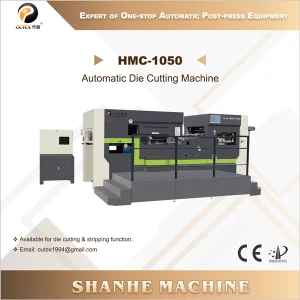
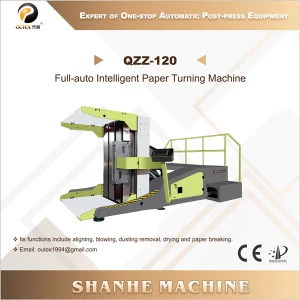
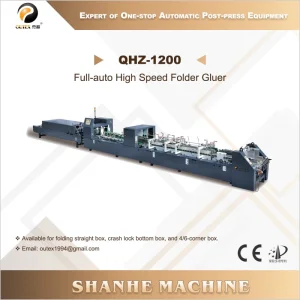
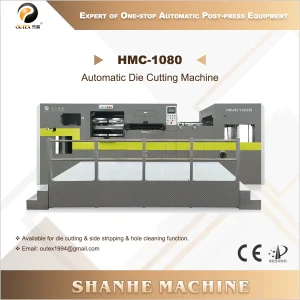
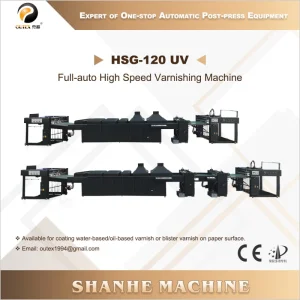
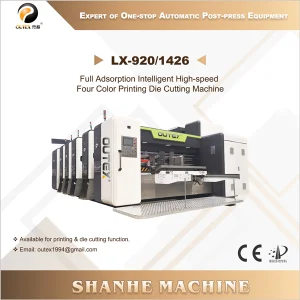
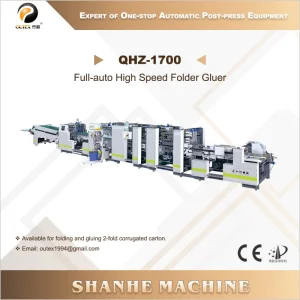
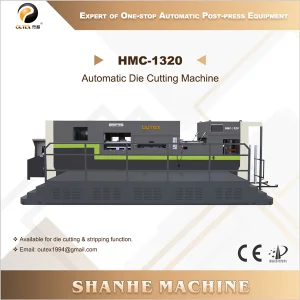
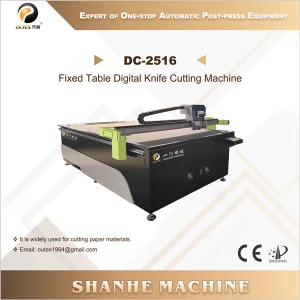
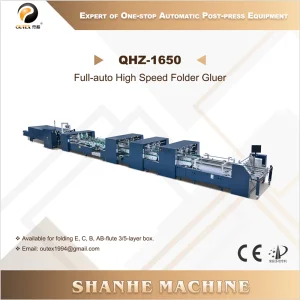
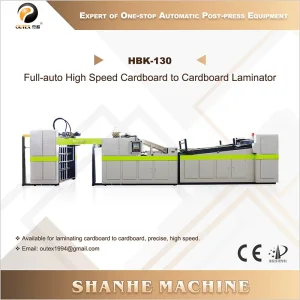
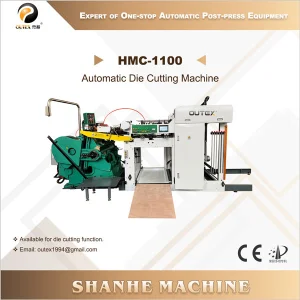
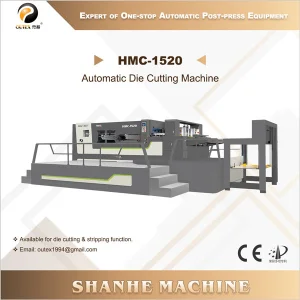
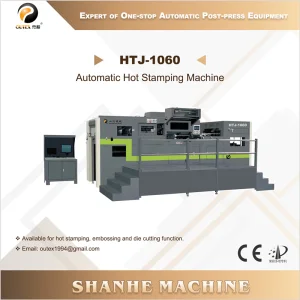
Explore top-tier automatic die-cutting, folder-gluing, varnishing, and laminating solutions manufactured under strict CE and ISO quality control standards.
Understanding thermocompression foil transfer, mechanical toggle leverage, and precision PID temperature regulation in modern manual and semi-automatic hot stamping machinery.
Manual hot stamping operates at the intersection of thermal energy, pressure vectoring, and dwell timing. Heated magnesium, brass, or copper dies transfer pigment or metallic foil layers onto porous or non-porous substrates through molecular thermal activation. Chinese manufacturers utilize advanced planar heating elements to ensure zero temperature delta across the entire bed surface.
Sub-degree accuracy is maintained using solid-state relays (SSR) integrated with proportional-integral-derivative (PID) microcontrollers. This prevents heat sagging during continuous manual cycling, protecting delicate metallic foils from scorching and eliminating patchy transfer on heavy cardboard, genuine leather, or synthetic polymers.
Heavy-duty cast iron frames (HT250 grade gray iron) absorb structural deflection during high-tonnage pressing. Dual compound toggle linkages allow operators to apply up to 2.5 metric tons of impression force with minimal physical effort, guaranteeing sharp debossing and crisp foil edges across short to medium production runs.
Modern manual hot stamping machines manufactured in China no longer rely on mechanical friction pullers. Instead, they integrate programmable stepper motors for foil advancement. This allows micro-metric foil stepping, reducing foil waste by up to 35% and allowing complex, multi-color stamping sequences on a single press layout.
The Shantou and Guangdong printing machinery clusters represent the world's most concentrated ecosystem for post-press engineering excellence, material integration, and rapid OEM customization.
From precision machine casting and heat treatment to CNC machining of platen tables, Chinese manufacturers control 100% of the manufacturing value chain. This vertical integration guarantees rigid quality control while reducing lead times for custom platen dimensions or specialized foil feeding mechanisms.
Leading Chinese exporters build export-grade machinery using internationally standardized electrical and pneumatic components. Systems feature Omron temperature controllers, Schneider Electric switches, AirTAC/SMC pneumatic cylinders, and Taiwan-designed speed reducers, ensuring worldwide spare-part availability.
Whether client requirements demand custom voltage configurations (110V/220V/380V), pneumatic assist conversions, sliding workbench extensions, or localized interface languages, Chinese suppliers provide rapid engineering response cycles without prohibiting small-batch MOQ.
Compare mechanical specs, operational throughput, setup complexity, and capital expenditure across different machine tiers to select the optimal equipment for your facility.
| Specification Metric | Manual Toggle Press | Pneumatic Semi-Auto Press | Full-Auto Platen Stamping Line |
|---|---|---|---|
| Production Capacity (pcs/hr) | 300 - 800 | 1,000 - 2,200 | 4,500 - 7,500 |
| Impression Pressure Source | Manual Lever / Dual Toggle | Pneumatic Cylinder (0.6-0.8 MPa) | Motor-Driven Eccentric Worm Gear |
| Maximum Stamping Area | Up to 300 x 400 mm | Up to 400 x 600 mm | 1050 x 750 mm+ |
| Temperature Range & Control | 0 - 300°C (Digital PID) | 0 - 400°C (Multi-Zone PID) | Multi-Zone Intelligent Thermal PLC |
| Substrate Versatility | Paper, Leather, Wood, Plastics, Ribbons | Cardboard, Rigid Boxes, Poly-bags | Folding Cartons, Corrugated Board |
| Setup Time & Changeover | 5 - 15 Minutes | 15 - 30 Minutes | 45 - 90 Minutes |
| Capital Outlay (CapEx) | Low ($500 - $3,000) | Moderate ($3,500 - $12,000) | High ($50,000 - $250,000+) |
A strategic framework for procurement directors, commercial printers, and luxury packaging converters evaluating equipment investments.
Manual hot stamping presses provide unmatched capital efficiency. For short-run luxury packaging, custom leather embossing, or rapid prototyping, manual machinery eliminates the heavy amortized machinery cost of industrial automatic lines, achieving ROI within 3 to 6 months of active operation.
With fewer complex servo drives, suction belts, or electronic sensors than automated die-cutters, manual units possess an exceptionally low failure rate. Standard preventative maintenance involves routine lubrication of toggle joints and visual inspection of heating elements, ensuring continuous factory uptime.
Chinese manual foil stamping machines feature universal mounting grids or magnetic plate systems compatible with standard magnesium, copper, and zinc dies. This allows print shops to utilize existing tooling inventory across multiple manual and semi-automatic press beds seamlessly.
Meeting stringent international regulations ensures operator safety, smooth customs clearance, and seamless compliance across European and North American industrial markets.
Machines exported by premier Chinese OEMs carry full CE certification complying with the Machinery Directive 2006/42/EC and Low Voltage Directive 2014/35/EU. Production lines operate under strict ISO 9001:2015 quality management systems.
Operational safety is paramount. Presses feature dual palm-switch activation (for pneumatic models), transparent acrylic safety barriers, anti-pinch lever mechanisms, and immediate thermal cut-off switches to prevent operator injury.
To eliminate operational barriers, control panels and digital thermostatic displays can be localized into English, Spanish, Russian, French, Arabic, and German, complete with comprehensive English user manuals and wiring schematics.
Manual hot stamping machines excel across luxury finishing, bespoke crafting, security authentication, and short-run industrial packaging applications.
Accentuating rigid boxes, cosmetics cartons, and premium spirits packaging with metallic gold, silver, holographic, or matte foil finishes. Precision pressure control prevents micro-cracking on textured or soft-touch laminated paperboards.
Monogramming hardcovers, leather journals, photo albums, and invitations. Deep thermal debossing creates tactile branding that commands high premium value in artisan markets.
Ideal for shoe insoles, leather belts, automotive upholstery, and PVC/PU accessories. High thermal retention plates enable deep color transfer without scorching synthetic leather fibers.
Emerging technologies shaping the next generation of manual and hybrid foil stamping systems.
Future manual presses are integrating IoT modules that log temperature stability, impression counts, and thermal cycle efficiency in real time, allowing plant managers to track operator productivity via smartphone dashboards.
Shift toward nano-composite ceramic heating plates that achieve target temperatures in under 3 minutes while cutting power consumption by 40%, aligning with global carbon-neutral factory initiatives.
Integration of miniature optical laser positioning pointers right above the platen bed, allowing manual operators to achieve exact ±0.02mm registration on pre-printed sheet samples instantly.
Addressing essential technical, operational, and commercial queries regarding China manual hot stamping machines.
Complement your post-press department with automated digital cutters, cardboard laminators, and high-speed flute laminators built for industrial performance.