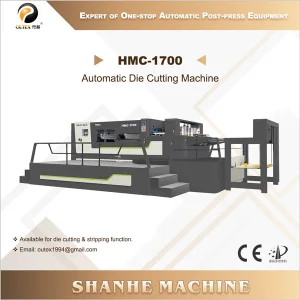
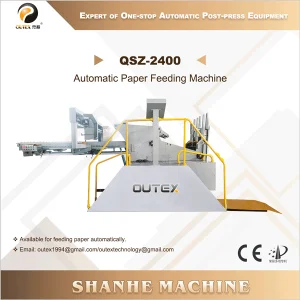
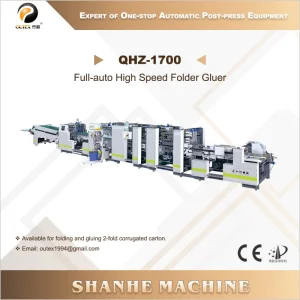
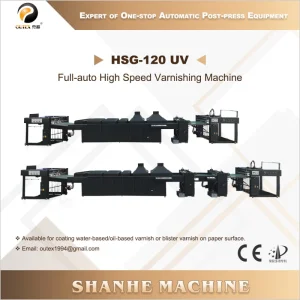
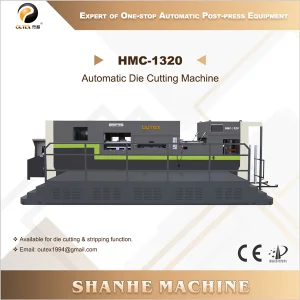
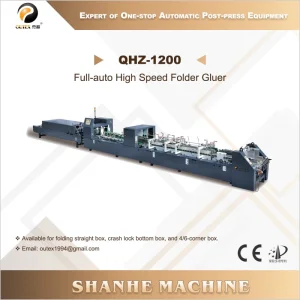
Engineered for maximum operational throughput, high registration accuracy, and long-term durability in high-demand conversion plants.
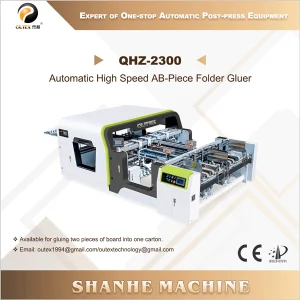
In the high-stakes sector of premium folding carton manufacturing, luxury packaging, tobacco packaging, cosmetics embellishment, and security printing, surface embellishment is no longer a secondary post-press consideration. It is a critical value-driver that commands retail shelf presence and brand authenticity. As consumer brand owners demand increasingly complex foil stamping patterns, tactile micro-embossing, and multi-color holographic anti-counterfeiting features, converting operations worldwide are undergoing a rapid technological transition.
Legacy manual platens and semi-automatic hot foil stamping machines are proving incapable of keeping pace with modern production demands. High labor costs, inconsistent temperature dissipation across large platen surfaces, excessive foil waste, and high downtime during job changeovers severely limit profitability. Consequently, Tier-1 packaging converters and high-volume commercial printers are systematically shifting capital expenditures toward Full Automatic Hot Foil Stamping Machines driven by multi-axis servo systems, intelligent thermal zoning, and integrated optical registration control.
Strategic Market Shift: According to global post-press conversion benchmarks, switching from semi-automated stamping to fully automatic servo-driven platen systems reduces setup waste by up to 65% while increasing sheet throughput rates from 2,000 sheets/hour to over 7,500+ sheets/hour with registration tolerances held within ±0.075 mm.
Modern full automatic hot foil stamping machines are sophisticated mechatronic ecosystems. They integrate heavy-duty mechanical tonnage—often exceeding 300 to 400 metric tons of platen pressure—with sub-micron electrical control algorithms. By combining heat, pressure, and precise dwell time, these machines bond metallic, pigment, or holographic foil films onto diverse substrates ranging from lightweight 100 g/m² paperboards to thick 2000 g/m² rigid boards and micro-fluted corrugated cardboard (E, B, F, and N flute).
Understanding the internal mechanics and mechatronic design of high-efficiency hot foil stamping platens.
Utilizes multi-axis independent servo stepping motors for foil advance. Longitudinal and transversal foil feeding options ensure optimal foil foil utilization, reducing foil skeleton waste by allowing differential step-stepping profiles across multiple foil rolls simultaneously.
Equipped with up to 12 to 20 individually controlled thermal heating zones managed by microprocessors. Maintains strict surface thermal accuracy within ±1°C, eliminating thermal expansion cold-spots across large honeycomb chase plates during continuous high-speed runs.
Cast from high-tensile nodular cast iron (QT600-3) and processed via stress-relief heat treatment to prevent frame distortion under maximum tonnage. Provides maximum rigidity required for combination die-cutting, deep micro-embossing, and heavy foil transfer.
Integrates ultra-sensitive fiber optic sensors and dynamic side-lay register systems. Monitors sheet arrival at the front lays in real-time, automatically pausing foil feeding or triggering sheet ejectors if registration misalignment exceeds preset tolerances.
Features pneumatically or mechanically locked honeycomb chase beds constructed from high thermal conductivity alloy steel. Facilitates ultra-fast die mounting, precise position micro-adjustments, and significant reductions in job changeover downtime.
Designed with stream feeders featuring suction head adjustment, non-stop sheet insertion, and automatic pile height compensation. High-pile delivery units feature pneumatic sheet quietening devices and brush alignment to maintain pristine stack geometry.
Over the past three decades, China’s post-press machinery manufacturing sector has evolved from low-cost assembly to world-class precision engineering. Guangdong Shanhe Industrial Co., Ltd. (operating globally as SHANHE MACHINE) stands at the forefront of this industrial transformation. Established in 1994 in Shantou, Guangdong, Shanhe Machine has dedicated over 30 years to the continuous R&D and manufacturing of high-end intelligent post-press equipment.
Operating out of a state-of-the-art 34,175 m² specialized production base with over $18 million invested in advanced CNC machining infrastructure, Shanhe Machine delivers heavy-duty post-press equipment that matches or exceeds European quality standards at a significantly more competitive total cost of ownership (TCO).
| Engineering Parameter | Standard Semi-Auto Platen | SHANHE HTJ/HMC Full Auto Series | Operational Impact |
|---|---|---|---|
| Max Operating Speed | 1,500 - 2,500 sheets/hr | 7,000 - 7,500 sheets/hr | 300% Increase in Daily Output |
| Foil Feeding Axes | 1-2 Longitudinal Shafts | 3 Longitudinal + 2 Transversal (Servo) | Up to 45% Reduction in Foil Consumption |
| Platen Tonnage Capacity | 80 - 150 Tons | 300 - 400 Metric Tons | Flawless Micro-Embossing & Deep Foiling |
| Thermal Zoning & Accuracy | 4-6 Zones (±3°C - 5°C) | 12-16 Independent Zones (±1°C) | Eliminates Foil Flaking & Hot Spot Failures |
| Registration Precision | ±0.25 mm | ≤ ±0.075 mm | Compliance with Luxury Brand Standards |
| Changeover Setup Time | 90 - 120 Minutes | 20 - 35 Minutes | Enables Profitable Short & Medium Runs |
Unlike regional machinery assemblers that outsource critical structural components, Shanhe Machine maintains full internal quality control over the entire production life cycle. From heavy platen casting machining to precision shaft grinding, electronic cabinet wiring, and pre-shipment continuous load testing, every process is conducted within our Shantou facility.
Holding independent import and export rights, Guangdong Shanhe Industrial Co., Ltd. exports directly to packaging converters across Europe, North America, Latin America, Southeast Asia, and the Middle East. With direct factory shipping via Shantou, Shenzhen, Guangzhou, and Shanghai ports, global clients bypass unnecessary broker markups while securing comprehensive direct-factory technical support, OEM spare parts replacement, and direct engineer dispatch services.
How packaging plant managers calculate Total Cost of Ownership (TCO) and foil consumption efficiency when choosing hot foil stamping suppliers.
Foil raw material accounts for up to 60% of job running costs. Evaluate suppliers based on servo-driven foil advance algorithm capability, multi-stepping software, and transversal roll capability which dramatically reduces matrix waste.
High nominal speed is useless if downtime dominates. Look for non-stop feeding systems, pneumatic chase locking, quick-set side lays, and memory storage for repeat job parameters to maximize total daily uptime.
Ensure the machine platen geometry and gripper bar mechanism can handle smooth paperboard, heavy laminated substrates, plastic synthetic sheets, and micro-corrugated flute boards without crushing fluting structures.
Converters supplying high-end European cosmetics brands require intricate micro-embossing combined with metallic foil transfer on soft-touch laminated paperboard. Shanhe’s automatic hot foil stamping machines deliver multi-zone heat stability, ensuring that delicate foil textures do not bleed or bridge fine lines, while maintaining 100% register accuracy with offset-printed graphics.
With high regional labor costs in North America, packaging converters prioritize rapid job changeovers and automated defect detection. Shanhe equipment incorporates touchscreen HMI interfaces, motorized pressure adjustment, and integrated safety light curtains, allowing a single operator to manage high-speed production runs efficiently.
In regions where brand protection is paramount, Shanhe hot foil stamping machinery can be equipped with specialized holographic registration systems. These systems precisely align security holograms onto cigarette cartons, pharmaceutical boxes, and government tax stamps at operational speeds exceeding 7,000 sheets per hour.
Innovations driven by sustainability, artificial intelligence, and Industry 4.0 integration.
Next-generation machines are integrating closed-loop piezoelectric sensors across the platen bed. AI algorithms continuously monitor platen impression force and automatically compensate for slight paperboard thickness variations during operation.
As global regulations tighten around single-use plastics, hot foil stamping technology holds a distinct environmental advantage over plastic film laminates. Modern hot foil transfers leave extremely thin metallic layers (under 1 micron), allowing finished paperboard cartons to be 100% repulpable and recyclable.
Integration of telemetry devices enables direct factory engineers at Shanhe Machine to conduct real-time remote diagnostics, firmware updates, and predictive maintenance alerts for international buyers, drastically reducing unexpected downtime.
Detailed technical and commercial answers to assist your equipment procurement decision.
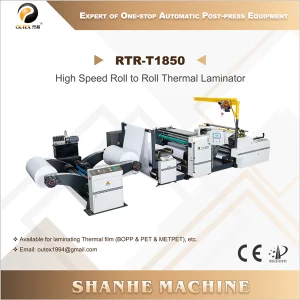
Discover our complete line of automatic die cutters, folder gluers, laminators, and coating machinery designed for maximum converting productivity.