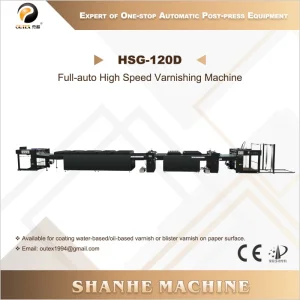
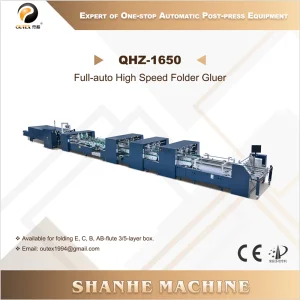
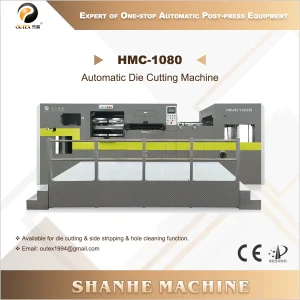
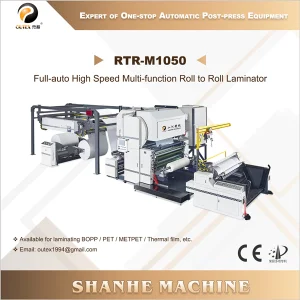
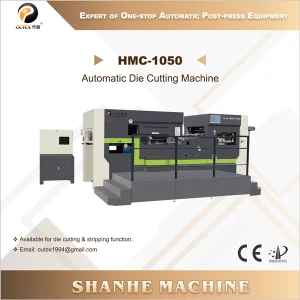
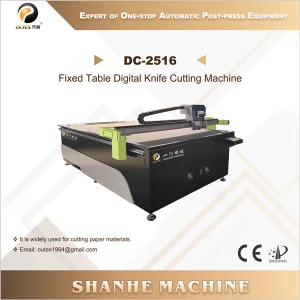
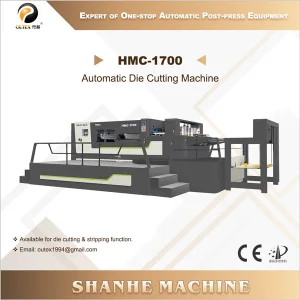
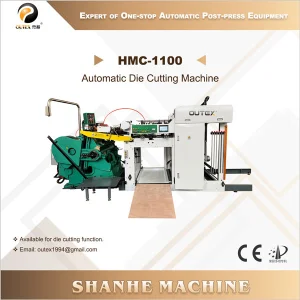
Explore our premium range of precision converting machines engineered for max efficiency and quality.
How advanced foil stamping technologies redefine luxury finishing, anti-counterfeiting, and shelf impact across global markets.
Hot foil stamping remains the pinnacle of surface embellishment. By combining controlled heat, tonnage pressure, and micro-dwell timing, metallic foils bond seamlessly to coated paperboards, synthetic stocks, and corrugated fluting. Machines built by leading manufacturers like Zonesun and industry peers utilize multi-zone thermal control to prevent thermal distortional flaws on high-speed runs.
Modern commercial packaging converters require seamless integration between structural converting and decorative finishing. Combining high-speed automatic die-cutting with precision hot foil stamping eliminates workflow bottlenecks, elevating Overall Equipment Effectiveness (OEE) by up to 35% compared to manual or semi-automatic platen setups.
Beyond aesthetics, foil stamping is a critical pillar for security packaging. Holographic foil positioning, micro-embossing, and registered security seal application protect high-value pharmaceutical, tobacco, and luxury cosmetics lines against global counterfeiting operations.
Understanding the core mechanical and thermodynamic parameters that separate basic hot stamping tools from industrial-grade equipment.
Thermal stability across the entire honeycomb plate is paramount. Industrial hot stamping machinery integrates individual heating zones managed by solid-state PID controllers. This design neutralizes heat sinks caused by rapid thermal transfer during continuous foil contact, eliminating color shifts or incomplete foil adhesion on wide-format sheet runs.
Foil web tension changes continuously as rolls unwind and rewind. Advanced machinery employs independent servo motors coupled with optical tension sensors. This allows micro-step foil advancement—calculating precise skip distances down to the millimeter—which minimizes foil waste by up to 40% on irregular foil layouts.
A technical comparison of post-press machinery configurations utilized in packaging converter facilities globally:
| Machine Line / Technology Type | Primary Application | Tonnage / Operating Speed | Target Substrate Compatibility | Automation Index |
|---|---|---|---|---|
| Automatic Hot Stamping Die Cutters | Metallic Foil, Deep Hologram Embossing | 300T – 600T / Up to 7,500 sheets/hr | 80–2000 g/m² Board, E/B Corrugated | Fully Automated (Servo PLC) |
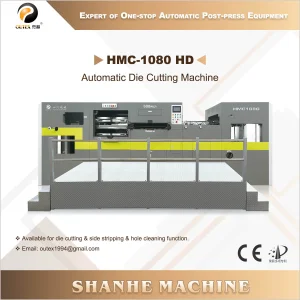
| Heavy-Duty Platen Die Cutters (e.g. HMC-1080HD) | High-Volume Blanking & Creasing | 600 Metric Tons / 6,000 sheets/hr | Rigid Cardboard, Micro-flutes | High (Inline Stripping) |
| High-Speed Flute Laminators (HBZ/HBF) | Litho-Lamination for Packaging Boxes | 200 m/min Linear Output | Printed Sheet to A/B/C/E/F Flutes | Smart Inline Flip-Flop |
| Compact Benchtop / Manual Hot Stampers | Small Batch Leather/Polymer Stamping | 0.5T – 3T Manual Press | Leather, Rigid Plastics, Small Cards | Semi-Manual / Operator Driven |
Analyzing cross-regional supply chains, export standards, and operational integration in high-growth commercial printing hubs.
Rising demand for sustainable, eco-friendly luxury packaging has driven folding carton manufacturers in North America to modernize post-press fleets. High-speed automatic stamping lines replace legacy foil presses to meet demanding turnaround times for e-commerce and retail brands.
European converters strictly demand machinery certified to EN 60204-1 electrical standards and ISO 13849 safety protocols. Dual safety circuit integration, light curtain arrays, and silent hydraulic actuation are non-negotiable baselines in modern EU installations.
As the global center for print manufacturing, APAC regions leverage integrated post-press operations. Hot stamping machinery operates seamlessly alongside high-speed flute laminators and automatic folder gluers, handling massive seasonal output volumes with minimal downtime.
From high-end cosmetics to industrial pharmaceutical cartons, see how automated foil stamping elevates diverse market sectors.
Requires flawless multi-color foil registration combined with delicate blind embossing on lightweight SBS cardstock. Prevents sheet cracking and retains micro-detail brilliance.
Applies heavy metallic foils to textured wet-strength papers. Sustained tonnage ensures deep foil penetration into open-pore paper substrates without fill-in.
Integrates registered optical sensors to apply specialized anti-tamper holographic track-and-trace foil elements at maximum continuous press speeds.
Foil stamping directly onto cloth, synthetic leather, and heavyweight book covers, guaranteeing strong foil adhesion and scratch-resistant durability.
Ensuring zero operational risk with stringent international safety certifications, rapid field service networks, and technical training.
All machinery designs undergo strict structural stress analysis. Castings are heat-treated to relieve internal mechanical stress, preventing frame deformation over decades of heavy tonnage usage. Fully certified under international CE and ISO safety directives.
Equipped with infrared optical guards, pneumatic clutch-brake systems, and instant emergency mechanical locking. Dual-hand press activation ensures operator protection during setup and plate replacement phases.
Equipped with remote IoT telemetry modules for real-time fault diagnostics. Technical support engineers provide 24/7 remote assistance and maintain regional spare parts inventories for immediate global dispatch.
Strategic technological milestones advancing AI-driven registration, zero-foil waste algorithms, and hybrid inline converting systems.
Integration of ultra-high-definition CMOS camera arrays that evaluate sheet positioning in real-time, automatically adjusting micro-registration grippers to compensate for paper expansion or printing skew.
Advanced algorithmic software that dynamically manages foil reel acceleration and multi-axis stepping, allowing irregular shape nesting to reclaim up to 98% of unused foil film.
Single-pass architecture unifying digital variable foil deposition with heavy platen die-cutting, drastically shortening makeready times for short-run custom packaging.
In-depth technical answers addressing common buyer inquiries regarding machinery selection, operational parameters, and maintenance.
Hot Foil Stamping uses physical heated dies (copper, brass, or magnesium) combined with high tonnage pressure to transfer metallic foil onto paper or board. It offers unparalleled shine, tactile embossing capabilities, and maximum cost-efficiency for medium to long runs. Digital Foil Stamping applies foil onto digitally printed toner or UV varnish without physical dies, making it ideal for micro-runs or variable data, though it cannot match the extreme embossing depth and tonnage penetration of traditional platen hot stampers.
During continuous stamping operations, the foil transfer process absorbs thermal energy from the plate. Multi-zone heating plates feature independent PID temperature sensors and heating elements. If one region of the plate cools down due to dense foil coverage, that specific zone receives instant thermal compensation. This prevents uneven foil release, dulling, or incomplete adhesion across large sheet formats.
Industrial platen machinery (such as the HMC series) typically accommodates paperboards from 80 g/m² up to heavy cardboard of 2000 g/m². Additionally, corrugated board types including micro-flute, E, B, C, and FE flutes up to 4mm to 8mm thickness can be easily processed depending on feeder configuration and gripper bar clearance.
Foil is a primary consumable cost in post-press finishing. Servo-driven foil stepping systems calculate the exact minimum advance required for each impression cycle. By advancing the foil only by the precise length of the design (plus micro-clearance), foil overlap waste is eliminated. On complex multi-position jobs, dynamic foil step advancing can cut foil consumption by 20% to 40%.
For long runs exceeding 50,000 to 100,000 impressions, CNC-engraved Brass Dies are recommended due to their exceptional heat retention, sharp edge definition, and high resistance to compression wear. Magnesium Dies are lighter and faster to etch, making them ideal for short-to-medium runs (under 30,000 impressions). Copper Dies offer a balanced midpoint for medium production cycles.
Industrial machines incorporate redundant safety systems, including dual-channel safety light curtains surrounding the platen area, instant pneumatic clutch-brake disengagement, mechanical torque limiters, dual push-button setup control, and physical safety interlock doors complying with CE EN standards.
Dual-purpose machines (such as combination Hot Stamping Die Cutters) are designed with removable honeycomb thermal plates and integrated foil rewind shafts. They can perform high-speed hot foil stamping with registered embossing in one pass, or be configured strictly for high-tonnage die-cutting, creasing, and stripping by disabling the heating zones.
Routine maintenance includes daily cleaning of platen surfaces and optical sensor lenses, checking central automatic oil lubrication reservoir levels, inspecting gripper bar tensioning, and cleaning thermal plate surfaces to prevent adhesive residue buildup. Periodic calibration of heating sensors and pneumatic pressure regulators guarantees maximum machine longevity.
Explore our complete ecosystem of post-press machinery designed to integrate with automated converting lines.