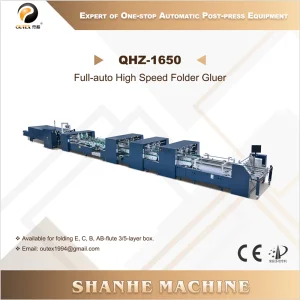
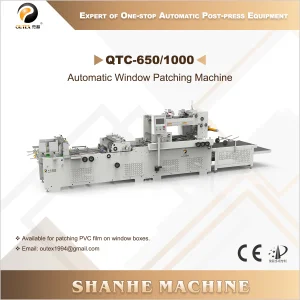
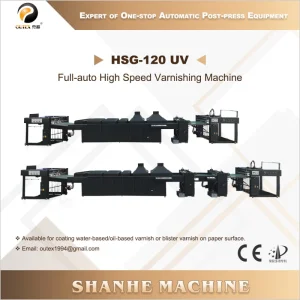
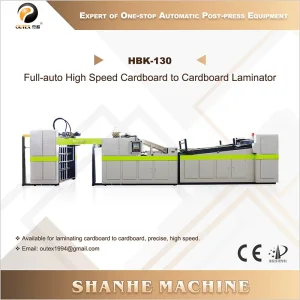
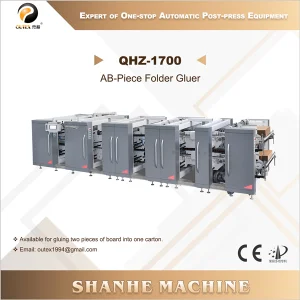
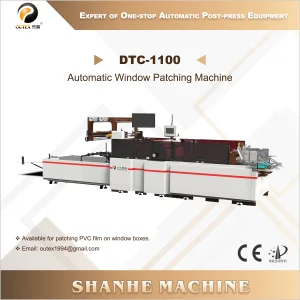
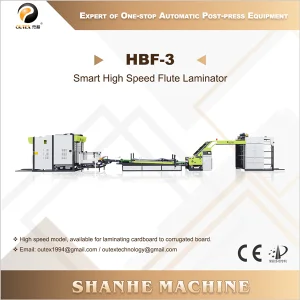
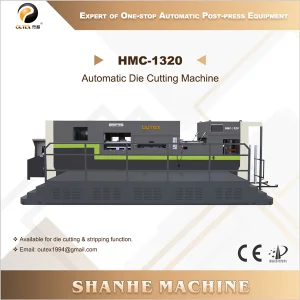
Explore our primary series of CE-certified automatic die-cutters, high-speed folder gluers, laminators, and auxiliary post-press equipment engineered by leading Chinese OEM manufacturers.
Demystifying solid board-to-board lamination, paperboard mounting physics, high-speed registration mechanics, and the strategic positioning of Chinese equipment manufacturers.
In the global post-press packaging domain, the demand for high-rigidity, eco-friendly, and visually flawless paper products has catalyzed a profound technological transition. Traditionally, structural strength in packaging relied heavily on corrugated board (flute lamination) or heavy plastic laminates. However, contemporary market dynamics—driven by stringent European and North American single-use plastic bans, carbon footprint reduction mandates, and the explosive growth of luxury retail—have positioned Cardboard to Cardboard Laminators (Solid Board-to-Board Mounting Machines) as indispensable capital assets for tier-one packaging converters.
Cardboard to cardboard lamination involves the high-speed, ultra-precise bonding of two or more layers of flat solid board (such as greyboard, duplex board, kraft board, or ivory board) ranging from 250 gsm paperboard up to 4.0 mm heavy-caliper chipboard. Unlike standard flute laminators that join printed sheets to corrugated flutes (A, B, C, E, F, N flutes), solid board mounting demands vastly higher mechanical rigidity control, precise adhesive film metering, and sophisticated moisture balancing to prevent sheet warping or registration drift.
Chinese packaging machinery manufacturers, anchored in key manufacturing clusters across Guangdong (Shantou, Dongguan), Zhejiang (Wenzhou), and Jiangsu, have completely rewritten the economics of solid board laminating. By integrating German optical sensor arrays, Japanese servo-drive architectures, and Taiwanese high-precision machining with low-overhead, highly integrated local supply chains, China’s direct manufacturers supply automated laminators that match European machinery standards at a fraction of the total capital cost.
An in-depth breakdown of the sub-systems, servo motion loops, metering dynamics, and structural anti-warping systems engineered into modern Chinese board laminating lines.
Equipped with non-stop top and bottom suction feeders. High-torque servo motors independently control sheet separation, overlap spacing, and vacuum stream intensity, handling fragile 250 gsm printed face paper alongside rigid 800-2000 gsm base greyboard without surface scratching.
Employs micro-grained stainless steel dynamic dynamic-balancing glue rollers paired with automatic level-sensing fluid pumps. Applies an ultra-thin, uniform film of PVA cold glue or starch adhesive (down to 12-18 g/m²), drastically reducing wet-moisture absorption and eliminating wave warping.
Utilizes high-speed optical sensor arrays and side-pull lay mechanisms. The system dynamically measures front edge position and lateral offset in real time, adjusting the relative position of the top sheet to the bottom board within ±0.5 mm tolerances before initial nip pressure engagement.
Features extended multi-stage elastic compression belts with variable speed synchronized drives. Optional inline thermal heating pads accelerate cross-linking of the adhesive while maintaining uniform mechanical pressure, outputting bone-dry, dead-flat laminated boards ready for instant die-cutting.
When evaluating China-manufactured solid board-to-board laminating machines, engineering teams compare key mechanical boundaries to match their operational substrate range:
| Specification Parameter | Standard Automatic Model | Heavy-Duty Industrial Model | Ultra High-Speed Line (HBF / HBK Series) |
|---|---|---|---|
| Max Sheet Size (L x W) | 1100 x 1000 mm | 1450 x 1250 mm | 1650 x 1450 mm / Custom 2200 mm |
| Min Sheet Size (L x W) | 350 x 350 mm | 420 x 400 mm | 450 x 450 mm |
| Top Sheet Stock Range | 200 – 600 gsm | 220 – 800 gsm | 250 – 800 gsm Paperboard |
| Bottom Sheet Stock Range | 300 – 1500 gsm | 350 gsm – 4.0 mm Board | 0.8 mm – 8.0 mm (Cardboard + Rigid Board) |
| Laminating Precision | ± 0.75 mm | ± 0.5 mm | ± 0.3 mm to ± 0.5 mm |
| Max Mechanical Speed | 6,000 sheets/hr | 8,500 sheets/hr | 10,000 sheets/hr (up to 200 m/min) |
| Adhesive Compatibility | PVA / Starch / Cold Glue | PVA / Synthetic Resin | PVA / Quick-Dry Water-Based Adhesive |
| Control Architecture | PLC + Touch Screen | Siemens PLC + Servo Drive | Bus-based Motion Controller + IoT Telemetry |
Evaluating the macro supply chain ecosystem, engineering capability maturation, OEM customizability, and total cost of ownership (TCO) benefits.
Global purchasing directors and plant operations leaders evaluating capital machinery investments face a distinct competitive reality: remaining agile requires high technological capacity without over-encumbering the balance sheet with bloated capital expenditure. Chinese cardboard to cardboard laminator suppliers have evolved from basic machine builders into end-to-end automation partners capable of configuring complex, fully integrated post-press lines.
Chinese manufacturing hubs feature ultra-dense supply chain ecosystems. Within a 50-kilometer radius of major factories in Guangdong or Jiangsu, component suppliers provide high-grade alloy casting, precision gear hobbing, thermal treatment, and CNC frame milling. This localized density eliminates supply chain bottlenecks and dramatically accelerates lead times.
Procuring an automatic board-to-board laminating system directly from top-tier Chinese manufacturers yields substantial savings over equivalent Western brands, without compromising structural integrity or output speed. Capital saved can be redirected into upstream digital printing technology or factory automated guided vehicles (AGVs).
Western equipment manufacturers frequently enforce rigid standard configurations. In contrast, Chinese factories excel in custom engineering—adapting feeder height for specialized floor loading, altering working widths for oversize POP displays (e.g., 2200mm working width), or integrating inline flip-flop stackers and bundle strapping systems.
Leading Chinese manufacturers maintain standardized inventories of critical wearable parts (feed belts, suction heads, bearings, solenoid valves, pneumatic cylinders). Utilizing global commercial components (Siemens PLCs, Schneider electronics, NSK bearings, Omron sensors) ensures plant technicians can also procure replacement parts locally worldwide.
How global environmental regulations, luxury box growth, and smart packaging automation are shaping modern machine design.
Regulatory frameworks such as the EU Single-Use Plastics Directive and global ESG commitments are driving brand owners to eliminate plastic film lamination (BOPP film laminates) and EPS foam cushions. Laminating thick greyboard with premium coated virgin paperboard creates ultra-rigid, 100% recyclable mono-material paper structures ideal for circular economy compliance.
Consumer electronics, premium cosmetics, wine & spirits, and boutique confectionery rely heavily on rigid gift boxes. Automatic cardboard to cardboard laminators produce the dense, heavy-caliper structural board (board-to-board mounting) required for V-grooved box wraps, magnetic closure cases, and unyielding rigid covers.
Modern Chinese cardboard laminators incorporate edge-computing modules and cloud telematics. Production managers can monitor real-time linear speed, sheet counts, adhesive batch consumption, thermal roller energy draw, and preventive maintenance alerts directly via centralized ERP/MES dashboards.
From consumer electronics packaging to heavy-duty industrial paper pallets, discover how solid board lamination serves diverse sectors.
Mounting offset-printed 157 gsm art paper onto 1.5 mm to 3.0 mm dense greyboard. Creates warp-free blanks ready for high-speed die-cutting, V-grooving, and corner staying in high-end smartphone and cosmetics packaging.
Laminating multiple layers of heavy duplex board or solid bleached sulfate (SBS) board to construct structural retail stands, dump bins, and hanging signage that resist buckling under heavy retail product loads.
Joining smooth specialty paper or printed sheets to thick binders board. Enables ultra-flat execution necessary for automated case-binding machines and high-density foldable board games.
Multi-layer solid board mounting (3-ply to 5-ply board-to-board) creating extreme burst-strength laminated cores used in eco-friendly export paper pallets, edge corner guards, and heavy machinery cradles.
A practical, engineering-first framework for evaluating China supplier credibility, machine tolerances, factory testing, and international compliance.
Verify that the manufacturer utilizes heavy-duty integrated wallboards (cast iron frames, typically 25mm to 40mm thick) that have undergone stress-relief heat treatment (annealing). Solid wallboard framing prevents high-speed vibration and maintains cylinder parallel alignment over decades of continuous 24/7 operation.
Ensure all electrical enclosures conform to CE (EMC + LVD directives), ISO9001, and UL safety standards. Inspect the quality of wiring harnesses, circuit breaker branding (e.g., Schneider, Eaton), IP54 dust protection, and emergency safety interlocks along the feeder and compression belts.
Before shipping, perform a live FAT using your actual production substrates (both thin face paper and thick base board). Test maximum operational speed, measure registration precision across 500 consecutive sheets with an optical micrometer, and inspect sheet lay flatness after 24 hours of drying.
Confirm the supplier provides comprehensive English documentation, clear electrical schematics, remote software diagnostics via secure VPN, and guaranteed dispatch of technicians or emergency replacement components under clear Warranty Service Level Agreements (SLAs).
Expert answers to common engineering, operational, maintenance, and purchasing questions regarding Chinese cardboard to cardboard laminating systems.
Discover our complete line of automatic folder gluers, high-speed flute laminators, window patchers, and specialized post-press converting machinery.